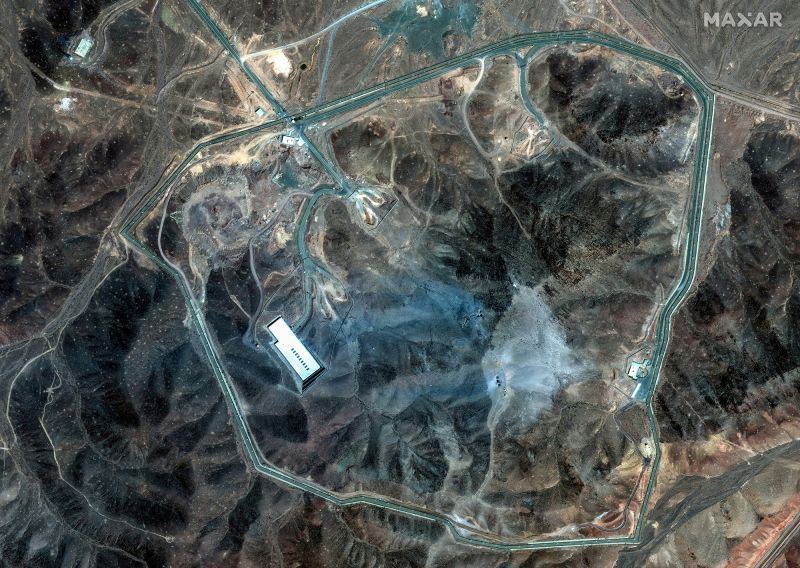
Dmitry Medvedev, the Deputy Chairman of the Russian Security Council, has stated that a nuclear confrontation between Iran and Israel is now inevitable. This warning comes amid escalating tensions between the two nations, raising international concerns about stability in the Middle East.
Medvedev, who previously served as President of Russia, emphasized that the current situation requires the international community to take urgent steps to prevent the escalation of conflict. His remarks were made in the context of discussing the increasing risks that could lead to a full-scale military confrontation in the region.
Details of the Situation
Concerns are growing that the escalation between Iran and Israel could lead to direct military confrontation, especially following a series of mutual attacks and increasing threats. Recently, Israel has carried out airstrikes on Iranian sites in Syria, while Iran has responded by bolstering its military presence in the region.
Medvedev clarified that these dynamics could lead to an unexpected escalation, making it difficult for the involved parties to control the situation. He also noted that nuclear tensions could increase if effective diplomatic measures are not taken.
Background & Context
Historically, relations between Iran and Israel have been tense, with Israel considering Iran an existential threat due to its nuclear program. Conversely, Iran views Israel as a threat to its national security. Since the signing of the Iranian nuclear deal in 2015, there have been repeated attempts by Israel to thwart this program, leading to heightened tensions.
In recent years, Iran has increased its military capabilities, raising concerns in Tel Aviv. Additionally, repeated statements from Iranian officials about the destruction of Israel further intensify the tensions between the two sides.
Impact & Consequences
If a nuclear confrontation were to occur, it would significantly impact regional and international security. It could likely lead to a major humanitarian crisis, along with severe economic repercussions for neighboring countries. Major powers would find themselves compelled to intervene, potentially escalating the conflict further.
Medvedev's statements reflect the growing concern among major powers regarding stability in the Middle East. The international community is now urged to act urgently to prevent any escalation that could lead to dire consequences.
Regional Significance
The Arab countries neighboring Iran and Israel find themselves in a sensitive position, as any military confrontation could affect their stability. Many Arab nations fear that the conflict could lead to a flow of refugees and increased sectarian tensions in the region.
Moreover, any escalation could impact the Arab economy, especially given the heavy reliance on oil and gas. Thus, Arab countries need to enhance cooperation among themselves to address potential security challenges.
In conclusion, Medvedev's remarks serve as a wake-up call for the international community, as the current situation requires urgent action to avoid a nuclear confrontation that could have catastrophic implications for the region and the world.