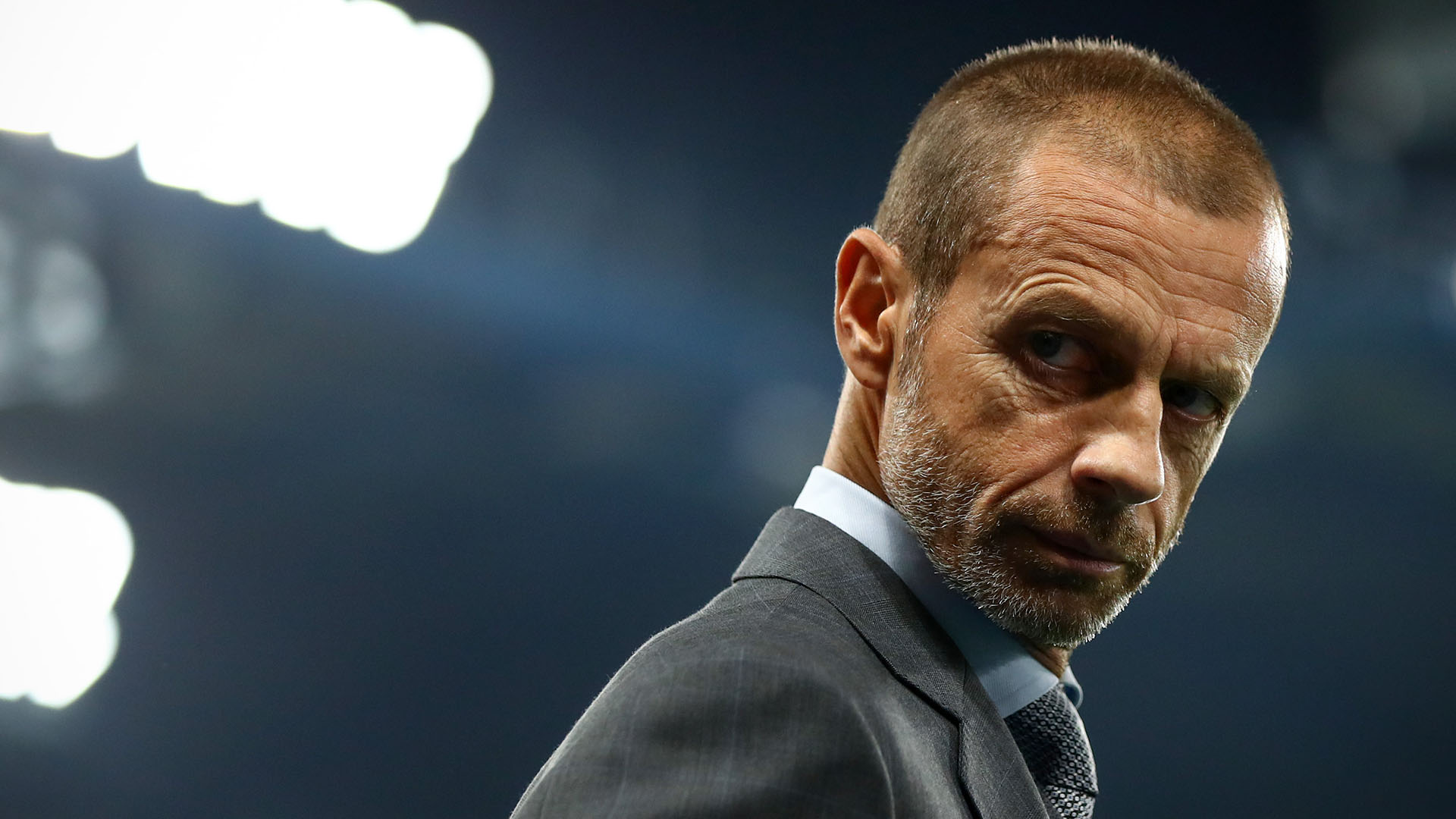
UEFA President Alexander Ceferin has warned that Italy could lose its role as a joint host for the Euro 2032 tournament if it does not work on improving its sports infrastructure. This warning came during an interview with Gazzetta dello Sport, where Ceferin emphasized the need to update Italian stadiums, especially after Italy missed qualifying for the World Cup for the third consecutive time.
Ceferin, who had supported Gabriel Gravina, the recently resigned president of the Italian Football Federation (FIGC), expressed concern over the absence of modern stadiums in Italy. He confirmed that the tournament is scheduled for 2032, but added, "I hope the infrastructure is ready; otherwise, the tournament will not be played in Italy."
Event Details
Italy must submit a list of five stadiums to host matches for Euro 2032 to UEFA by October. However, major clubs such as AC Milan, Inter Milan, Lazio, and Roma face significant challenges in renovating or rebuilding their stadiums, often stalling these processes due to conflicts with public authorities that own these venues.
According to consulting firm PwC, only six Italian stadiums have been built or renovated from 2007 to 2024, compared to 19 in Germany, 13 in England, and 12 in France. These figures reflect the substantial gap in sports infrastructure development between Italy and other European countries.
Background & Context
Historically, Italy has been one of the powerhouses in global football, having achieved numerous titles in European and world championships. However, the current situation reflects a decline in performance on the international stage, as Italy failed to qualify for the 2022 World Cup, raising questions about the future of football in the country.
Gravina's resignation came at a sensitive time, as he faced increasing pressure from the media and political figures following the national team's failure to qualify. Ceferin, for his part, defended Gravina, pointing out that the responsibility does not lie solely with him but also with Italian politicians who should question themselves about the reasons for the deterioration of sports infrastructure in the country.
Impact & Consequences
This crisis could have serious repercussions for Italian football, as losing the hosting rights for Euro 2032 may negatively impact the local economy and reduce opportunities for investment in stadium and infrastructure development. It could also increase pressure on clubs and the Italian Federation to provide urgent solutions.
Forecasts indicate that Italy needs substantial investments to improve its infrastructure, which may require cooperation between the public and private sectors. If the situation remains unchanged, Italy may find itself in a difficult position in the near future.
Regional Significance
Football is one of the most popular sports in the Arab world, with millions of fans following European tournaments. Italy's failure to improve its infrastructure could affect the image of European football as a whole, which may reflect on Arab fans' interest in European competitions.
Moreover, investments in sports infrastructure in Arab countries may also be impacted, as Italy could serve as a model for countries seeking to develop their stadiums and prepare for hosting major tournaments.
In conclusion, the future of Italian football hangs in the balance, dependent on the country's ability to enhance its infrastructure, requiring collective efforts from all stakeholders involved.