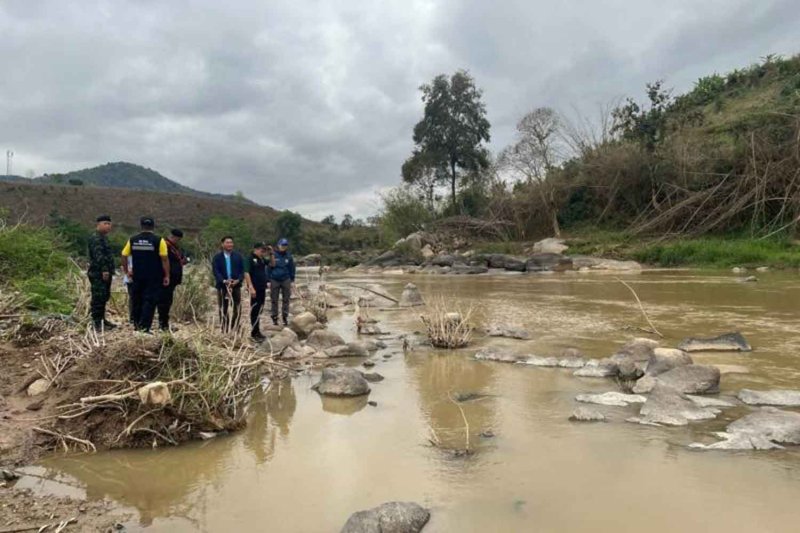
Civil society organizations in Thailand have warned about the rising levels of arsenic and other heavy metals in the Mekong River, raising serious health and environmental concerns for local communities. This warning was issued during an annual meeting of local networks in Loei province last week, highlighting the importance of protecting the river from potential pollution.
Montree Chantawong, coordinator of the Mekong Butterfly group, stated that preliminary surveys conducted by civil society organizations indicate an increasing risk of pollution resulting from mining activities in neighboring countries along the Mekong basin. He emphasized that "the presence of arsenic indicates that the Mekong is slowly accumulating heavy metals along its length."
Event Details
The Pollution Control Department in Thailand has been monitoring arsenic levels in the Mekong River since 2022, initially reporting no traces. However, the first detection was reported in August 2024, coinciding with the identification of arsenic pollution in the Kok River in northern Thailand. Subsequent tests showed that arsenic levels at some sites in Bueng Kan province exceeded the safety guideline of 0.01 milligrams per liter, necessitating close monitoring of potential pollution sources.
Last year, civil networks conducted preliminary surveys at eight sites in Bueng Kan, Nakhon Phanom, Mukdahan, Amnat Charoen, and Ubon Ratchathani. The results indicated low concentrations of arsenic that approached but typically remained below the safe threshold.
Background & Context
The issue of pollution in the Mekong River is not new, as the region has witnessed an increase in unregulated mining activities in neighboring countries such as Myanmar and Laos over the years. Data from the Stimson Center reveals thousands of mining sites in Southeast Asia, including hundreds within the Mekong basin, which have been linked to water quality and sediment problems.
Subsakoon Klanuakorn, a lecturer at the School of Social Innovation at Mae Fah Luang University, stated that the expansion of mining activities is driven by increased demand for minerals and foreign investments, coupled with weak environmental oversight in border areas.
Impact & Consequences
The warnings indicate that local communities living along the banks of the Mekong River may face unavoidable health and environmental impacts in the long term if monitoring and preventive measures are not enhanced. Montree urged the Pollution Control Department to increase the frequency of tests from quarterly to monthly, warning that irregular monitoring may fail to capture new pollution trends.
He also called on authorities to expand health screenings for communities near the river and improve transparency in reporting pollution data. The lack of accurate information regarding pollution levels is a key factor hindering efforts to protect the environment and public health.
Regional Significance
The issue of environmental pollution in rivers and water bodies is a vital concern for all countries, including Arab nations. As environmental challenges increase, Arab countries must adopt effective strategies to monitor and protect their water resources. Regional cooperation in environmental protection can contribute to knowledge and experience sharing, enhancing the capacity of countries to address environmental challenges.
In conclusion, the current situation in the Mekong River requires urgent responses from local and international authorities to protect the environment and the health of local communities. Strengthening monitoring and transparency in environmental data is a crucial step towards achieving sustainable development.