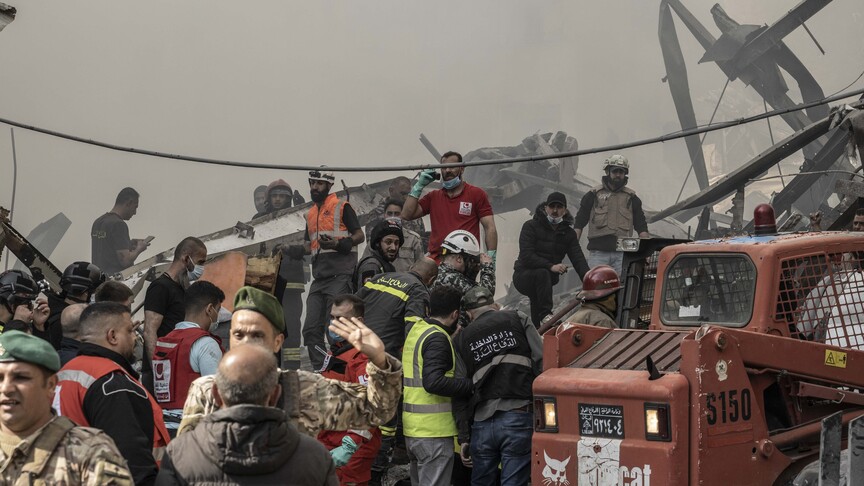
Reports from Lebanon indicate a notable escalation in violence, despite news of a ceasefire announcement. The head of the UN mission in Lebanon confirmed that the security situation remains tense, with clashes continuing in several areas, raising concerns about worsening conditions.
While Lebanese citizens were hoping for positive news regarding the ceasefire, reports have confirmed that violence has continued in a "dramatic" manner. This news reflects a state of instability that the country is experiencing, necessitating urgent intervention from the international community.
Details of the Incident
Reports indicate that clashes have erupted in various regions of Lebanon, including the capital, Beirut. These clashes have resulted in injuries among civilians, complicating the humanitarian situation in the country. There are also fears that the continuation of violence could exacerbate the economic and social crises faced by the Lebanese people.
This escalation comes at a sensitive time, as there was hope that the ceasefire would alleviate tensions. However, with violence persisting, it seems that hopes for peace have faded, placing Lebanon in front of new challenges.
Background & Context
Historically, Lebanon has suffered from multiple political and security crises, having witnessed wars and internal conflicts over the past decades. These crises have left deep scars on the social and economic fabric of the country, making it susceptible to clashes and violence.
In recent years, conditions in Lebanon have worsened due to ongoing economic and political crises, with citizens facing severe shortages of basic resources. This situation makes it difficult for the Lebanese government to take effective steps towards achieving stability.
Impact & Consequences
The current escalation in Lebanon could have serious implications for regional security. The continuation of violence may lead to an influx of refugees into neighboring countries, increasing pressure on these nations. Furthermore, any escalation could affect relations between Lebanon and its neighbors, complicating the security situation in the region.
Moreover, the ongoing violence could exacerbate humanitarian crises, as many Lebanese are suffering from poverty and unemployment. This situation could create a conducive environment for increased extremism and violence.
Regional Significance
The situation in Lebanon is part of a larger picture concerning security and stability in the Arab region. Events in Lebanon could impact neighboring countries, such as Syria and Palestine, where humanitarian crises could worsen due to the deteriorating conditions in Lebanon.
The international community is closely monitoring the situation in Lebanon, as any escalation may prompt international intervention. Therefore, hopes for achieving peace and stability in Lebanon require joint efforts from all concerned parties.