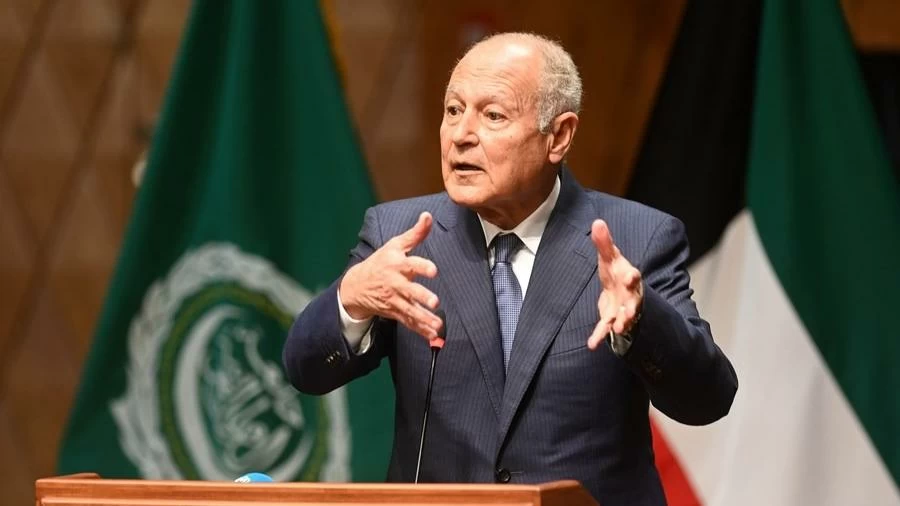
Ahmed Aboul Gheit, the Secretary-General of the Arab League, has warned that the hardening of positions among the parties involved in the U.S.-Israeli-Iran conflict could push the region towards catastrophic scenarios from which no party will emerge unscathed. In a press statement, Aboul Gheit emphasized that "the rigidity of positions can lead to catastrophic scenarios that no party will be immune to the consequences of," stressing the need for all parties to act responsibly in this "critical moment" to spare the region from disasters whose effects could last for many years.
The Secretary-General also pointed out that the demands from both the U.S. and Iranian sides are unlikely to lead to a near settlement, urging mediators to work by all possible means to bridge the gap between positions and save the situation before it is too late. Aboul Gheit condemned Iranian threats to target vital facilities in Arab countries as "unacceptable and condemned at all levels," warning Tehran against "persisting in its aggressive and sinful policies towards the Arab region."
Details of the Situation
Aboul Gheit's statements come at a time when regional tensions between the U.S. and Iran are escalating, with recent weeks witnessing a back-and-forth exchange of threats and strikes. Iranian attacks using missiles and drones have targeted vital facilities in several Arab countries, provoking widespread Arab condemnations. These statements reflect the growing concern over the escalation of violence in the region and its impact on security and stability.
In this context, Aboul Gheit called on Iranian leaders to "think carefully about the day after war, and what this reckless policy leaves behind in terms of indelible residues of hatred and animosity among neighbors." This call reflects the urgent need to consider the dire consequences that may arise from continued escalation.
Background & Context
Historically, relations between Iran and Arab countries have been marked by increasing tensions, especially amid ongoing regional conflicts. These tensions are manifested in the disputes in Syria, Yemen, and Iraq, where Iran plays a pivotal role in supporting certain factions. Additionally, U.S. policies in the region, including sanctions imposed on Iran, have intensified these tensions.
Arab countries are striving to enhance their security and stability in the face of Iranian threats, complicating the regional landscape further. However, achieving a diplomatic settlement appears challenging given the high demands from both sides, raising fears of escalating conflict.
Impact & Consequences
If the situation continues as it is, the region may face serious repercussions, including the outbreak of a comprehensive war that could affect oil facilities and navigation in the Gulf. Such a war would not only impact the countries involved but would also cast a shadow over the entire region's economies and global energy prices.
The military escalation could exacerbate humanitarian crises in the affected countries, increasing civilian suffering and complicating relief efforts. Furthermore, the continuation of tensions may contribute to heightened sectarian and ethnic divisions in the region, threatening long-term stability.
Regional Significance
Aboul Gheit's statements serve as an urgent call for Arab countries to unite in the face of Iranian threats. Arab cooperation in this context is essential to enhance national security and achieve stability. There is also an urgent need to promote dialogue between Arab countries and Iran to avoid escalation and achieve peace.
In conclusion, hope remains pinned on diplomacy and international mediation to bridge the gap between positions and save the region from potential disasters. The stability of the region depends on the ability of the involved parties to overcome their differences and work towards peaceful solutions.