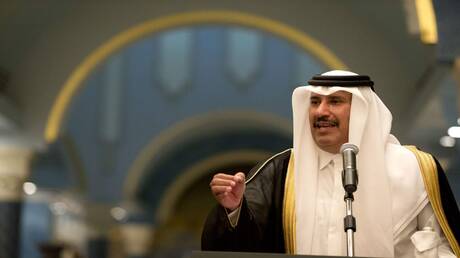
Sheikh Hamad bin Jassim, the former Prime Minister of Qatar, has warned that the situation in the Gulf region may be heading towards a 'war in every sense of the word.' These statements come at a time when the region is witnessing escalating tensions, especially with the Houthis entering the fray, further complicating the political and military landscape.
These warnings serve as a wake-up call for Gulf countries, which are facing multiple challenges on both security and political fronts. The increase in Houthi activities in the region raises concerns about regional stability and places Gulf states in front of difficult choices that could affect their future.
Details of the Situation
In statements made by Sheikh Hamad bin Jassim, he emphasized that the situation in the Gulf requires the concerned countries to take urgent steps to address the increasing challenges. He pointed out that the Houthis, who enjoy Iranian support, could alter the balance of power in the region, necessitating a coordinated response from Gulf nations.
He also added that military escalation could lead to serious repercussions, not only at the regional level but also internationally. Any escalation could impact oil prices and disrupt trade in one of the world's most important maritime corridors.
Background & Context
Historically, the Gulf region has witnessed numerous conflicts and disputes, but the current situation is considered one of the most complex. The conflict in Yemen, which has entered its eighth year, has added a new dimension to the regional conflict, as Iran seeks to enhance its influence by supporting the Houthis.
It is noteworthy that Gulf countries, led by Saudi Arabia and the UAE, have conducted military operations against the Houthis in Yemen, which has intensified tensions. However, political solutions remain elusive, increasing fears of a comprehensive military escalation.
Impact & Consequences
If the situation continues on this trajectory, the consequences will be dire. Escalation could lead to mass displacement of populations, an increase in casualties, and a worsening of humanitarian crises in Yemen.
Moreover, any military escalation could directly affect the global economy, especially given the heavy reliance on Gulf oil. Rising oil prices due to conflicts could negatively impact the economies of importing countries.
Regional Significance
The situation in the Gulf has significant implications for the overall conditions in the Arab region. Conflicts in the Gulf could lead to the spread of chaos in other countries, threatening stability in neighboring nations.
Furthermore, Sheikh Hamad bin Jassim's warnings come at a sensitive time, as attention turns to how Gulf states will respond to this challenge. Cooperation and coordination among these countries will be essential to confront the increasing threats.
In conclusion, the situation in the Gulf remains under scrutiny, requiring the concerned nations to take urgent and effective measures to avoid the worst-case scenarios.