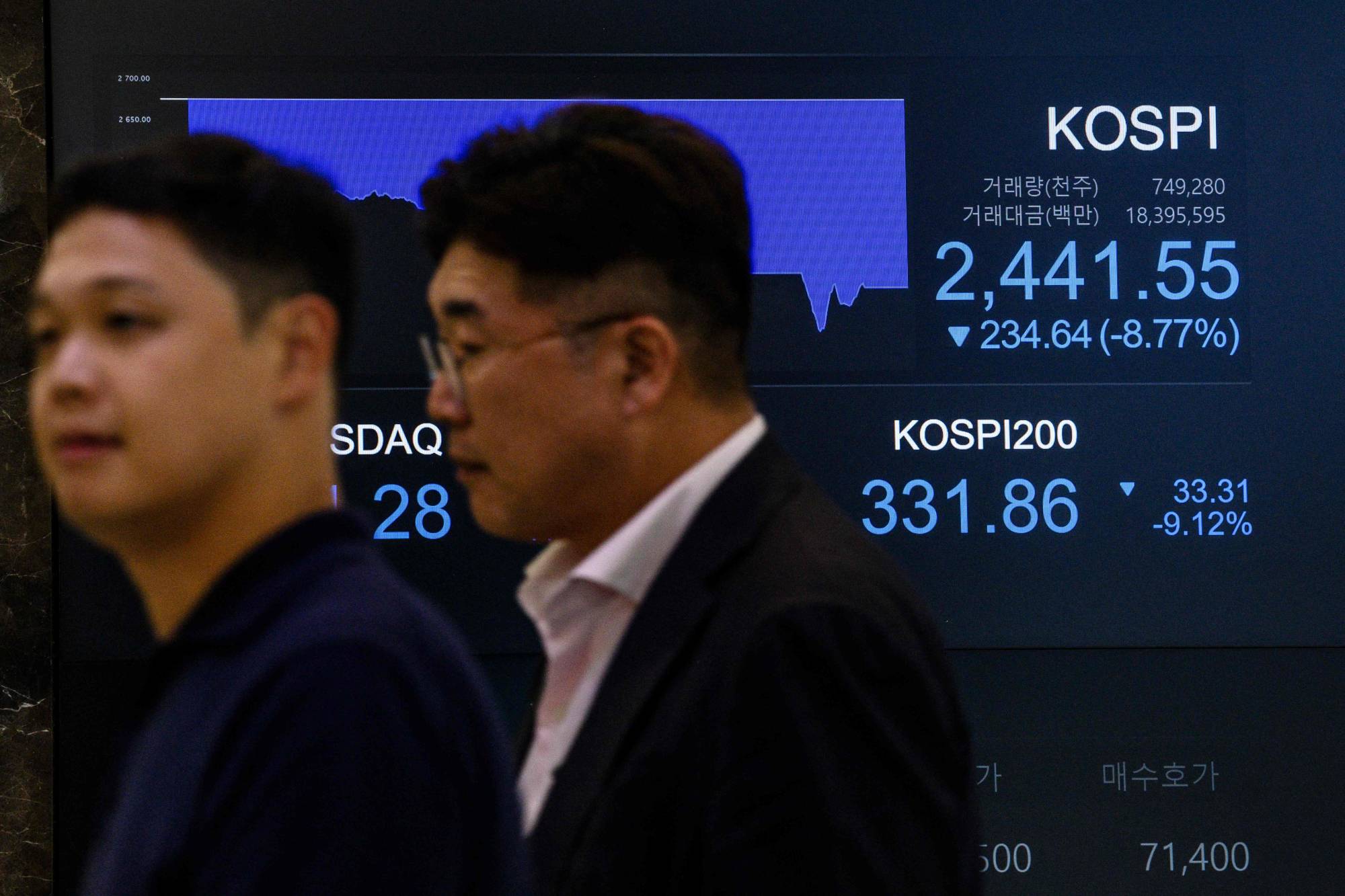
Recent reports suggest that a selling pattern in the KOSPI Composite Index in South Korea could act as a warning for the US chip sector, as movements in both markets have been closely linked lately. This selling pattern, known as a "major bearish reversal," may indicate a potential decline in the stock prices of the chip sector, which is considered vital for the global economy.
Chip stocks are among the most volatile in the markets and have seen significant increases recently. However, any sign of a potential downturn could lead to widespread selling, raising concerns among investors. The warning from KOSPI comes at a sensitive time, as investors are looking for market stability after periods of sharp increases.
Details of the Selling Pattern
The selling pattern observed in the KOSPI Index indicates a high likelihood of price declines in the near future. This pattern forms when prices experience a significant rise followed by a decline, signaling weakness in demand. In the case of KOSPI, this pattern could have direct effects on the stocks of major companies in the chip sector such as NVIDIA and Intel.
History shows that KOSPI movements often reflect trends in US markets, increasing the importance of this warning. Investors in the United States are closely monitoring any developments in KOSPI, as any downturn in the Korean market could negatively impact US markets.
Background & Context
Historically, the chip sector in the United States has experienced significant volatility, especially with the rising demand for modern technology. In recent years, stock prices of companies operating in this sector have increased dramatically, making them susceptible to any changes in market trends. Additionally, trade tensions between the United States and China have also affected this sector, complicating the situation further.
If this warning materializes, it could lead to a substantial decline in chip stock prices, impacting investments in this sector. Companies that rely on chips for their production may also be affected, potentially leading to reduced profits and slowed growth. This situation could negatively reflect on the overall US economy, as the technology sector is considered a key driver of growth.
Impact & Consequences
If this warning comes to fruition, it could result in a significant drop in chip stock prices, affecting investments in this sector. Companies that depend on chips for their production may also be impacted, leading to diminished profits and a slowdown in growth. This scenario could adversely affect the US economy as a whole, given that the technology sector is viewed as a primary engine for growth.
Investors are urged to remain vigilant and consider the potential implications of this selling pattern. The interconnectedness of global markets means that developments in one region can have ripple effects across the world, especially in critical sectors like technology.
Regional Significance
The implications of the KOSPI's performance extend beyond South Korea, as it often serves as a barometer for investor sentiment in the broader Asian markets. A downturn in KOSPI could signal caution among investors globally, particularly in technology and semiconductor stocks, which are pivotal for economic growth.
In conclusion, the warning from the KOSPI Index highlights the delicate balance that exists within the global chip sector. Investors must stay informed and prepared for potential shifts in market dynamics that could arise from this selling pattern.