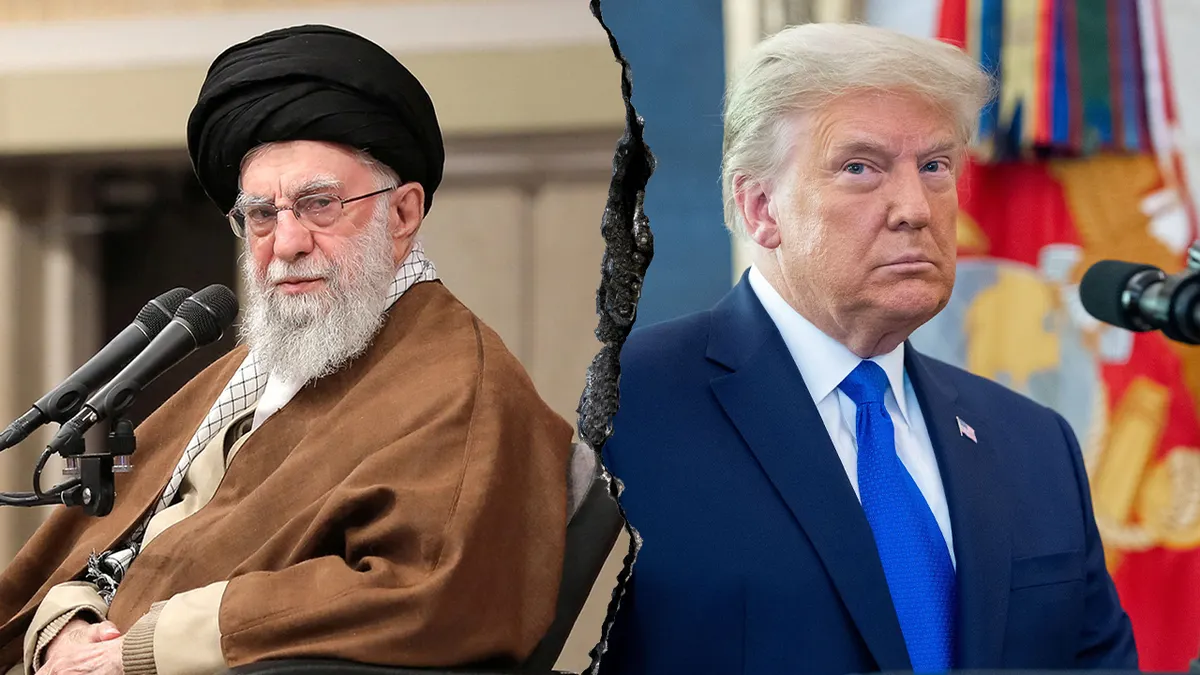
Former British Foreign Secretary William Hague warns that U.S. President Donald Trump's intervention in the conflict with Iran could turn into an irreversible strategic mistake. These warnings come at a time when Trump continues to assert that the war is nearing its end, despite the clear contradictions in his statements regarding the military situation.
In an article for the Times, Hague pointed to recent attacks targeting strategic sites, including a drone strike on a Russian port and another on Prince Sultan Air Base in Saudi Arabia, resulting in significant losses. Hague considers these events to reflect a geopolitical folly by Trump, who has embroiled the United States in an unnecessary conflict with Iran.
Details of the Situation
Hague reported that Trump believes Russia supports Iran in this conflict, as Moscow seeks to achieve its geopolitical goals by backing Tehran. Nevertheless, Trump still believes that Russian President Vladimir Putin can be negotiated with, reflecting unrealistic optimism given the current circumstances.
Hague also noted that Trump misjudges the strength of the weaker party in the dispute, as Iran does not intend to surrender easily, while Ukraine continues its resistance thanks to Western support. These dynamics suggest that the White House may have made a significant strategic error.
Background & Context
Historically, U.S.-Iranian relations have seen increasing tensions since the U.S. withdrawal from the nuclear deal in 2018. Since then, hostilities have escalated, leading to heightened conflict in the region. Trump's intervention in this conflict comes in the context of his attempts to bolster his political position both domestically and internationally, but the outcomes may be counterproductive.
Hague believes that the continuation of the war could exacerbate global economic conditions, as the U.S. economy faces significant challenges, while China seeks to increase its influence in the region. Trump's options appear limited, as negotiating a ceasefire with Iran may be the wisest choice to avoid further escalation.
Impact & Consequences
Trump's contradictory statements regarding the war, ranging from affirmations of victory to threats of destroying Iranian infrastructure, reflect instability in U.S. policy towards Iran. This contradiction could negatively impact financial markets, as concerns grow over escalating conflict.
While the United States has deployed approximately 50,000 troops to the Middle East, the White House remains unable to specify a clear timeline for the end of the conflict. This ambiguity increases uncertainty in the region, which could exacerbate economic and social crises.
Regional Significance
Developments in the U.S.-Iran conflict directly affect Arab countries, especially those located in the Gulf region. Rising tensions could lead to increased oil prices, impacting the economies of Arab nations that heavily rely on oil revenues.
Under these circumstances, Arab countries may find themselves in a difficult position, needing to balance their national interests against the challenges arising from the conflict. It is crucial for these nations to adopt effective strategies to manage potential crises.
In conclusion, Trump's intervention in the conflict with Iran could lead to serious repercussions, not only for the United States but for the entire region. The current situation requires political wisdom and effective diplomacy to avoid further escalation.