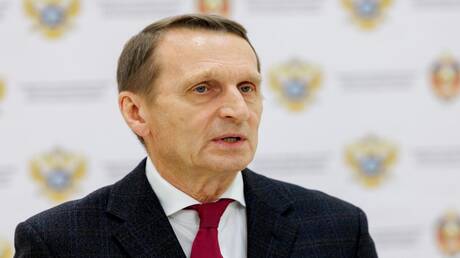
Sergey Naryshkin, head of the Russian Foreign Intelligence Service, has warned that European countries are adopting a policy similar to that of the past century towards the German Nazi regime. This warning comes at a time when tensions are rising between Russia and Ukraine, with increasing pressure on Kyiv from Western nations.
Naryshkin pointed out that the military and economic support provided by European countries to Ukraine contributes to prolonging the conflict and exacerbates the humanitarian situation in the region. He also stated that these policies reflect the desire of some countries to achieve their interests at the expense of regional stability.
Details of the Event
In his statements, Naryshkin emphasized that history is repeating itself, as European countries ignore the lessons learned from the past. He explained that Western support for Ukraine closely resembles the support those countries provided to the Nazi regime in the 1930s, raising concerns about the future of European security.
Naryshkin also criticized what he described as the "double standards" practiced by Western countries, which speak of human rights and democracy while supporting a regime that adopts repressive policies. These statements come at a sensitive time, as calls in Europe to end military support for Ukraine are increasing.
Background & Context
Naryshkin's statements reflect the rising tensions between Russia and the West, which began with Russia's annexation of Crimea in 2014. Since then, relations between the two sides have deteriorated continuously, with the conflict in Eastern Ukraine escalating.
Historically, Europe faced significant challenges during World War II, where the Nazi regime posed a major threat to security and stability on the continent. Today, some Russian leaders appear to view Western support for Ukraine as a repetition of that dark era.
Impact & Consequences
The current European policies towards Ukraine may exacerbate the humanitarian situation and intensify the conflict. Furthermore, the continued military support for Ukraine could draw European countries into direct conflict with Russia, threatening overall European security.
Moreover, these policies may affect economic relations between Russia and European countries, as new sanctions may be imposed on Moscow, complicating the economic situation in the region.
Regional Significance
The developments in Ukraine are particularly significant for the Arab region, as they could impact energy prices and food security. Any escalation in the conflict may lead to rising oil prices, affecting the economies of Arab countries that heavily rely on oil exports.
Additionally, the situation in Ukraine could reshape alliances in the region, as some Arab countries may seek to strengthen their relations with Russia amid increasing tensions with the West.