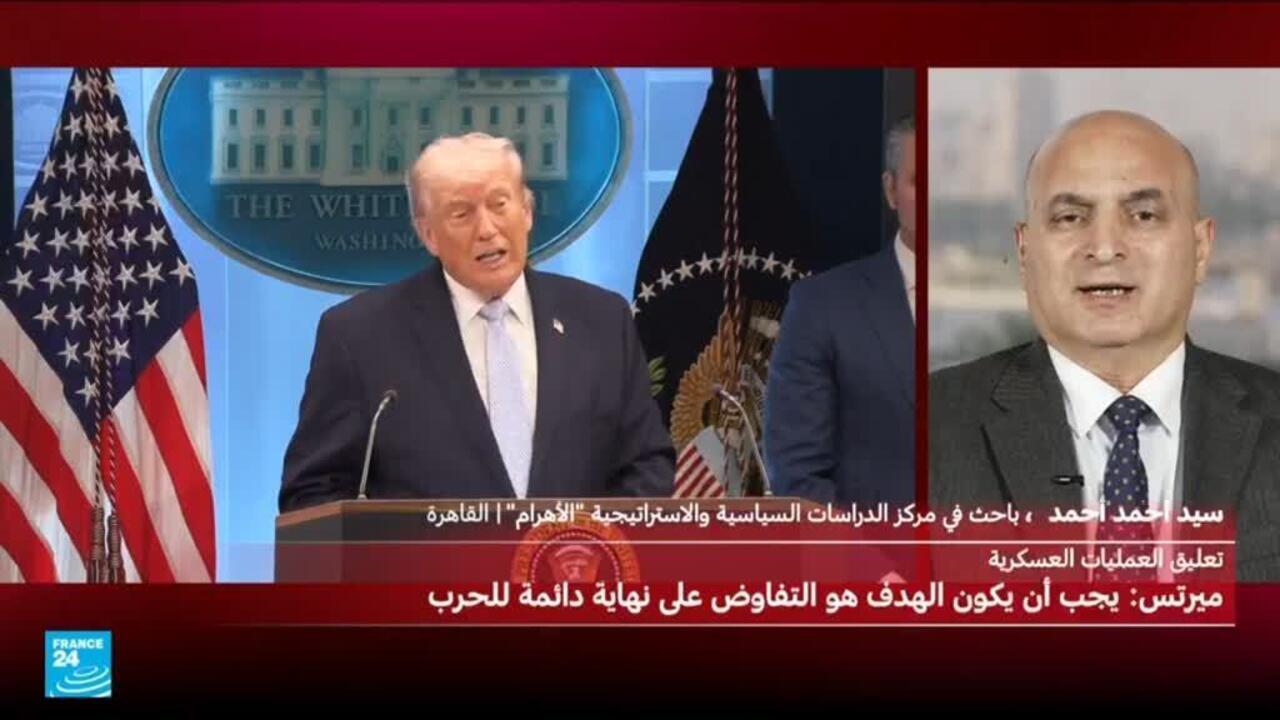
U.S. President Donald Trump has agreed to suspend military attacks against Iran for a period of two weeks, a move that may signal a shift in the U.S. administration's policy towards Tehran. This decision followed a series of communications with Pakistani leaders, who acted as mediators between Washington and Tehran.
This step comes at a time when the world is witnessing increasing tensions in the Middle East, with fears of military escalation that could lead to widespread conflict. Trump, who had previously taken a hardline stance against Iran, now appears to be seeking to ease tensions.
Details of the Agreement
In an official statement, Trump confirmed that the decision to suspend attacks was made after consultations with Pakistani leaders, who offered to mediate in the ongoing dispute. This approach may reflect the U.S. administration's desire to avoid a costly military conflict, especially amid the internal and external pressures it faces.
It is expected that the situation will be reassessed after the two-week period, as Washington and Tehran will review their positions. This move could open the door for new negotiations, although doubts remain about the possibility of achieving real progress in relations between the two parties.
Context and Background
The history of U.S.-Iranian relations is fraught with tensions, having seen numerous crises over the past decades. Since the U.S. withdrawal from the Iranian nuclear deal in 2018, tensions have escalated significantly, leading to the imposition of stringent economic sanctions on Tehran.
In recent years, there have been multiple attempts to reach agreements aimed at easing tensions, but these have often ended in failure. The Pakistani mediation could represent a new step in this direction, potentially opening up new opportunities for dialogue.
Impact and Consequences
If the agreement succeeds in achieving a ceasefire, it could lead to a reduction in tensions in the region, positively impacting regional stability. This step may also affect oil prices and financial markets, which are significantly influenced by political events in the Middle East.
However, concerns remain that this agreement may be temporary, and any new escalation could occur in the future. Therefore, observers are closely monitoring developments, especially given the uncertainty surrounding U.S.-Iran relations.
Impact on the Arab Region
U.S.-Iranian relations directly affect many countries in the region, as Iran is a key player in regional conflicts. Any improvement in relations between Washington and Tehran could have repercussions in Iraq, Syria, and Lebanon, where Iranian influence is significant.
At the same time, U.S. allies in the region, such as Saudi Arabia and Israel, may feel concerned about any rapprochement between Washington and Tehran, which could lead to changes in regional alliances.
In conclusion, it remains to be seen whether this agreement will withstand challenges and whether it will lead to improved relations between the United States and Iran. Given the current circumstances, the region appears to be in urgent need of lasting stability.