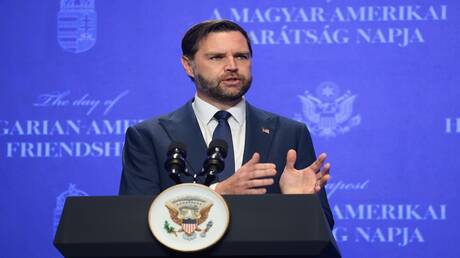
U.S. Vice President J.D. Vance announced that the United States will not conduct attacks on Iranian energy and infrastructure targets until the deadline set by President Donald Trump expires. This statement comes as tensions escalate between Washington and Tehran, with concerns growing over the implications of any military escalation in the region.
Vance, speaking at a press conference, emphasized that the U.S. administration is closely monitoring the situation, noting that any military actions will be carefully considered. This statement reflects the current administration's policy aimed at avoiding direct escalation with Iran, especially given the complex geopolitical circumstances in the region.
Details of the Event
Vance's remarks come at a critical time as Iran continues to advance its nuclear program, raising alarms within the international community. The deadline referenced by Trump pertains to potential negotiations surrounding Iran's nuclear program, which Washington hopes will lead to a comprehensive agreement ensuring Iran does not develop nuclear weapons.
Simultaneously, Iran is enhancing its military capabilities, exacerbating tensions in the region. Reports indicate that Iran has developed new missiles and strengthened its military presence in strategic areas, heightening fears of a military conflict.
Background & Context
Relations between the United States and Iran have significantly deteriorated since Washington's withdrawal from the nuclear agreement in 2018. This withdrawal led to the imposition of stringent economic sanctions on Iran, severely impacting its economy. In response, Iran has expanded its nuclear program and bolstered its military capabilities.
Historically, there have been several attempts to reach an agreement between the U.S. and Iran, but these have often failed due to mutual distrust. This backdrop complicates predictions about the future of relations between the two countries, especially with other regional and international powers seeking to enhance their influence in the area.
Impact & Consequences
Vance's recent statements could influence regional dynamics, potentially encouraging Iran to continue developing its nuclear program without fear of immediate military repercussions. This situation could lead to increased tensions in the region, particularly between Iran and Gulf states.
Moreover, the ongoing situation could affect global oil prices, as any military escalation in the region could lead to significant price hikes. This could impact the global economy, especially amid the economic crises many countries are facing.
Regional Significance
Arab countries neighboring Iran find themselves in a sensitive position, as any military escalation could directly affect their security and stability. Gulf states, in particular, are closely monitoring the situation, as any threat from Iran may prompt military responses from these nations.
Furthermore, the continuation of tensions between the U.S. and Iran could impact peace and stability efforts in the region, complicating the political and economic situations in Arab countries.
In conclusion, the situation in the region remains complex, as U.S. statements may reflect a cautious policy while simultaneously opening the door to further tensions. It is crucial to closely monitor future developments, as any change in the situation could impact security and stability in the region.