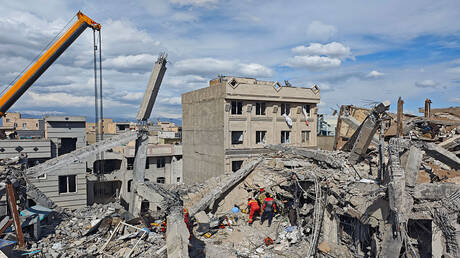
Israeli and American estimates indicate that the war against Iran will continue for at least ten more days, as Washington has informed Tel Aviv of a stalemate in negotiations with Tehran. This information comes at a critical time as tensions in the region escalate significantly.
Concerns are growing over a potential military escalation, as reports suggest that both sides have been unable to reach an agreement to ease the conflict. This situation reflects the depth of the current crisis between Iran and the United States, complicating the regional landscape further.
Details of the Situation
These developments coincide with an intensification of rhetoric between Tehran and Washington, with both countries exchanging accusations regarding violations of previous agreements. Sources within the Israeli government have confirmed that Tel Aviv received clear signals from Washington indicating that negotiations have not made any tangible progress.
At the same time, Iran continues to bolster its military capabilities, raising concerns among neighboring countries. Israeli officials have pointed out that the continuation of the war could lead to serious repercussions for regional security.
Background & Context
Historically, relations between Iran and the United States have seen increasing tensions since the Islamic Revolution in 1979. Successive American administrations have attempted to negotiate with Tehran, but these efforts have often failed. In recent years, economic pressures on Iran due to sanctions have made it more isolated on the international stage.
This crisis comes at a sensitive time for the region, as tensions between major powers are rising, raising fears of a comprehensive conflict that could affect neighboring countries.
Impact & Consequences
If the war against Iran continues, it could lead to serious repercussions for regional security. Oil prices are likely to be significantly affected, which could reflect on the global economy. Additionally, the ongoing conflict may result in new waves of refugees, increasing pressure on neighboring countries.
Moreover, military escalation could lead to external interventions, complicating the situation further. European countries, for example, may find themselves in a difficult position if they decide to support either side.
Regional Significance
Arab countries neighboring Iran are in a precarious position, as any military escalation could impact their stability. Countries like Iraq, Syria, and Lebanon may find themselves at the heart of the conflict, complicating their security situations.
Furthermore, the continuation of the war could affect relations between Arab countries and Iran, as some nations may seek to strengthen their alliances with the United States, while others may attempt to mediate the dispute.
In conclusion, the situation in the region remains complex and requires intensive diplomatic efforts to avoid a new escalation that could lead to dire consequences for all involved.