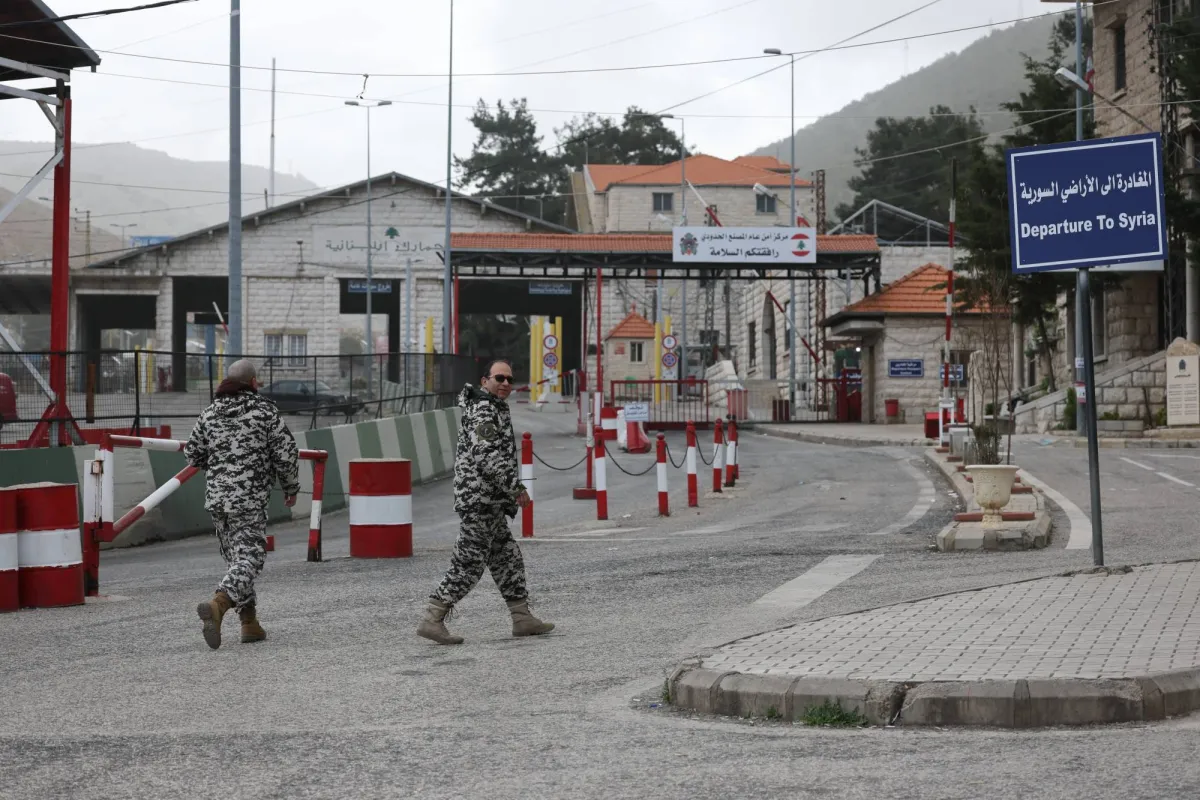
Political sources in Tel Aviv reported that the United States intervened to stop Israeli bombing at the Masnaa border crossing between Syria and Lebanon, preventing a military escalation that could draw Syria into war. This decision followed warnings issued by the Israeli military to evacuate the area in preparation for an attack.
The Israeli Public Broadcasting Corporation (Kan 11) stated that the U.S. administration directed a request to Israeli Prime Minister Benjamin Netanyahu shortly after the warnings were issued by the Israeli military spokesperson in Arabic. The Israeli army bombed areas near the crossing, claiming that Hezbollah was using it for military purposes.
Details of the Incident
The Israeli army indicated that the bombing aimed to destroy the crossing and demanded that everyone present evacuate. However, Israel received a request from the United States to suspend the attack for political reasons, indicating diplomatic efforts to contain tensions in the region.
Sources confirmed that the Syrian government informed the Americans that it was acting against Hezbollah and had thwarted attempts to smuggle weapons from Syria to Lebanon in recent days. Nevertheless, there are concerns that the real goal of the Israeli military operations is to pressure Damascus to intervene in the conflict.
Background & Context
Historically, relations between Israel and Syria have been marked by increasing tensions, especially following the Syrian army's intervention in Lebanon in 1976, which led to ongoing conflicts. Today, it appears that Israel is seeking to replicate that experience, despite the previous failures that resulted in multiple wars.
Estimates in Israel are rising that Lebanon's failure to confront Hezbollah and the American loss of confidence in Lebanese institutions may lead to changes in regional balances, potentially opening the door for new understandings between Israel and the Syrian regime.
Impact & Consequences
These developments are significant as they reflect instability in Lebanon and its impact on regional security. In the absence of an effective partner in Lebanon, pressures are mounting on the United States and Israel to find alternative solutions to confront Hezbollah.
If these dynamics continue, we may witness new shifts in the conflict, where Israel and Syria might indirectly cooperate against Hezbollah, altering the nature of the conflict in the region.
Regional Significance
These events contribute to increasing tensions in the region, potentially leading to a new military escalation that could negatively impact neighboring countries. Any escalation may also affect peace and stability efforts in the Middle East.
In conclusion, the situations in Lebanon and Syria remain under scrutiny, with growing fears of military escalation that could drag the region into new wars, necessitating intensive diplomatic efforts to contain tensions.