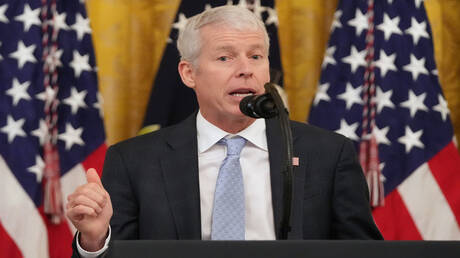
In alarming statements, U.S. Energy Secretary Chris Wright acknowledged that the United States lacks a clear plan to transfer enriched uranium from Iran, reflecting the challenges facing U.S. policy in dealing with the Iranian nuclear file. This admission coincides with escalating fears regarding Iranian nuclear activities, especially following reports indicating increased levels of uranium enrichment.
Wright's remarks raise numerous questions about U.S. strategy in this context, amid rising tensions between Washington and Tehran. This acknowledgment reflects a lack of concrete steps by the U.S. administration to address this sensitive issue, which could negatively impact future negotiations regarding the nuclear agreement.
Details of the Admission
During a press conference, Wright confirmed that the United States does not have a specific plan for transferring enriched uranium out of Iran. These statements come at a critical time, as the international community seeks diplomatic solutions to curb Iranian nuclear activities. This acknowledgment serves as a signal that the United States may face difficulties in achieving its objectives related to Iran's nuclear program.
These statements follow a period of tensions between Iran and Western countries, where attempts have been made to revive the nuclear agreement reached in 2015. However, the absence of a clear plan for transferring enriched uranium could complicate negotiation efforts and heighten tensions in the region.
Background & Context
Historically, Iran has been a focal point of international attention due to its nuclear program, which began in the early 2000s. This led to the imposition of international sanctions on Tehran, significantly impacting its economy. In 2015, a nuclear agreement was reached between Iran and major powers, allowing Tehran to enrich uranium under international supervision, but the U.S. withdrawal from the agreement in 2018 complicated the situation further.
Since then, Iran has increased its uranium enrichment levels, raising concerns within the international community. These activities are viewed as a potential threat to regional and international security, as they could lead to a nuclear arms race in the Middle East.
Impact & Consequences
The lack of a plan for transferring enriched uranium could exacerbate conditions in the region, as neighboring countries may feel alarmed by Iranian nuclear activities. Additionally, this situation could bolster the position of anti-Iran groups, increasing the likelihood of military escalation in the area. Furthermore, the absence of a clear strategy from the United States may reflect a weakness in U.S. foreign policy, which could affect relations with its allies in the region.
As tensions rise, the implications of this situation may lead to a reassessment of diplomatic strategies by both the U.S. and its allies, as they navigate the complexities of Iran's nuclear ambitions.
Regional Significance
The developments surrounding Iran's nuclear program are of significant importance in the context of international politics and regional security, as they can influence the stability of the area. The lack of a clear U.S. plan may lead to increased anxiety among neighboring countries and could trigger a reevaluation of their own security policies.
In conclusion, the acknowledgment by U.S. officials about the absence of a plan for transferring enriched uranium highlights the challenges faced in addressing the Iranian nuclear issue. This situation necessitates urgent diplomatic efforts to mitigate potential risks and foster stability in the region.