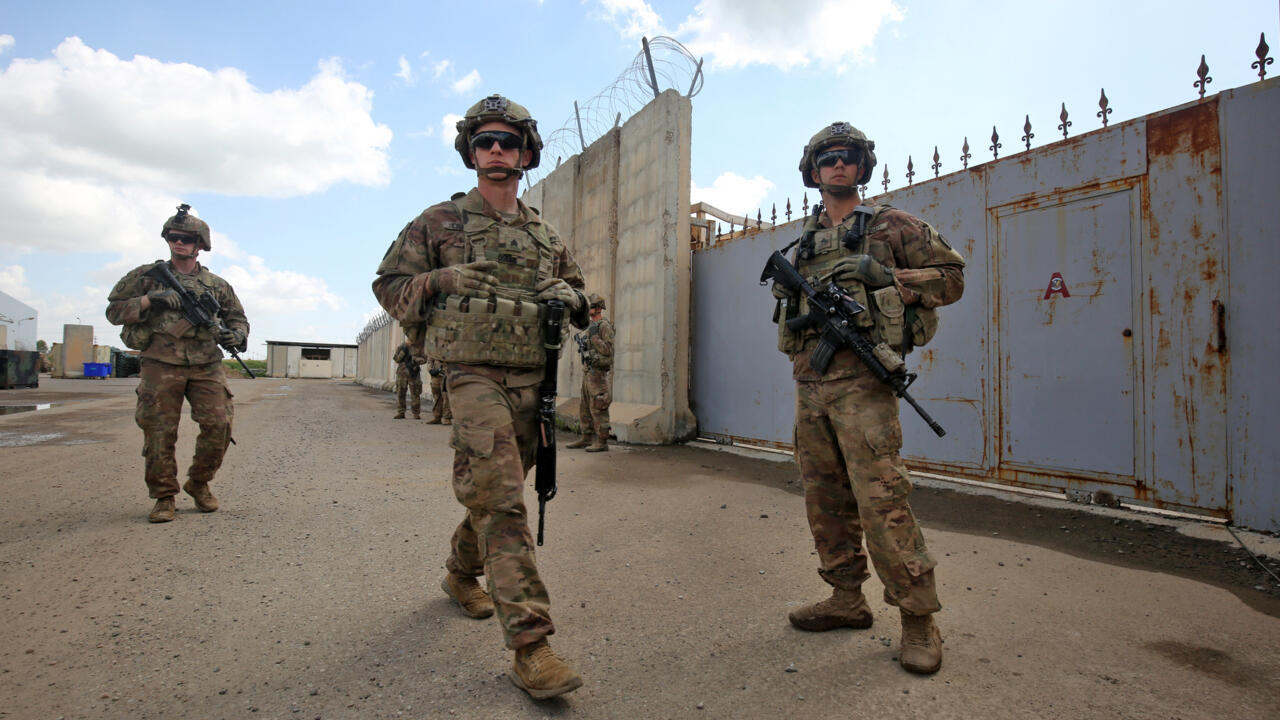
The Washington Post reports that the United States is preparing to conduct limited ground military operations inside Iran, a move reflecting a calculated escalation by the U.S. administration. This preparation comes as Washington struggles to achieve its objectives in the region solely through airstrikes.
According to unnamed American sources, the U.S. Department of Defense (Pentagon) may deploy approximately 3,500 troops to carry out field operations that could last several weeks. These operations, according to officials, will not reach the level of a full-scale invasion but will be limited to targeted raids conducted by special units.
Details of the Event
This information comes at a time when the amphibious assault ship USS Tripoli has been deployed to the Middle East, carrying around 3,500 sailors and Marines. The U.S. Central Command has announced the arrival of this ship, reflecting a reinforcement of the American military presence in the region.
At the same time, U.S. Secretary of State Marco Rubio indicated that the United States is capable of achieving its objectives regarding Iran without the need to deploy ground forces, adding another layer of ambiguity to Washington's plans.
Background & Context
Tensions between the United States and Iran have been escalating for a long time, as Washington seeks to pressure Tehran over its nuclear program and regional activities. Relations between the two countries have notably deteriorated since the U.S. withdrawal from the nuclear agreement in 2018, leading to the imposition of severe economic sanctions on Iran.
Historically, the United States has engaged in wars in Iraq and Afghanistan, raising concerns about slipping into a new quagmire in Iran, especially given its rugged terrain and vast area.
Impact & Consequences
If these operations are carried out, they could lead to unprecedented escalation in the region, threatening regional stability. Observers note that any military intervention could face strong resistance from Iranian forces, potentially resulting in significant casualties among American soldiers.
Moreover, military escalation could affect U.S. relations with its allies in the region, who may hesitate to support any new military operations due to fears of negative repercussions.
Regional Significance
Developments in Iran have a direct impact on Arab countries, as any military operations could increase tensions in nations like Iraq, Syria, and Lebanon, which are already suffering from internal conflicts. Additionally, any escalation could negatively affect regional security, exacerbating the suffering of civilians in those countries.
In conclusion, the situation in the Middle East remains tense, with growing fears of military escalation that could lead to catastrophic outcomes. The international community must closely monitor these developments to avoid slipping into a full-scale conflict.