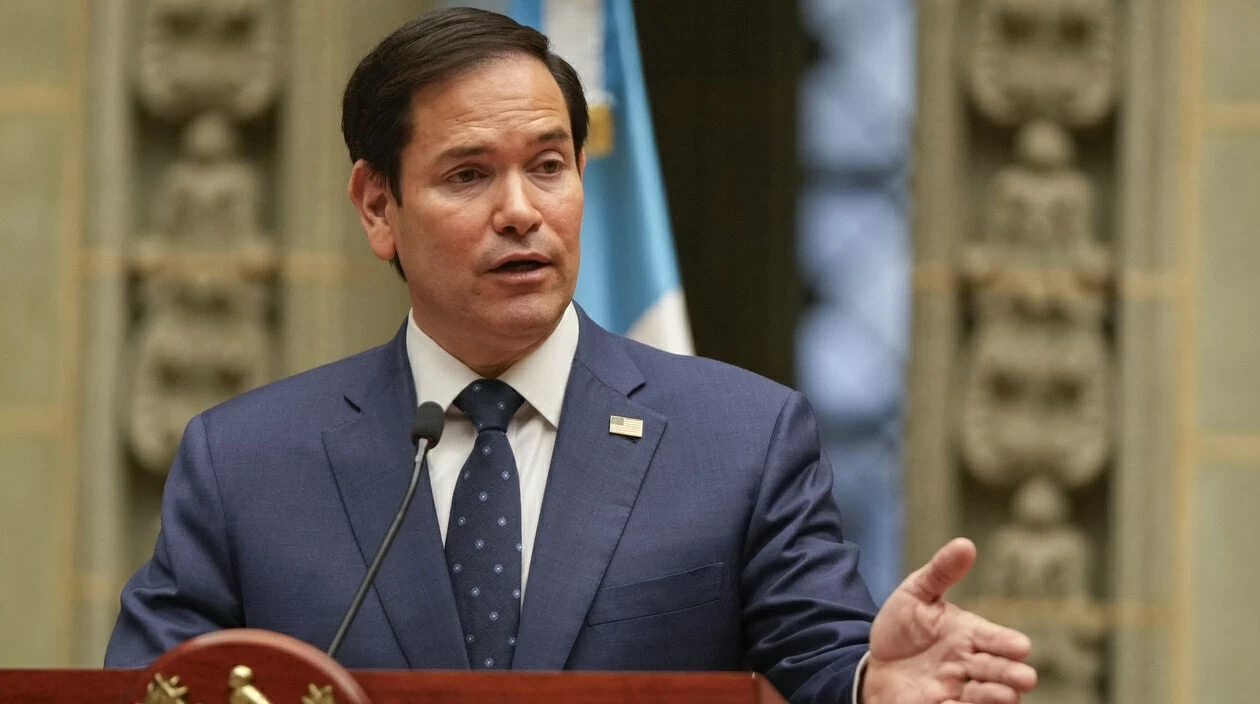
U.S. Secretary of State Marco Rubio affirmed that his country will not allow Iran to dictate who passes through international waterways, indicating that Tehran's threats to establish a permanent system in the Strait of Hormuz are unacceptable. This statement came during an interview with ABC News, where Rubio warned that the rest of the world needs to pay attention to this matter, especially since they have more to lose than the United States.
Rubio explained that the United States relies on a very small percentage of its energy through the Strait of Hormuz, while the rest of the world depends on it to a much greater extent. He confirmed that President Donald Trump has several options at his disposal, noting that the U.S. Department of Defense is working on preparing alternatives and various options to address potential scenarios.
Details of the Event
In his remarks, Rubio pointed out that there are new individuals in the Iranian government who have a more rational vision for the future, emphasizing the need for Washington to be prepared for the failure of negotiations with the Iranians. He clarified that the core of the American mission is to destroy Iranian military capabilities, including its air and naval forces, and to dismantle the arms factories that produce this equipment.
He also noted that the United States has made significant progress in achieving these goals, with a substantial reduction in the number of Iranian missile launch platforms, which diminishes their ability to threaten their neighbors in the future. He assured that all these objectives are being achieved according to the specified timeline.
Background & Context
These statements come at a time when the world is witnessing increasing tensions in the Gulf region, where the Strait of Hormuz is considered one of the most important waterways globally, with approximately 20% of the world's total oil passing through it. The region has seen a rise in tensions between the United States and Iran, especially after Washington's withdrawal from the Iranian nuclear agreement in 2018.
Iran seeks to enhance its influence in the region, raising concerns among neighboring countries and the United States. There are also fears that these tensions could lead to an open military conflict, which could impact the stability of the region as a whole.
Impact & Consequences
Through these statements, the United States aims to reassure its allies in the region, particularly the Gulf states that heavily rely on the stability of maritime navigation in the Strait of Hormuz. If Iran continues its threats, this could lead to military responses from the United States and its allies, increasing the likelihood of military escalation in the region.
Additionally, these statements could affect global oil prices, as any tension in the Gulf region can lead to a significant rise in prices. Therefore, the stability of the region is vital for the global economy.
Regional Significance
The Arab countries neighboring Iran, such as Saudi Arabia and the United Arab Emirates, are among the most affected by the tensions in the Strait of Hormuz. These countries depend on exporting their oil through this strait, and any threats that may impact navigation will lead to serious economic repercussions.
Moreover, these statements reflect the United States' firm stance towards Iran, which may strengthen the position of Arab countries in facing security challenges in the region. However, these countries must be prepared to deal with any potential escalation in tensions.
In conclusion, the situation in the Strait of Hormuz remains under scrutiny, as any new developments could significantly impact security and stability in the region.