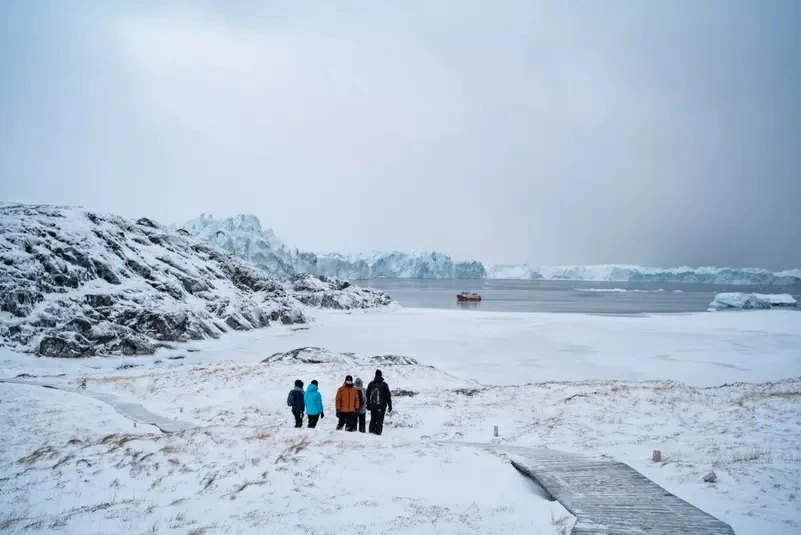
The United States is looking to expand its military presence on the island of Greenland, engaging in discussions with the Danish government to gain access to three new bases. This move comes at a time when the world is witnessing escalating geopolitical tensions, particularly in the Arctic region.
The New York Times reported that General Gregory J. Guillot, a senior officer at the U.S. Department of Defense, stated that negotiations with Copenhagen include military bases that the United States had previously abandoned. This expansion represents the first step of its kind in decades and reflects changes in the global security landscape.
Details of the Event
During a congressional hearing, the head of U.S. Northern Command confirmed that the military is seeking increased access to various bases in Greenland, citing rising threats and the strategic importance of the island. Among the locations being considered by the U.S. are the towns of Narsarsuaq and Kangerlussuaq, with the former providing a deep-water port and the latter offering a long runway for large aircraft.
Historically, these two towns served as American bases during World War II and the Cold War, but they returned to Danish and Greenlandic authorities after U.S. forces departed in the 1950s.
Background & Context
Greenland is considered a semi-autonomous territory, having been part of the Danish Kingdom for over 300 years. In recent years, the United States has increased its interest in the island, especially after former President Donald Trump proposed the idea of purchasing Greenland, which sparked widespread controversy.
Located off the northeastern coast of Canada, more than two-thirds of Greenland's land lies within the Arctic Circle. Since World War II, Greenland has been a crucial element in defending North America, as the United States occupied it to prevent it from falling into Nazi Germany's hands.
Impact & Consequences
With the increasing climate changes and melting ice, Greenland has become a focal point for major powers, as these changes open new avenues for international trade. This situation reignites competition between the United States, Russia, and China over mineral resources in the region.
The U.S. demand to expand its military presence in Greenland places the Danish government in a precarious position, as it conflicts with the wishes of local residents who oppose the increasing military deployment. This could affect relations between Denmark and the United States and complicate the situation in the region.
Regional Significance
While events in Greenland may seem distant from the Arab region, geopolitical tensions in the Arctic could impact global security and stability, reflecting on Arab interests. Additionally, competition for resources may open new avenues for cooperation or conflict in the future, requiring Arab nations to closely monitor these developments.
In conclusion, the expansion of the U.S. military presence in Greenland represents a strategic step amid escalating global challenges. The international community, including Arab countries, must be aware of these dynamics and respond in ways that align with their interests.