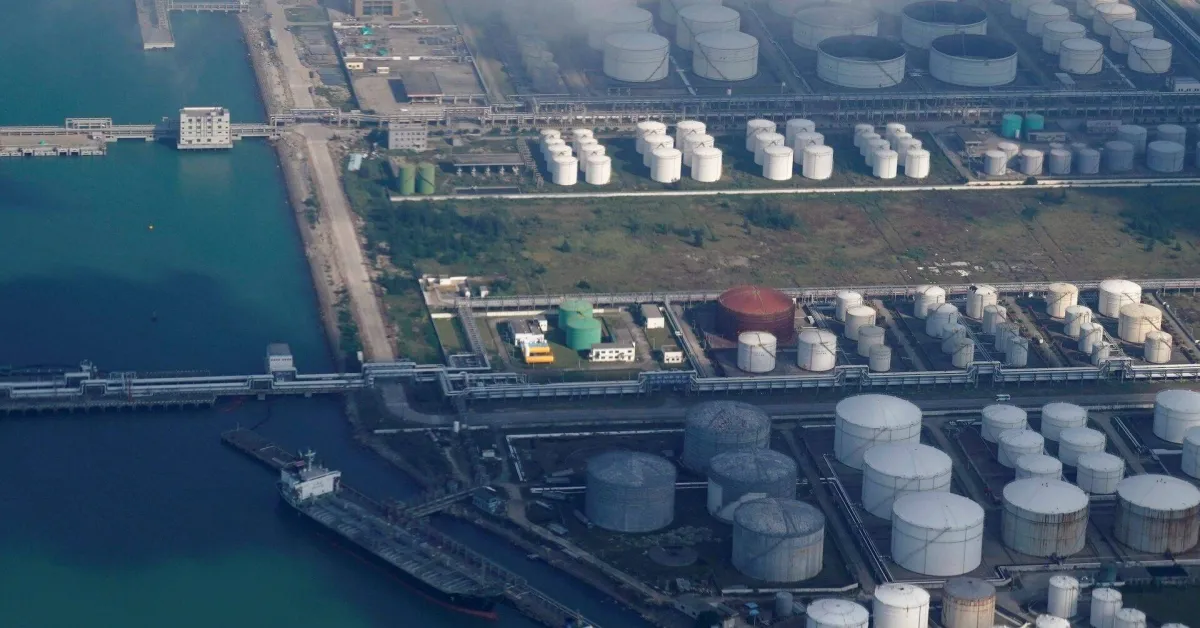
The United States is moving towards new measures to enhance the sanctions imposed on Iran, as the U.S. Treasury Department announced its targeting of Chinese oil refineries that deal with Tehran. This step comes at a time when tensions between Washington and Beijing are escalating, raising fears of a potential economic confrontation.
The Treasury Department clarified that banks and financial service providers could face severe penalties if they engage with what are known as "teapot refineries" in China, which are small, independent facilities that purchase and refine discounted Iranian oil.
Details of the Event
Reports indicate that approximately 90% of Iranian oil exports currently head to China, making it a key partner for Tehran in this sector. In this context, U.S. Treasury Secretary Scott Piesen stated that the department is targeting Iran's international financial infrastructure, including access to cryptocurrencies and the "shadow fleet" of ships with concealed ownership.
Piesen also noted that these measures have deprived Iran of billions of dollars in revenue, warning that any entity engaging in illicit trade with Tehran would face U.S. sanctions. Last week, the United States imposed sanctions on one of China's largest independent refining companies for its dealings with Iran, provoking angry reactions from Beijing.
Background & Context
These developments come at a time when negotiations between the United States and Iran regarding a long-term nuclear agreement have stalled, prompting both sides to use economic pressure as a means to achieve their objectives. In response, Iran has threatened the Strait of Hormuz, a vital artery for global oil trade, through threats and attacks on oil tankers.
The United States aims to cut off Iran's oil export revenues through these sanctions, complicating the situation in the region further. These actions come at a sensitive time, as pressure on the Iranian economy increases, which is already suffering from the effects of ongoing sanctions.
Impact & Consequences
Analysts expect these sanctions to exacerbate economic conditions in Iran, which could negatively affect regional stability. Additionally, the escalation between the United States and China may impact trade relations between the two countries, increasing uncertainty in global markets.
These steps are part of a broader strategy aimed at intensifying pressure on Iran and may provoke reactions from Beijing, which has asserted that it will defend the rights and interests of its companies. These dynamics could lead to an escalation of trade disputes between the United States and China.
Regional Significance
These developments directly impact the Arab region, where Iran is a key player in many regional conflicts. Increased economic pressure on Iran is expected to lead to changes in its foreign policies, which may affect the stability of neighboring countries.
Moreover, the rising tensions between the United States and China could create an unstable environment in global markets, affecting oil prices and essential commodities, which is a concern for oil-producing Arab nations.
In conclusion, developments in the relationships between the United States, Iran, and China remain of significant interest, as they may lead to radical changes in the geopolitical and economic landscape of the region.