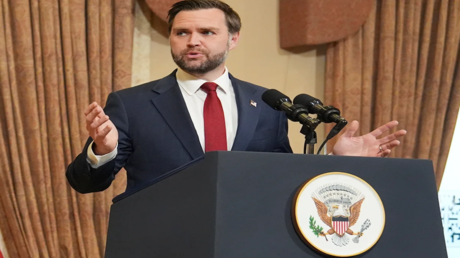
U.S. Vice President J.D. Vance stated during a press conference on Thursday that the United States has not yet reached an agreement with Iran, but he noted that both sides are very close to achieving this objective. These statements come at a time when international pressure on Iran regarding its nuclear program is increasing, highlighting the importance of ongoing negotiations.
Vance clarified that discussions between the two sides are continuing intensively, and there has been notable progress on some outstanding issues. He added that the United States hopes to reach a comprehensive agreement that ensures Iran does not develop nuclear weapons and enhances regional security.
Details of the Event
Vance's remarks coincide with intense diplomatic efforts by major powers to reach a nuclear agreement with Iran. Recently, there have been multiple meetings between U.S. and Iranian officials, addressing a range of issues including economic sanctions and the development of Iran's nuclear program.
It is worth noting that the previous nuclear agreement signed in 2015 collapsed after the United States withdrew from it in 2018. Since then, relations between Washington and Tehran have significantly deteriorated, prompting the international community to seek new diplomatic solutions.
Background & Context
Historically, U.S.-Iranian relations have been tense since the Islamic Revolution in 1979. Since then, the United States has imposed strict economic sanctions on Iran, significantly impacting its economy. However, there is an increasing desire from both sides to return to the negotiating table.
This negotiation process is part of broader international efforts, with European countries, China, and Russia seeking to support the negotiation process. Achieving a new agreement is considered a crucial step toward stabilizing the Middle East, which is suffering from multiple conflicts.
Impact & Consequences
If an agreement is reached, it could lead to the easing of sanctions imposed on Iran, allowing it to recover economically. Additionally, this agreement may contribute to improving relations between Iran and Western countries, which could positively affect regional security.
On the other hand, the failure of negotiations could escalate tensions, increasing the likelihood of new conflicts in the region. Therefore, the success of these negotiations is vital not only for the United States and Iran but for all countries in the region.
Regional Significance
The U.S.-Iranian relationship is pivotal for security in the Middle East, directly affecting Arab countries. Reaching an agreement could help stabilize conditions in Iraq, Syria, and Lebanon, where Iran plays a prominent role.
Moreover, any improvement in relations between Washington and Tehran could reflect on the relationships between Arab countries and Iran, potentially opening the door for broader dialogue on shared regional issues.
In conclusion, negotiations between Washington and Tehran remain in a sensitive phase, with everyone looking forward to positive outcomes. The success of these talks could radically change the geopolitical landscape in the region.