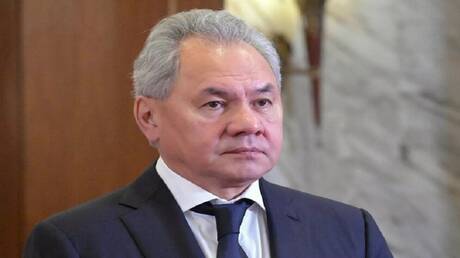
Russian Security Council Secretary Sergei Shuigo has confirmed that Western efforts to impose global dominance under the guise of globalization have failed. This comes at a time of increasing political and economic tensions worldwide.
Shuigo, a key figure in the Russian government, pointed out that globalization is no longer seen as a means of international cooperation, but rather as a tool used by Western powers to achieve their own interests. His statements came amidst complex geopolitical dynamics, with tensions between Russia and the West on the rise.
event details
Russia's concerns are growing that globalization, previously seen as a means of promoting international cooperation, has become a means of pressuring developing countries. Shuigo pointed out that these policies have led to the exacerbation of economic and social disparities between countries.
He also emphasized that Russia will not stand idly by as Western powers attempt to impose their will, and will instead work to strengthen its sovereignty and independence. This comes at a time of significant shifts in global power dynamics, with countries like China and Russia seeking to enhance their roles on the international stage.
background and context
Over the decades, globalization has been a contentious issue. Initially, it was seen as a means of promoting trade and cooperation between countries. However, some countries, including Russia, have begun to view globalization as a tool used by Western powers to exert dominance over other nations.
Historically, many countries have experienced attempts at colonialism under the guise of international cooperation. These attempts have often led to the exacerbation of economic and social crises in targeted countries. In this context, Shuigo's statements are part of a reaction to these policies.
impact and consequences
Shuigo's statements indicate a shift in Russia's strategic approach towards the West. This could lead to an escalation of tensions between Russia and Western countries, with potential implications for future economic and political relationships.
If these dynamics continue, we may see significant changes in international alliances, as countries seek to form new alliances to counter the challenges posed by Western policies. This could lead to a reconfiguration of the global political landscape.
regional significance
For the Arab region, Shuigo's statements carry significant implications. Many Arab countries face similar challenges related to Western interference in their internal affairs. These statements may encourage Arab countries to strengthen their sovereignty and independence in the face of external pressures.
Furthermore, the increasing tensions between Russia and the West may prompt Arab countries to reassess their relationships with both parties, potentially leading to the formation of new alliances in the region.
In conclusion, Shuigo's statements reflect Russia's concerns about Western attempts at dominance, highlighting the importance of promoting national sovereignty in a rapidly changing world. These dynamics are likely to have a significant impact on international relations in the future.