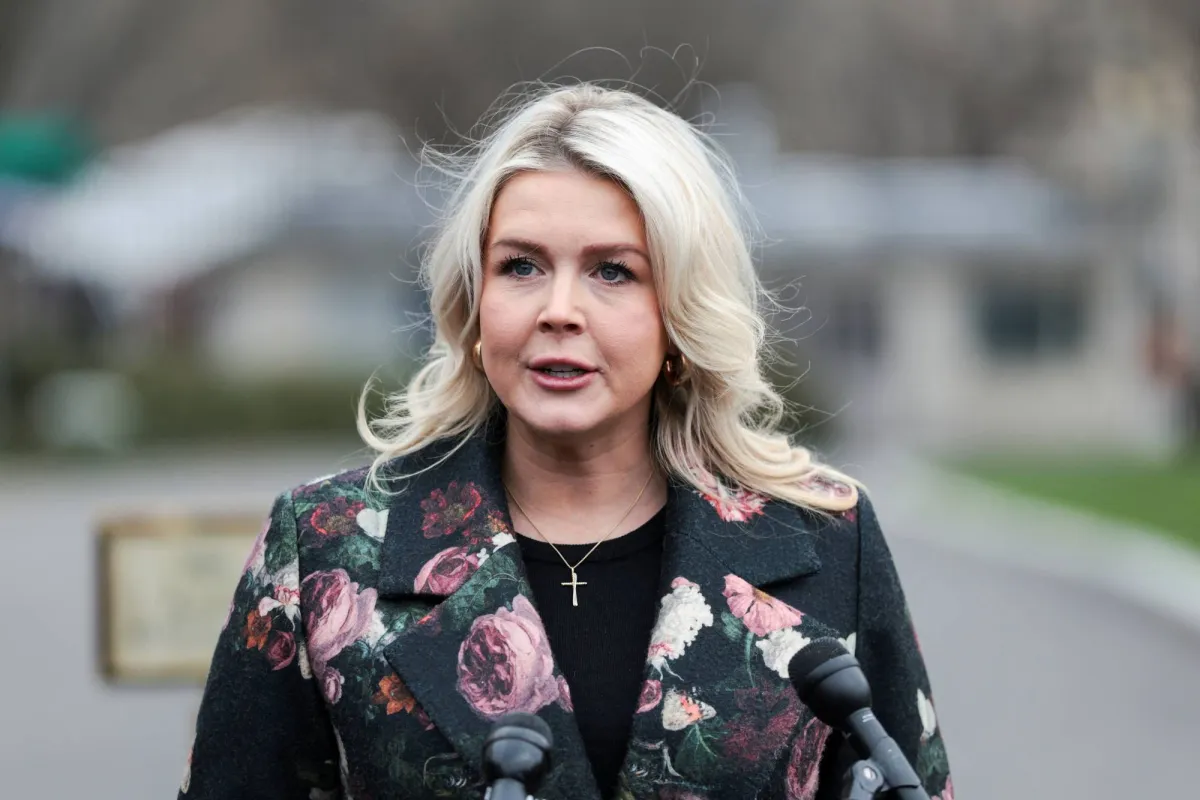
The White House announced on Tuesday that President Donald Trump continues military operations against Iran while exploring new diplomatic options. This announcement follows Trump's indication of starting talks with Tehran, with Pakistan emerging as a potential mediator in these negotiations.
White House spokesperson Caroline Levitt stated in a release to Agence France-Presse that "President Trump and his negotiators are exploring this new diplomatic possibility while the Epic Fury operation continues relentlessly to achieve the military objectives set by the Commander-in-Chief and the Pentagon."
Details of the Ongoing Situation
U.S. and Israeli airstrikes on Iran have continued, while Tehran has responded with missile attacks on Israel, following Trump's surprising announcement about the commencement of talks between Washington and Tehran. A senior Iranian Foreign Ministry official told CBS News that Tehran has received proposals from Washington through intermediaries, which are currently under review. The official confirmed that "the U.S. and Iran have had very good and fruitful discussions over the past two days regarding a comprehensive resolution to hostilities in the Middle East."
This escalation comes at a time when the region is experiencing increasing tensions, as the United States seeks to balance military power and diplomacy. This approach is considered part of Trump's strategy in dealing with Iran, which includes using military force as a means to pressure Tehran.
Background & Context
The roots of tensions between the United States and Iran date back several years, with relations deteriorating significantly since Washington's withdrawal from the Iranian nuclear deal in 2018. Since then, the U.S. has imposed strict sanctions on Iran, exacerbating the country's economic and political conditions.
In recent years, mutual attacks between U.S. and Iranian forces have escalated, increasing tensions in the region. The recent period has seen an intensification of military operations, with U.S. airstrikes targeting Iranian sites, while Tehran has retaliated with attacks on U.S. forces and their allies in the region.
Impact & Consequences
Many analyses predict that the continuation of U.S. military operations against Iran could lead to further escalation in the conflict, negatively affecting regional security. These operations may also provoke reactions from Iran's allies, complicating the situation in the region.
Moreover, these developments could impact peace efforts in the Middle East, as many countries strive for stability in the region. Some believe that the ongoing military operations may complicate the chances of reaching a comprehensive diplomatic agreement to end the ongoing conflict.
Regional Significance
These developments directly affect Arab countries, especially those sharing borders with Iran or influenced by its interventions in domestic affairs. Gulf states, for example, are closely monitoring these events, as they view Iran as a threat to their security and stability.
Furthermore, the continued tensions between the United States and Iran could lead to increased divisions in the region, affecting regional cooperation efforts to address common challenges. Therefore, the current situation requires Arab countries to adopt clear strategic positions to deal with these challenges.
In conclusion, the situation in the Middle East remains complex, as military operations intertwine with diplomatic efforts, making it difficult to predict the future. However, the continuation of dialogue among the concerned parties may be the only way to avoid further escalation in the conflict.