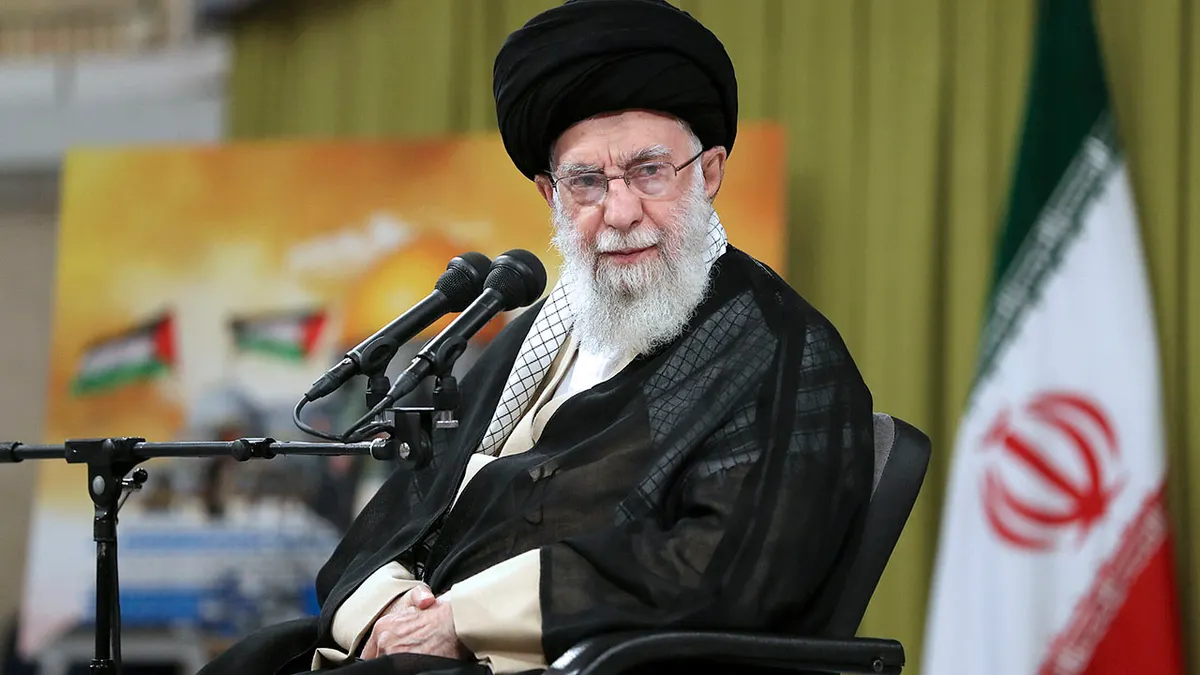
Despite significant military and political pressures, the Iranian regime remains resilient. Since the onset of the war on Iran in February, the most pressing question has been: why has the Iranian regime not collapsed despite the severe blows it has faced? Particularly, the opening strike, which resulted in the death of former Supreme Leader Ali Khamenei and several leaders, aimed to plunge the regime into chaos leading to its downfall. However, the paradox lies in the regime's ability to overcome these pressures as if nothing had happened.
The idea of the Iranian regime's collapse seems intuitive to the United States, which entered the war without a serious plan, overlooking crucial details such as the expected Iranian response of closing the Strait of Hormuz or targeting American bases and interests. The U.S. administration's excessive confidence in Israel contributed to this scenario, as the Israeli government convinced former President Donald Trump that it would take only a few days: "We assassinate the leader and the first tier of leaders, and the Iranians will flood the streets rejoicing in freedom." This rosy scenario painted by Benjamin Netanyahu was nothing but an illusion.
Event Details
Events show that the Orientalist perspective adopted by some American circles, which views Eastern countries as governed by tribal traditions, has contributed to the U.S. administration falling into this trap. This view assumes that decapitating the regime is sufficient for its demise, as seen in previous experiences in Iraq, Libya, and Yemen. However, the reality in Iran is more complex, as the ancient Iranian bureaucracy does not collapse easily as some might think.
The Islamic Republic of Iran is known in the West as the "Regime of Mullahs," a term that carries negative connotations, but this claim does not withstand close scrutiny. Iran is not an emergent state; rather, it is the heir to one of the oldest administrative systems in history, making it capable of absorbing shocks. When the head of the regime falls, there is always a "backup" ready in the institutional archive, allowing the bureaucracy to function as a shield protecting the state from collapse.
Background & Context
When the Iranian revolution occurred in 1979, the nascent republic was not built on the charisma of individuals but on rooted institutional structures. There are institutions such as the Expediency Discernment Council, the Guardian Council, and the Revolutionary Guard, each representing a center of power. These institutions make the absence of one of their leaders seem like a natural incident that does not affect the workflow.
The Revolutionary Guard, for example, is not just a military force; it is an economic, political, and security institution, complicating the landscape further. Whenever a leader is killed, a ready alternative emerges that has been prepared for this day for years. This complex bureaucracy explains the difficulties opponents face in dealing with Iran, as Trump believes that the assassination of leaders has not impacted the regime as expected.
Impact & Consequences
The strength of the Iranian bureaucracy is evident in its ability to persist and adapt to changing circumstances. After the revolution, the old bureaucracy was not demolished; rather, a new ideological layer was added, creating a complex administrative system. This repetition in bureaucracy acts as a safety valve, where if the original fails, the backup takes its place.
The Foundation of the Oppressed is an example of this, as it is one of the largest economic institutions in the country, operating independently of the government budget, which financially fortifies the regime against sudden collapse. This bureaucratic accumulation also explains how Iran has managed to maintain its stability despite external pressures.
Regional Significance
The Iranian experience demonstrates that strong bureaucratic systems can withstand crises, raising questions about how Arab countries deal with internal and external challenges. While some Arab regimes face significant pressures, they could benefit from studying the Iranian model in building robust institutions capable of confronting crises.
In conclusion, the question is not why the Iranian regime has not collapsed, but why it would collapse at all given this complex structure. Nevertheless, any regime, whether political or social, is susceptible to collapse, especially under the current circumstances facing Iran.