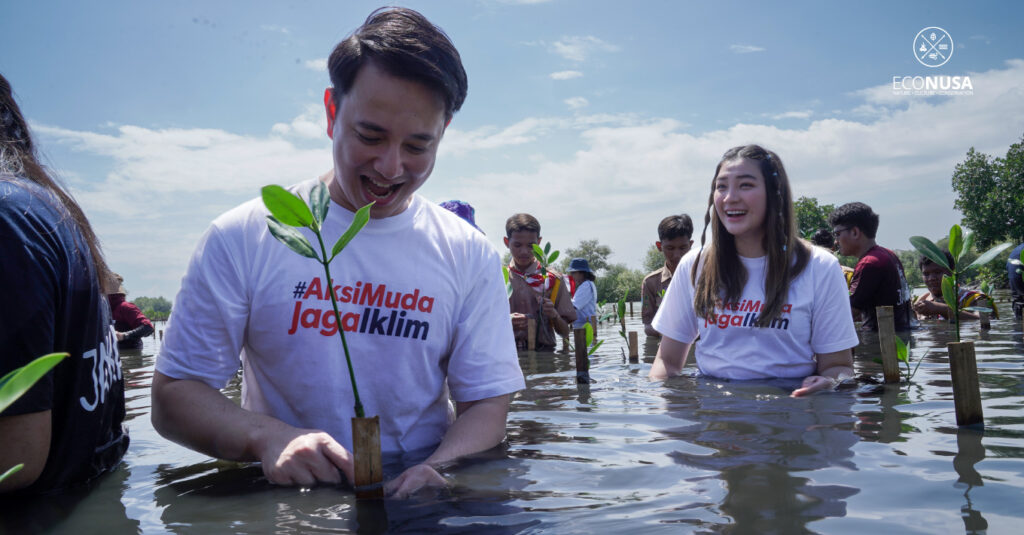
The mangrove forests along the coast of Engros village, also known as Engros, in Jayapura, Indonesia, are vital natural resources that play a central role in the lives of women in the area. Mothers, locally known as "Mama-Mama," spend their time after household chores searching for fish, shrimp, and crabs in these forests.
The mangrove forests are an invaluable treasure for the women of Engros, providing them with a source of income and helping them maintain their cultural traditions. Engros village is located in Yotefa Bay and comprises about 371 families, accessible by transport to the seashore, after which a boat is required to reach the village.
Event Details
Approximately 571 residents live in Engros village, characterized by its terrain that can be explored on foot, except for some houses that can only be reached by boat. One of the prominent figures in the village is environmental activist Petrobila Mirauji, who fully understands the importance of preserving the mangrove forests. Petrobila encourages the women in the village to plant trees and protect the environment, noting that these forests shield the village from erosion and provide them with an income source.
Petrobila, aged 45, states: "In these forests, we exchange conversations and laugh freely without fear of being overheard." This reflects the importance of these forests as a safe space for social communication among women.
Background & Context
Historically, mangrove forests have been considered part of the crucial ecosystem that protects coastlines and enhances biodiversity. However, climate change and human activities threaten these natural environments. In Indonesia, mangrove forests are among the most affected, making conservation efforts critical.
The women of Engros strive to preserve these forests not only for themselves but also for future generations. Petrobila expresses her hope that their daughters will continue the tradition of gathering shellfish and fish in the future.
Impact & Consequences
The efforts of the women in Engros serve as a model for other communities, demonstrating how women can play a pivotal role in environmental conservation. Preserving mangrove forests not only contributes to environmental protection but also enhances women's ability to achieve economic independence.
The significance of these efforts is increasing in light of global environmental challenges, where maintaining biodiversity is a fundamental part of responding to climate change. The Engros model can inspire other communities in the region and worldwide.
Regional Significance
The experience of women in Engros highlights the importance of environmental preservation worldwide, including in Arab countries. Many Arab nations face similar environmental challenges, such as coastal erosion and climate change, necessitating effective actions to conserve natural resources.
The Engros experience can serve as a model for how to empower women to play an active role in environmental protection, enhancing their ability to confront economic and social challenges.