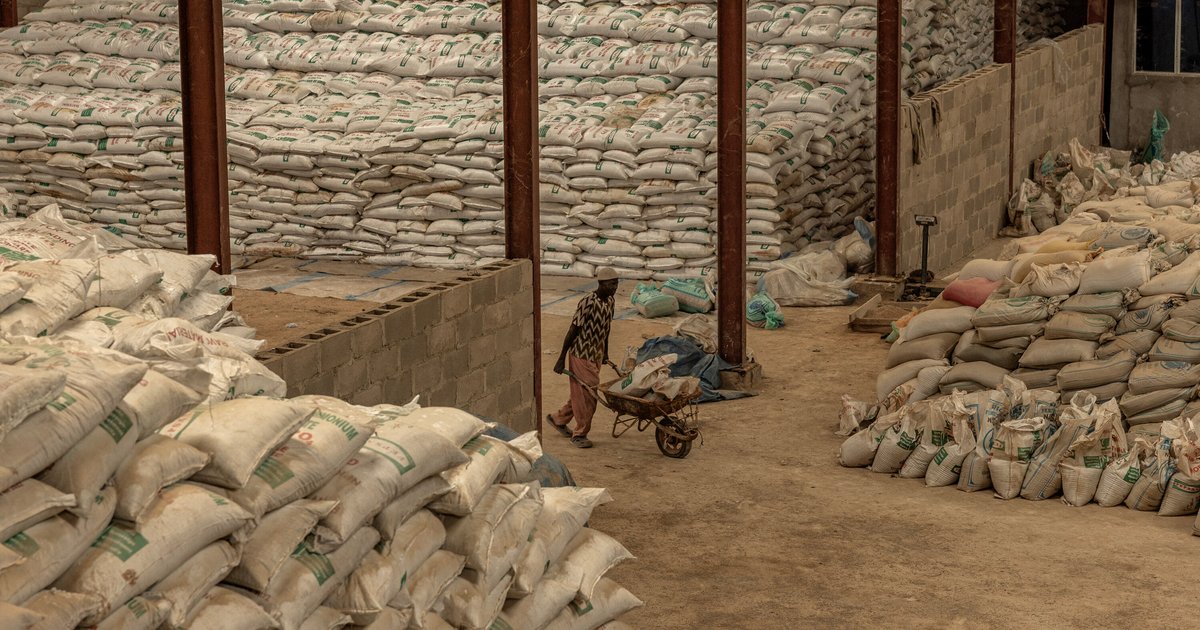
Concerns are mounting that the world is approaching a new food crisis amid the escalating war on Iran and its impacts on energy supplies and agricultural resources. Early warnings indicate that fertilizer shortages may be the hidden factor threatening global food security.
Analyses published in Foreign Policy and Bloomberg reveal the role of Gulf countries in fertilizer production, as these nations are among the leading producers of essential components such as nitrogen fertilizers, which farmers rely on to boost crop yields. Natural gas, used in the production of these fertilizers, is a critical element, meaning that any disruption in its supply directly affects agriculture.
Details of the Situation
In her article, Ertharin Cousin, the Executive Director of the Food Systems for the Future Institute, confirmed that the world has already entered the first phase of a global food crisis, even if it has not yet manifested on store shelves. She noted that food crises often begin long before prices rise, when the fundamentals of agricultural production are compromised.
Supplies of ammonia and sulfur, two essential materials for fertilizer production, are affected by countries such as Saudi Arabia and Qatar. The closure of the Strait of Hormuz due to the ongoing conflict has led to an increase in nitrogen and phosphate fertilizer prices by between 20% and 40%, adding pressure on farmers.
Background & Context
Historically, the world has faced food crises due to conflicts and wars, with the Russia-Ukraine war being a recent example. However, the current situation differs as the war is taking place in a desert region, which reduces its direct impact on agricultural production compared to previous crises.
At the same time, Javier Blas, a columnist for Bloomberg, points out that energy, electricity, and packaging costs are not experiencing sharp increases as seen in the past, which may alleviate some pressures on food supply chains. Nevertheless, future risks cannot be ignored, especially concerning fertilizers.
Impact & Consequences
Cousin emphasizes that farmers in countries like Brazil, India, and the United States have begun to adjust their agricultural plans, shifting towards growing crops that require less fertilizer, which could lead to a severe shortage of staple grains later on. This change in farmers' behavior may result in supply shortages and rising food prices.
Cousin also warns of climatic factors such as the La Niña phenomenon, which could lead to severe droughts in key agricultural areas, increasing risks to crops and enhancing the likelihood of a food crisis.
Regional Significance
For Arab countries, any food crisis could significantly impact food security, as many nations rely on food imports. Additionally, rising food prices could lead to increased economic and social pressures.
In conclusion, the warning remains: if the war continues and energy and fertilizer costs rise, these risks could escalate into a real food crisis threatening the stability of many nations.