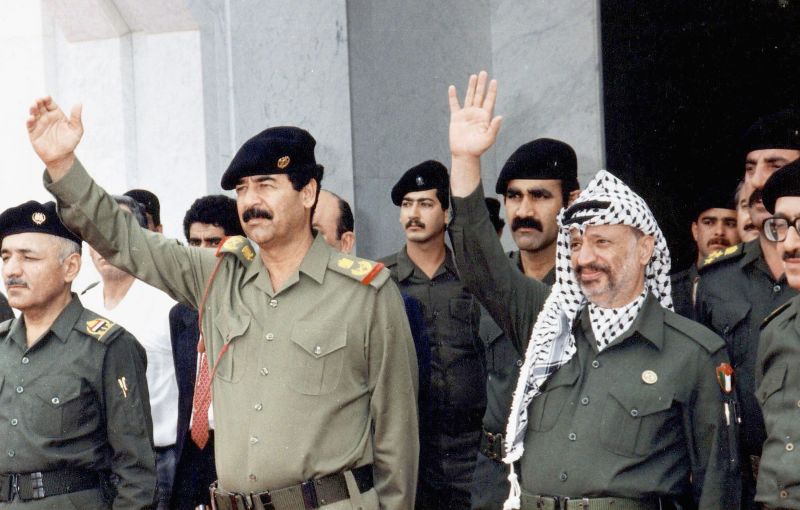
On April 1, 1989, Yasser Arafat took over the presidency of the State of Palestine, marking a historic turning point in the Palestinian cause. This event followed years of political and military struggle, reflecting the aspirations of the Palestinian people for independence and sovereignty.
Arafat, who held the position of chairman of the PLO (Palestine Liberation Organization), became a symbol of the Palestinian struggle. His presidency came after the declaration of Palestinian independence on November 15, 1988, when the State of Palestine was proclaimed in Algeria, giving an official character to Palestinian demands.
Details of the Event
Yasser Arafat assumed the presidency of Palestine at a time when the region was experiencing significant political tensions. The first Palestinian intifada had begun in December 1987, escalating the conflict between Palestinians and Israelis. Arafat, who was leading the PLO, managed to unite the Palestinian factions under one banner, which contributed to strengthening their position on the international stage.
During his presidency, Arafat worked to enhance relations with Arab and Western countries, seeking international support for the Palestinian cause. He also launched several political initiatives, including peace talks with Israel, despite the significant challenges he faced.
Background & Context
The history of the Israeli-Palestinian conflict dates back to the mid-20th century, when Palestine was partitioned in 1947. Since then, the region has witnessed numerous wars and conflicts, leading to the displacement of millions of Palestinians. In this context, the PLO emerged as a representative entity for the Palestinian people, led by Yasser Arafat since 1969.
Arafat, born in 1929 in Jerusalem, became a symbol of the Palestinian struggle. He led numerous military and political operations, making him a controversial figure in the Arab and international world. His assumption of the presidency in 1989 was a culmination of his ongoing efforts to achieve the rights of Palestinians.
Impact & Consequences
Yasser Arafat's presidency had a profound impact on the events in the region. It contributed to strengthening Palestinian national identity and made the Palestinian cause a central issue in Arab and international politics. It also helped open channels of dialogue with the international community, leading to the recognition of the State of Palestine by many countries.
However, his presidency faced significant challenges, including internal divisions among Palestinian factions and tensions with Israel. Despite this, Arafat continued to work towards achieving peace until his death in 2004.
Regional Significance
Arafat's influence on the Arab region was substantial, as he became a symbol of the struggle against occupation. His leadership inspired many liberation movements in the Arab world. His efforts also contributed to enhancing Arab solidarity with the Palestinian cause, making it a pivotal issue in Arab politics.
Today, Arafat's legacy remains present in the collective memory of the Palestinian people and Arabs in general. His cause continues to symbolize resilience and resistance, reflecting the aspirations of peoples for freedom and justice.