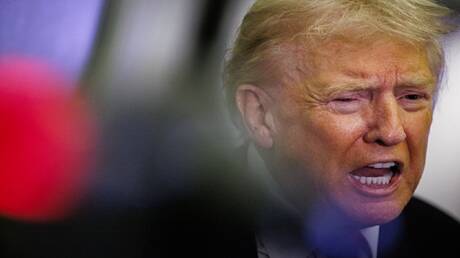
Former Iranian Foreign Minister Mohammad Javad Zarif has responded to the recent remarks made by U.S. President Donald Trump, indicating that the vulgar language employed by Trump reflects a state of despair rather than evidence of victory. These statements arise amidst escalating tensions between Iran and the United States, complicating the political landscape in the region.
Zarif, who served as Foreign Minister during the Iranian nuclear deal, emphasized that such language indicates Trump's inability to achieve his political goals. He pointed out that statements from leaders should reflect wisdom and respect, rather than descending into levels of inappropriate speech.
Details of the Incident
Earlier, Trump used vulgar language when discussing Iran, provoking widespread reactions from Iranian officials. Zarif, regarded as one of Iran's prominent diplomats, did not hesitate to respond to these remarks, asserting that such language does not signify strength or victory but rather indicates a state of frustration.
These comments come in the context of heightened tensions between Iran and the United States, especially following Trump's withdrawal from the nuclear agreement in 2018. This withdrawal led to the reinstatement of economic sanctions on Iran, significantly impacting the Iranian economy and exacerbating internal crises.
Background & Context
Since Trump took office, Iranian-American relations have notably deteriorated. The nuclear agreement reached in 2015 under President Obama represented a turning point in relations between the two countries, where sanctions were eased in exchange for Iran's commitment to refrain from developing nuclear weapons. However, Trump's withdrawal from the agreement reset relations to square one.
Historically, relations between Iran and the United States have been tense since the Iranian Revolution in 1979, which resulted in the severance of diplomatic ties. Since then, the relationship has witnessed numerous crises, including military and economic conflicts.
Impact & Consequences
Zarif's statements underscore the importance of diplomatic dialogue in resolving conflicts, as the use of vulgar language may exacerbate situations rather than improve them. The continuation of this type of rhetoric could negatively affect the prospects for future agreements between Iran and the United States.
Moreover, hostile statements could escalate tensions in the region, increasing the risk of military conflicts. The current situation requires leaders in both countries to exercise wisdom and moderation to avoid any unwanted escalation.
Regional Significance
The Iranian-American relationship is pivotal in determining stability in the Middle East. Any escalation in these relations could directly impact neighboring Arab countries, many of which have intertwined interests with both Iran and the United States.
The ongoing tensions could lead to increased divisions in the region, complicating peace and stability efforts. It is crucial for Arab nations to recognize the importance of dialogue and cooperation in facing common challenges, rather than being drawn into hostile rhetoric.
In conclusion, Zarif's remarks serve as a reminder that diplomatic discourse must be characterized by respect and moderation. Vulgar language does not reflect strength; instead, it expresses a state of despair, which is something leaders around the world must recognize.