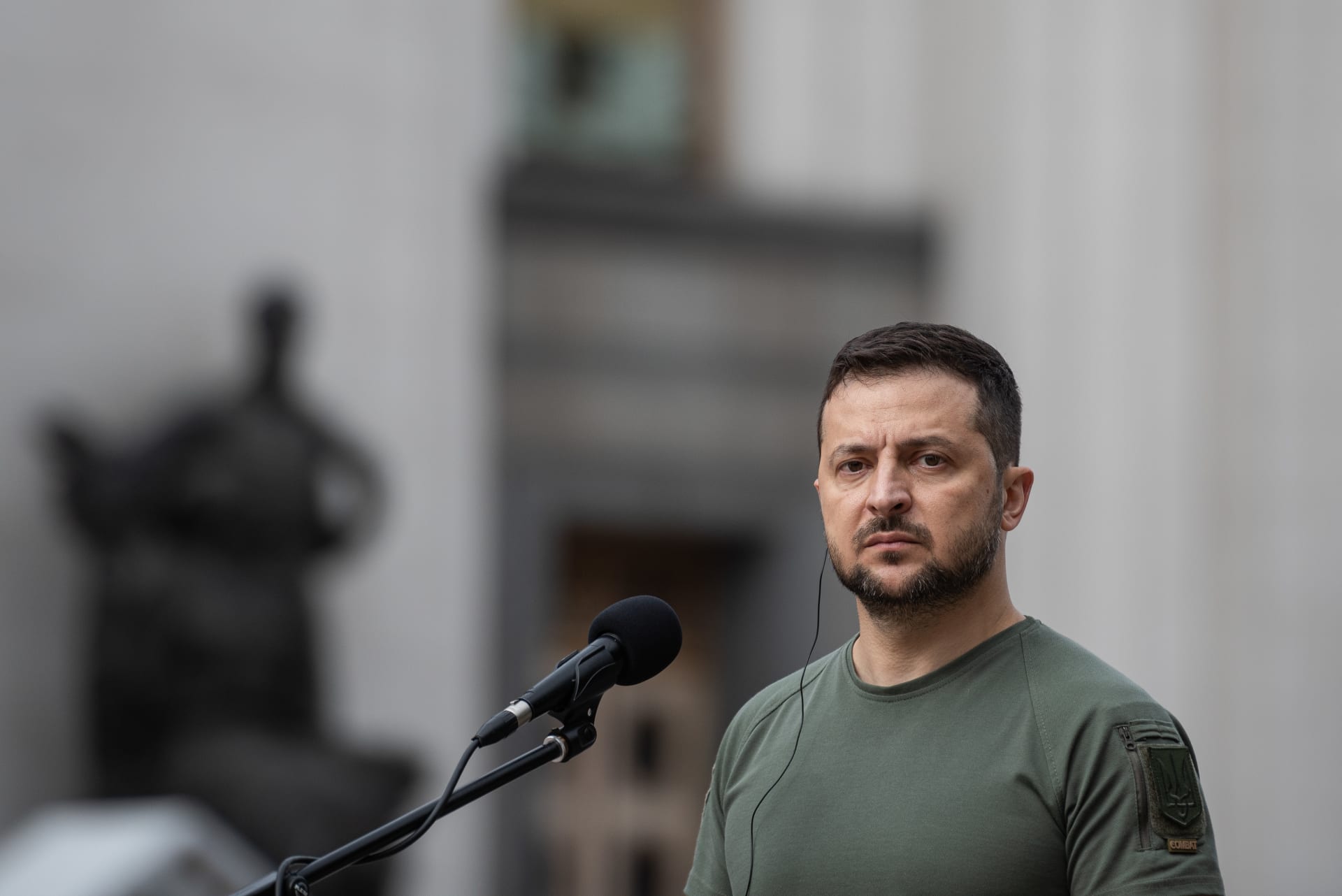
In an exclusive interview with Le Monde, Ukrainian President Volodymyr Zelensky emphasized the importance of ongoing American and European support for Ukraine, stressing the need to seek an exit from the ongoing conflict. Zelensky, who is leading his country in the face of the Russian invasion, pointed out the significant challenges Ukraine is facing and the necessity for international efforts to end the war.
During his discussion, Zelensky clarified that military and economic support from the United States and its allies is vital for the continuation of Ukrainian resistance. He also called for enhanced cooperation among Western nations to confront Russian threats, noting that any reduction in support could negatively impact the course of the war.
Details of the Event
Zelensky, in his conversation with Le Monde, did not hesitate to express his concern about the potential decline in international support, stating: "If we do not receive adequate support, it will lead to catastrophic results." He also indicated that Ukraine needs more advanced weaponry to counter Russian forces, which are employing sophisticated tactics on the battlefield.
The Ukrainian president affirmed that his country is striving hard to achieve peace, but stressed that this can only be realized through continuous pressure on Russia. He clarified that any future negotiations must take into account Ukraine's sovereignty and its right to defend its territory.
Background & Context
Since the onset of the conflict in 2014, Ukraine has witnessed escalating tensions with Russia, culminating in the full-scale invasion that began in February 2022. This conflict has resulted in the deaths of thousands of civilians and military personnel and has forced millions to flee their homes. The international community, particularly Western nations, has responded to this invasion by imposing sanctions on Russia and providing military and humanitarian support to Ukraine.
Historically, Ukraine has been seen as a crossroads between East and West, making it a focal point for major powers. The current conflict reflects a broader struggle between Russia and Western nations, as each side seeks to achieve its strategic interests.
Impact & Consequences
Zelensky's recent statements reflect a growing concern about the implications of the conflict for European security. Ongoing tensions could lead to greater military escalation, threatening the stability of the entire region. Additionally, any decline in Western support may embolden Russia to take more aggressive actions.
Furthermore, the continuation of the conflict directly impacts the global economy, as energy and food prices have surged due to the disruptions caused by the war. This situation adversely affects developing countries, including Arab nations, which rely on importing these resources.
Regional Significance
Considering the direct impact of the Ukrainian conflict on the Arab region, it is evident that Arab countries are facing increasing economic challenges due to rising prices of essential commodities. The conflict may also affect relations between Arab nations and Russia, as some countries seek to maintain a balance in their relationships with major powers.
In conclusion, the conflict in Ukraine remains a pivotal issue affecting global security and stability, and the international community needs to intensify its efforts to find a peaceful solution that guarantees the rights of all parties involved.