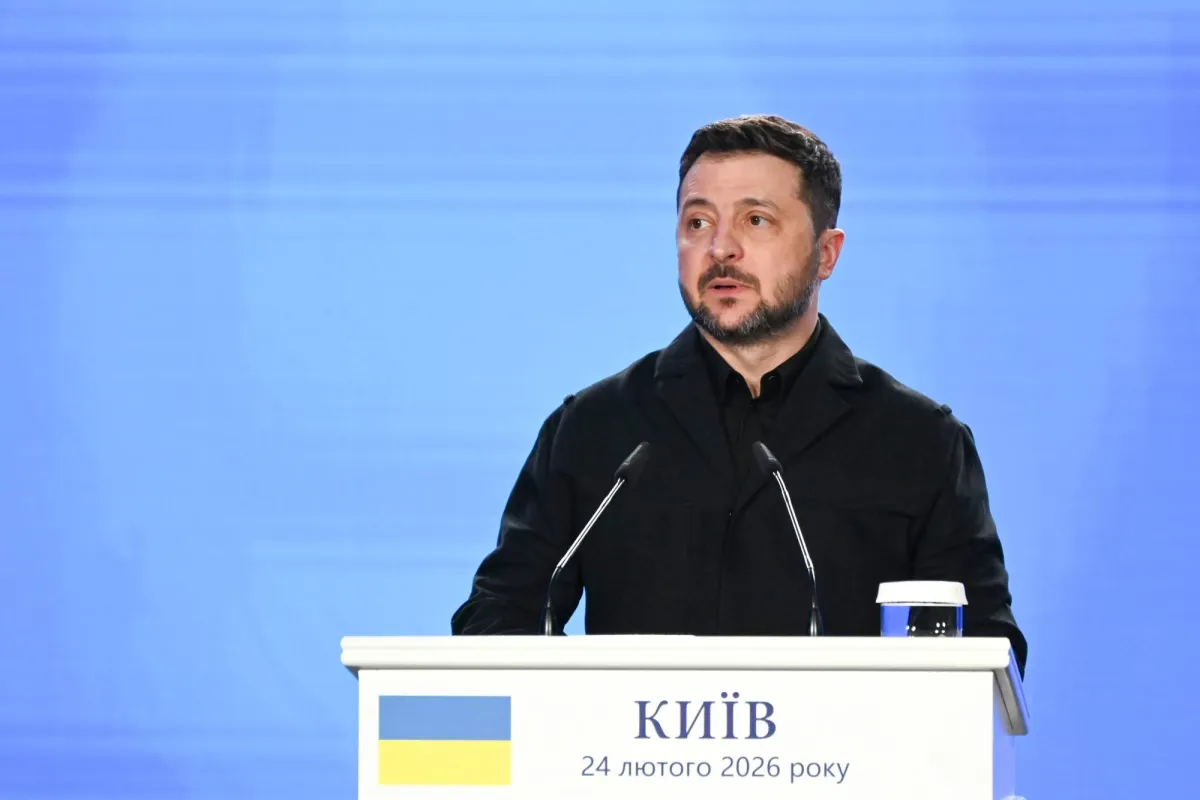
Ukrainian President Volodymyr Zelensky announced today, Monday, his country's commitment to a ceasefire proposal presented to Russia, stressing that this is conditional on Moscow stopping all attacks on Ukrainian energy infrastructure.
In his evening video address, Zelensky clarified that the United States had conveyed this proposal to the Russian side. He confirmed that discussions are ongoing with American negotiators regarding security guarantees, which he considers key to achieving lasting peace in the region.
Details of the Proposal
Zelensky stated, "If Russia is ready to stop attacks on our energy infrastructure, we will be prepared to respond in kind... This proposal has been conveyed to the Russian side through the Americans." Zelensky made this commitment on the occasion of Easter, which falls on the upcoming Sunday for Orthodox Christians, the predominant denomination in both Russia and Ukraine.
However, the Russian response to this proposal has been lukewarm, with Moscow expressing a preference for a comprehensive peace agreement instead. This coincided with new attacks on Ukraine, including an assault on the port of Odesa, resulting in the deaths of three people, further complicating the situation.
Background & Context
These developments come at a sensitive time as Ukraine seeks to strengthen its position amid the ongoing conflict with Russia. Recent events have shown that Russia is unwilling to accept ceasefire proposals, with Zelensky noting that Moscow does not take sacred times like Easter into account.
Historically, relations between Russia and Ukraine have seen increasing tensions since 2014, when Russia annexed the Crimea peninsula. Since then, military conflicts have escalated, exacerbating humanitarian and economic conditions in the region.
Impact & Consequences
If Russia continues to ignore ceasefire proposals, this could worsen conditions in Ukraine and increase civilian suffering. The ongoing attacks may also complicate international efforts to find a peaceful resolution to the conflict.
On the other hand, these developments could affect international relations, as pressure mounts on major powers to intervene and provide support to Ukraine. The American stance is crucial in this context, as Washington plays a key role in supporting Kyiv.
Regional Significance
The Arab region is indirectly affected by the repercussions of the Ukrainian-Russian conflict, as crises in energy supplies and global prices can impact Arab economies. Additionally, the continuation of the conflict may lead to increased geopolitical tensions in the region.
In conclusion, hope remains pinned on peace efforts, but current challenges indicate that the road to achieving stability is still long.