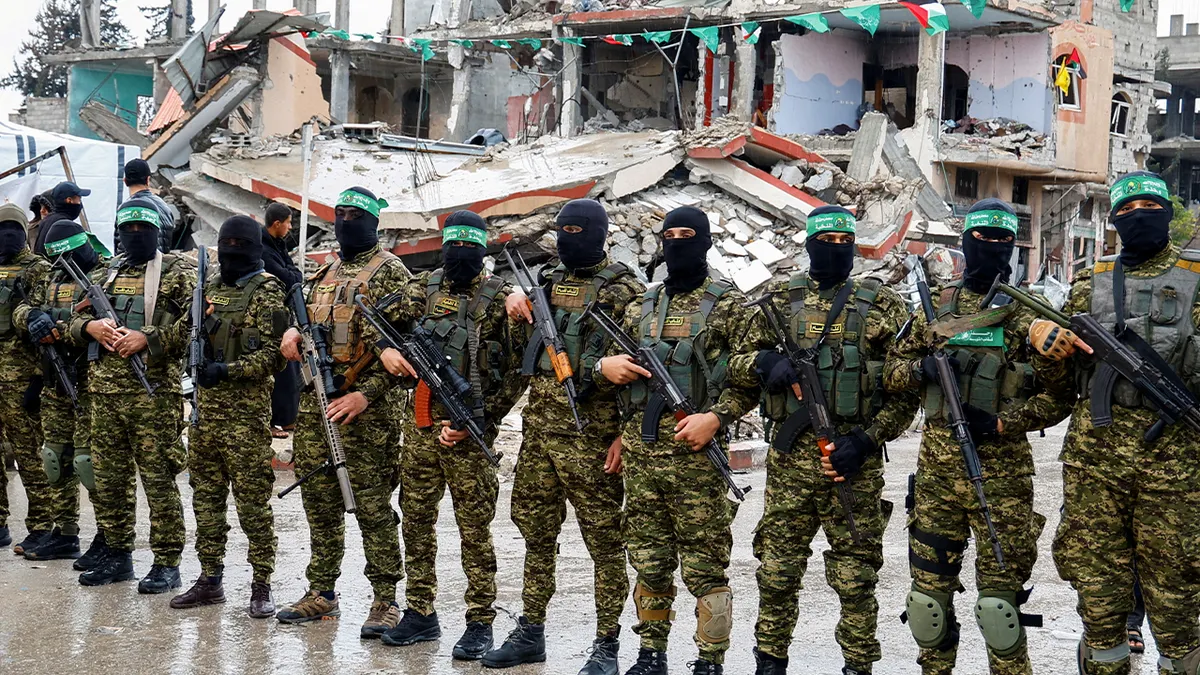
Leaks obtained by Al Jazeera Net reveal the upcoming phase in Gaza, following months of the ceasefire agreement reached on October 8. The proposal presented by the Peace Council to Hamas and other Palestinian factions in Cairo includes various benefits aimed at improving conditions in the sector.
The proposal discusses the freedom of goods flow and lifting restrictions imposed on dual-use goods, in addition to providing temporary housing units and granting amnesty to anyone who surrenders their weapons. It also includes securing a safe passage for those wishing to leave, alongside a massive reconstruction program.
Details of the Proposal
Among the key points in the proposal is a complete withdrawal of the Israeli army to the perimeter of the sector, pending adequate security measures in Gaza against any potential terrorist threats. The withdrawal will be gradual and linked to the disarmament verification process, according to the 20-point plan.
Moreover, the proposal emphasizes the freedom of goods flow, stating that there will be no quantitative restrictions on trucks loaded with non-dual-use goods. Restrictions on dual-use materials will be eased across the sector after obtaining a certificate of complete disarmament.
Background & Context
These developments come as part of international efforts to restore stability to Gaza, which has suffered from recurring conflicts and humanitarian crises. Previous agreements have not achieved the desired stability, making these leaks particularly significant.
The involved parties aim to achieve a comprehensive vision for peace, which includes establishing a transitional government under the supervision of the National Committee for Gaza Management, ensuring the principle of one authority, one law, and one weapon. These principles aim to end the security and political chaos in the sector.
Impact & Consequences
If these plans are implemented, they could lead to improvements in the economic and social conditions in Gaza, with expectations of introducing a large number of ready housing units and reconstruction projects worth $70 billion. These projects will contribute to job creation and improving the living standards of the population.
However, the biggest challenge remains the effective implementation of the disarmament process and ensuring all parties adhere to the signed agreements. The success of these plans depends on cooperation between Palestinian factions and the international sponsors of the process.
Regional Significance
These developments are of great importance to the Arab region, reflecting renewed efforts to achieve peace and stability in Palestine. The success of these initiatives could open new avenues for cooperation among Arab countries in addressing regional issues.
In conclusion, hope remains pinned on the implementation of these plans, as achieving peace in Gaza could be a starting point for greater stability in the region.