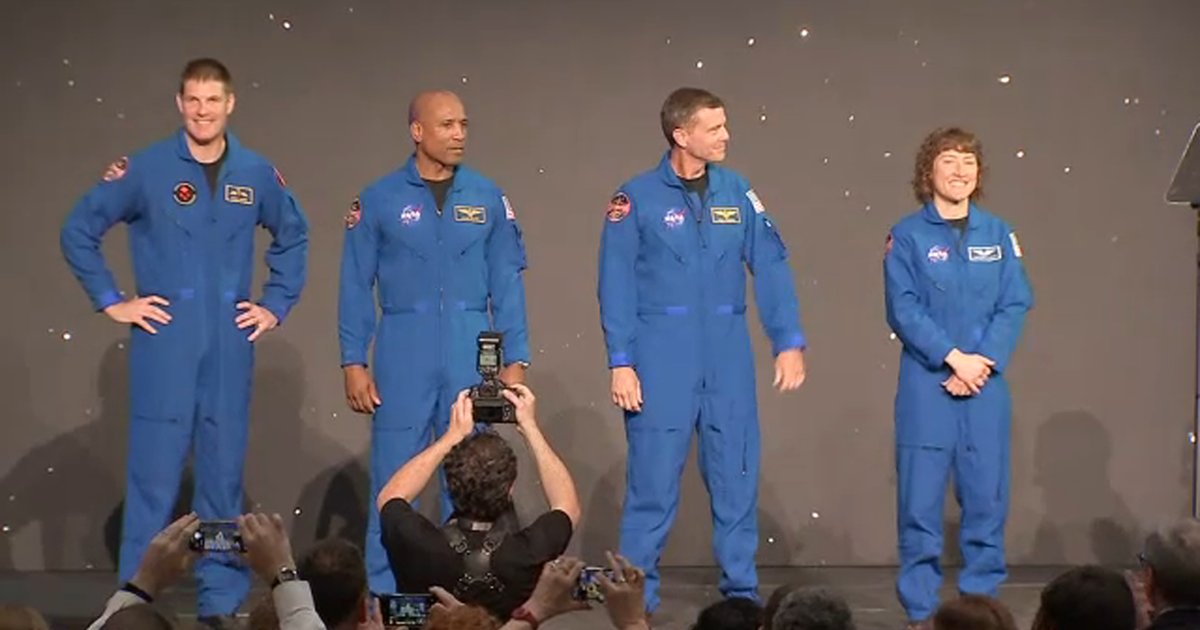
NASA's Artemis II astronauts have reached a historic milestone, traveling approximately 252,760 miles from Earth, surpassing the previous record set by astronaut Jim Lovell and his crew during the Apollo 13 mission 56 years ago.
The journey began from Florida last week, and the astronauts awoke on Monday, April 6, to a recorded message from Lovell, who passed away last year at the age of 97. He expressed his joy over this historic achievement, encouraging the astronauts to enjoy the breathtaking views during their flight.
Details of the Event
The Artemis II mission, lasting approximately 10 days, serves as a real test for crewed lunar flights. After reaching the farthest point, the astronauts will fly around the far side of the moon, witnessing a unique view from about 4,000 miles above its dark surface, with Earth appearing as a small basketball in the background.
The lunar flyby will last for six hours, during which the astronauts will use professional cameras to capture detailed images of the moon through the windows of their Orion spacecraft. These images will hold significant scientific value, showcasing sunlight filtering around the moon's edges.
Background & Context
The Artemis II mission is part of a larger program by NASA aimed at returning astronauts to the moon by 2028, ahead of China. This program also seeks to establish a long-term American presence on the moon, facilitating the construction of a lunar base that will serve as a launch point for future missions to Mars.
Historically, lunar spaceflights have been pivotal in space exploration, beginning with the Apollo program in the 1960s. Since then, technology has advanced significantly, allowing scientists and astronauts to explore space more safely and effectively.
Impact & Consequences
This achievement represents a crucial step in space exploration, opening new avenues for scientific research and technology. It also reflects international competition in the space domain, as major countries strive to achieve milestones in this field.
Through the Artemis program, NASA aims to enhance international cooperation in space exploration, potentially leading to new partnerships with other countries in the future. This collaboration may contribute to achieving shared goals in scientific research and technology.
Regional Significance
Although this event may seem distant from the Arab region, it has indirect implications. Achievements like this can encourage Arab countries to invest in space and technology programs, potentially leading to the development of local capabilities in this field.
Moreover, international cooperation in space exploration could open new opportunities for Arab nations to participate in scientific research and technology, enhancing their standing on the global stage.