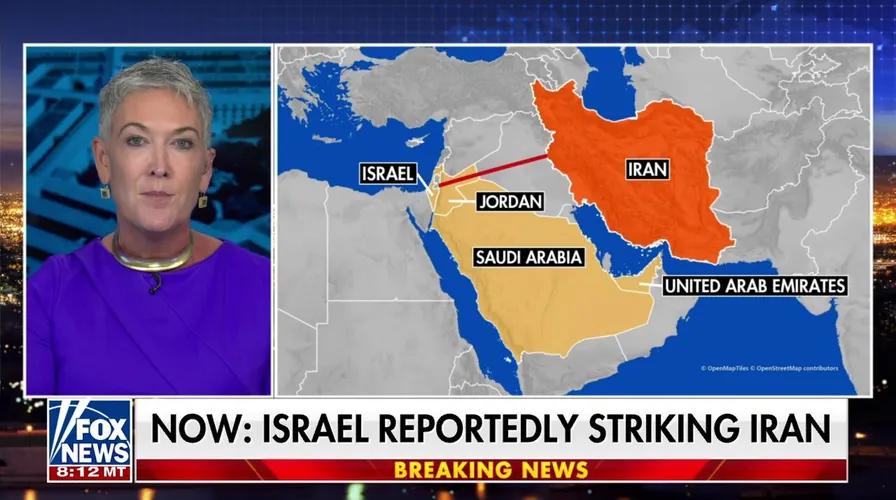
U.S. Defense Secretary Pete Hegseth announced that the United States will conduct the largest number of military strikes against Iran today. These statements come at a sensitive time when relations between Washington and Tehran are increasingly strained, raising international concerns about potential escalation in the region.
This move is part of the U.S. policy towards Iran, which has included economic and military sanctions since the withdrawal from the nuclear agreement in 2018. Hegseth indicated that these strikes aim to deter Iranian activities that destabilize the Middle East.
Details of the Event
In remarks made during a press conference, Hegseth confirmed that military operations will target strategic sites in Iran, focusing on those believed to support terrorist activities in the region. He also added that the United States will work to ensure the safety of its forces and allies during the execution of these operations.
These strikes come at a time when tensions between Iran and the United States are escalating, with recent weeks witnessing an increase in mutual attacks between the two sides. Iran has expressed its readiness to respond to any aggression, heightening the risks of a full-scale military conflict.
Background & Context
Historically, U.S.-Iranian relations have been marked by ongoing tensions since the 1979 Islamic Revolution. These tensions have intensified following the U.S. withdrawal from the nuclear agreement, with Washington considering Iran's efforts to develop its nuclear program as a threat to regional and international security.
In recent years, Iran has bolstered its influence in the region by supporting armed groups in Iraq, Syria, and Lebanon, prompting the United States to take military action against it. The recent escalation also occurs in the context of an upcoming U.S. presidential election, which may impact the country's foreign policy towards Iran.
Impact & Consequences
The potential military strikes could lead to a significant escalation in the conflict between the United States and Iran, threatening the stability of the entire region. Additionally, Iranian reactions to these strikes may result in further military escalation, increasing the likelihood of an all-out war.
Moreover, any military escalation could negatively affect oil prices and global financial markets, as Iran is one of the largest oil producers in the world. This situation could also impact relations between the United States and its allies in the region, who may find themselves in a difficult position between supporting Washington or maintaining their ties with Iran.
Regional Significance
Neighboring Arab countries such as Iraq and Saudi Arabia find themselves in a precarious position due to the rising tensions. Military strikes could exacerbate sectarian tensions in the region, as Iran seeks to enhance its influence in predominantly Shia countries.
Furthermore, any military escalation could lead to an influx of refugees from conflict-affected areas, increasing the burden on neighboring Arab countries. Under these circumstances, Arab nations must take diplomatic steps to avoid slipping into a larger conflict.
In conclusion, the situation in the region remains tense, and the world is watching closely to see how events will unfold following the United States' announcement of its intention to launch the largest number of military strikes against Iran. Military escalation could have dire consequences for regional and international security.