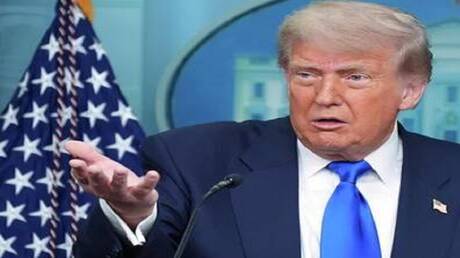
U.S. President Donald Trump has announced that the United States will take steps to impose fees on ships transiting through the Strait of Hormuz, indicating that his country will not allow Iran to collect these fees. These remarks come in the context of escalating tensions between Washington and Tehran, as the Strait of Hormuz is a vital transit point for oil and natural gas.
This move by Trump represents a shift in U.S. policy in the region, aimed at enhancing American control over critical maritime routes. Trump noted that this step is part of protecting U.S. interests and ensuring the safety of navigation in international waters.
Details of the Announcement
The Strait of Hormuz is one of the most important maritime corridors in the world, with approximately 20% of the world's total oil passing through it. In recent years, the strait has seen increasing tensions due to regional conflicts and threats from Iran. In this context, Trump's statements underscore the significance of this strait for the United States and its allies.
Speaking at a press conference, Trump confirmed that the United States would bolster its military presence in the region to ensure safe navigation. He also mentioned that any attempt by Iran to impose fees on passing ships would be met with a strong response from the United States.
Background & Context
Historically, the Strait of Hormuz has been the scene of numerous military and political conflicts. In 2019, the strait witnessed a series of attacks on oil tankers, leading to heightened tensions between Iran and the United States. These events prompted Washington to increase its military presence in the region, further escalating tensions.
Iran considers the Strait of Hormuz part of its sovereignty and has repeatedly threatened to close it if its interests are jeopardized. This threat poses a significant challenge to the United States and its allies, who heavily rely on this corridor to secure energy supplies.
Impact & Consequences
Imposing fees on ships passing through the Strait of Hormuz could lead to increased tensions between the United States and Iran, potentially negatively impacting global oil prices. Any escalation in the region could result in rising oil prices, affecting the global economy and increasing pressure on oil-importing countries.
This step may also provoke reactions from Iran, which might perceive it as a threat to its sovereignty. Iran could resort to retaliatory actions, potentially escalating the conflict in the region.
Regional Significance
The Arab countries neighboring the Strait of Hormuz, such as the United Arab Emirates and Oman, find themselves in a sensitive position. Any escalation in tensions could affect the security and stability of these countries, which heavily depend on maritime trade.
Moreover, any increase in oil prices resulting from tensions could impact Arab economies, which rely significantly on oil revenues. Therefore, the situation in the Strait of Hormuz represents a considerable challenge for the entire region.
In conclusion, developments in the Strait of Hormuz remain under close observation, as any changes in U.S. policy or Iranian reactions could lead to significant shifts in regional dynamics.