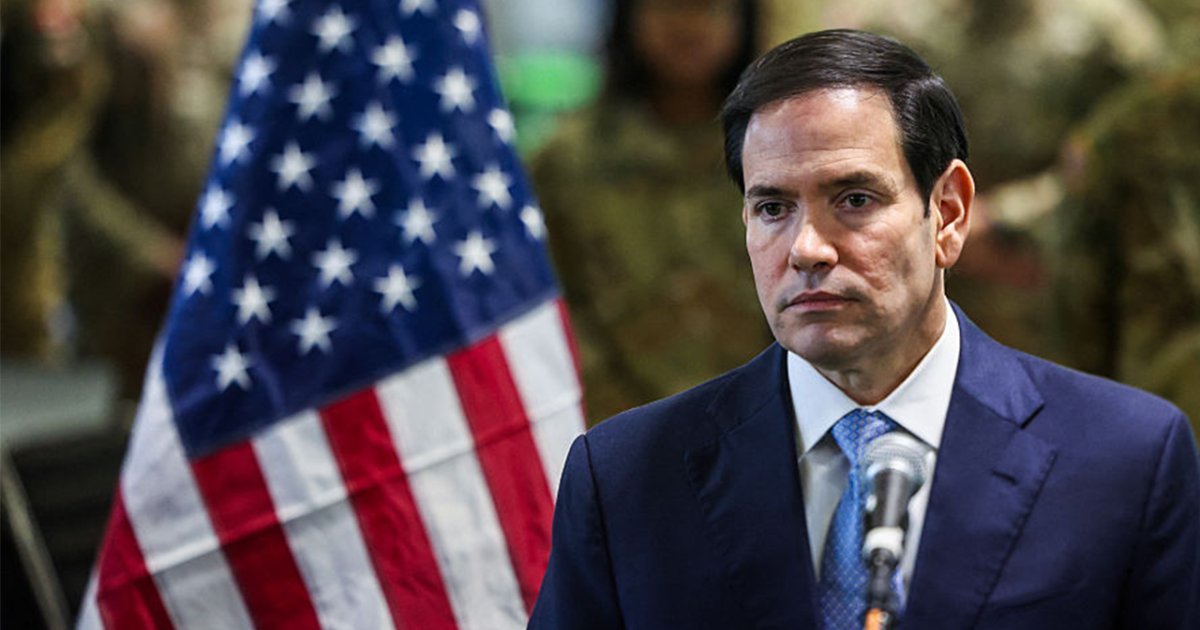
U.S. Secretary of State Marco Rubio is notably absent from negotiations concerning the Iranian file, prompting inquiries into the role of the State Department during President Donald Trump's administration. While Vice President J.D. Vance was engaged in 21 hours of negotiations in Islamabad, Rubio was attending a mixed martial arts event in Miami.
This absence raises questions about whether the State Department has been sidelined under the Trump administration or if Rubio is deliberately avoiding this file for political reasons. Reports suggest that Trump relies on close associates like Jared Kushner and Steve Witkoff to manage diplomatic matters, reflecting an unconventional approach to U.S. foreign policy.
Details of the Event
Marco Rubio, who holds the title of Secretary of State and National Security Advisor, has only traveled for a total of 71 days since taking office, the lowest rate for any U.S. Secretary of State this century. Rubio's team defends this absence, arguing that his presence in the White House ensures better coordination between the National Security Council and the State Department.
Rubio believes that world leaders come to him in Washington, allowing him to hold meetings that combine both of his roles. However, this situation has led to the perception that the Secretary of State position is vacant, negatively impacting the United States' ability to conduct effective diplomacy.
Background & Context
Historically, the U.S. State Department has played a pivotal role in managing international relations, but the Trump administration has adopted a different approach that relies on privacy in foreign policy. This shift reflects a trend towards diminishing the role of traditional institutions in foreign policy in favor of personal envoys.
Analysis from some experts indicates that Rubio may be distancing himself from the Iranian file due to political ambitions. He is viewed as a potential candidate for the 2028 presidential elections, which may lead him to avoid complex issues that could adversely affect his prospects.
Impact & Consequences
Rubio's absence from the negotiation table with Iran could have profound implications for U.S. foreign policy. As crises in the Middle East escalate, pressures mount on the U.S. administration to intervene. Nevertheless, Rubio seems to prefer focusing on safer issues such as Latin America.
This approach could exacerbate crises in the Middle East, as the United States leaves a vacuum that other powers may exploit. Additionally, a successful negotiation with Iran could be seen as a victory for Vance, complicating the domestic political landscape further.
Regional Significance
The lack of effective U.S. diplomacy regarding the Iranian file may impact the stability of the Arab region. Iran plays a central role in many conflicts in the Middle East, and any decline in diplomatic efforts could lead to an escalation of tensions.
Under these circumstances, Arab countries appear to need to reassess their strategies towards Iran, especially in light of the absence of U.S. leadership. This situation may pave the way for new alliances or unexpected escalations in the region.
In conclusion, Rubio's absence from the Iranian negotiations is not merely coincidental but rather a result of political and strategic trends that reflect changes in U.S. foreign policy. This situation calls for Arab nations to think deeply about how to navigate these shifts.