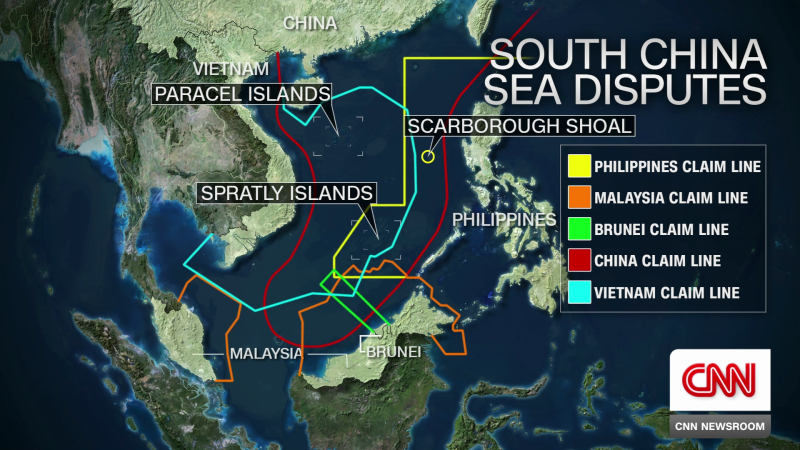
Tensions are escalating between China and the Philippines following accusations from Beijing that Manila has landed personnel on disputed reefs. A report from Chinese state media indicated that five individuals from the Philippines landed on Sandy Reef last Sunday. In response, the Philippines declared its intention to send naval vessels to expel Chinese boats conducting illegal research in its waters.
This incident comes amid increasing tensions between the two nations, with the Philippines being a U.S. ally. Reports have shown that Chinese naval forces have reached Sandy Reef flying the Chinese flag, prompting the Philippines to take swift action to protect its sovereignty.
Details of the Incident
While China has asserted that the landing of Filipino personnel on the reefs is an illegal act, it has not disclosed any additional measures taken in this regard. On the other hand, a spokesperson for the Philippine Coast Guard reported that the country has detected four Chinese vessels conducting illegal research in its waters, threatening to use aircraft and ships to expel them.
The tensions are evident in the South China Sea, where Beijing claims sovereignty over most of the water body, raising concerns among neighboring countries. The Philippines has shown resilience in dealing with these tensions, striving to maintain its relations with the United States under these circumstances.
Background & Context
Historically, the South China Sea has witnessed multiple regional disputes, with the interests of several countries in the area overlapping, including the Philippines, Vietnam, and Malaysia. These waters are rich in natural resources, intensifying competition among them. The Philippines had previously filed cases against China in the International Arbitration Court, which ruled in favor of Manila in 2016, further complicating relations between the two countries.
In recent years, China has increased its military activity in the region, raising concerns for the Philippines and other nations. However, Manila is attempting to maintain a delicate balance between strengthening its ties with the United States and managing its relationship with China.
Impact & Consequences
These events serve as a stark reminder of the complexity of regional disputes in the South China Sea, which could lead to potential military escalation. Should tensions persist, the United States may intervene, potentially resulting in a larger escalation in the region.
The economic relations between China and the Philippines are also affected, as both countries rely on mutual trade. Any escalation in the dispute could have negative repercussions on investments and tourism, adversely impacting the Philippine economy.
Regional Significance
The interests of Arab countries in the South China Sea are indirectly related, as this region is vital for global trade. Any escalation in the dispute could affect shipping routes and trade, reflecting on commodity prices in Arab markets.
Ultimately, the situation in the South China Sea remains under close observation, with concerned nations needing to take prudent steps to avoid escalating the conflict. Maintaining peace and stability in this region is essential for all countries, including Arab nations.