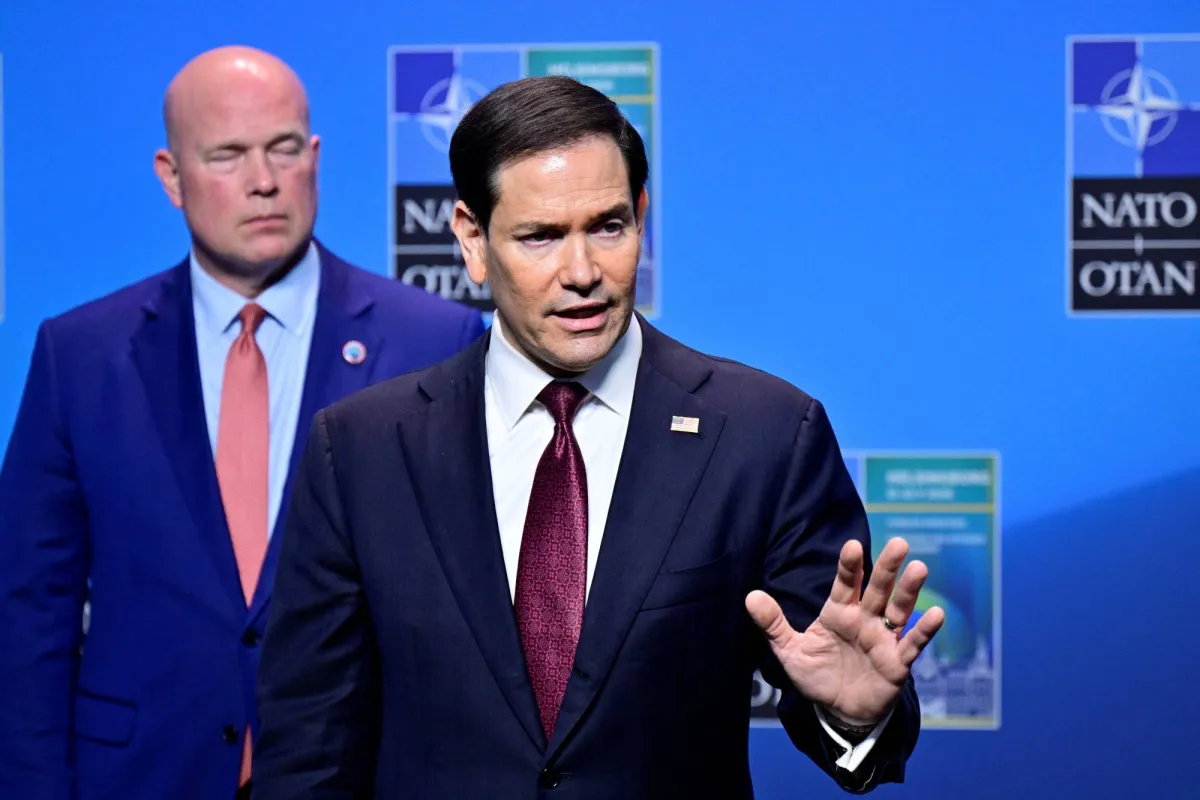
US Secretary of State Marco Rubio reported on Friday that there is "slight progress" in ongoing talks with Iran, facilitated by Pakistani mediation. Despite this progress, Rubio expressed uncertainty about the potential for a final agreement, indicating the possibility of renewed conflict between the United States and Iran.
Rubio's statements came at the outset of NATO foreign ministers' meetings in Helsingborg, Sweden, just days after President Donald Trump announced the postponement of a military strike against Iran at the request of Saudi Arabia, Qatar, and the UAE, citing ongoing "serious negotiations" through Pakistan.
Details of the Event
Rubio clarified that Trump's decision to give negotiations a chance created tension with Israeli Prime Minister Benjamin Netanyahu, as Trump had set deadlines for Tehran but later backtracked. Rubio discussed with NATO allies the role they could play in ensuring security in the Strait of Hormuz after the war, emphasizing the need for an "alternative plan" should negotiations fail.
He also noted that Iran would not "voluntarily reopen" the strait, revealing that he had informed European nations of the necessity to devise a backup plan to assist in forcibly reopening the strait if the war continued. He confirmed that the United States is imposing a blockade on Iranian ports, with 94 commercial vessels rerouted and four other ships disrupted since mid-April.
Background & Context
Talks between the United States and Iran continue amid escalating tensions in the Strait of Hormuz, a vital artery for global energy trade. Its closure has led to a sharp rise in oil prices, increasing the urgency for an agreement to end the ongoing three-month conflict.
Discussions regarding a US-Bahraini decision on the strait have been ongoing for over two weeks, with voting on the matter postponed multiple times due to opposition from China and Russia. France is also seeking to present a resolution in the UN Security Council regarding the formation of an international mission to restore navigation in the strait.
Impact & Consequences
American and Iranian perspectives diverge on several issues, notably the nuclear file and sanctions imposed on Tehran. While the United States aims to secure Iran's stockpile of highly enriched uranium, Tehran insists that this stockpile is for peaceful purposes.
As negotiations continue, the risk of renewed conflict remains, with Israeli intelligence warning of the potential for Iran to launch surprise attacks against Gulf states and Israel. Conversely, Iranian officials have affirmed their readiness to respond forcefully if their country is attacked.
Regional Significance
These developments significantly impact the Arab region, with growing concerns over escalating military tensions. The continuation or resurgence of war could exacerbate economic conditions in regional countries and raise oil prices, affecting economic stability.
Under these circumstances, hope rests on mediation efforts, particularly by Pakistan, which plays a pivotal role in bridging the views between Washington and Tehran. The success of these efforts could contribute to achieving peace and stability in the region.