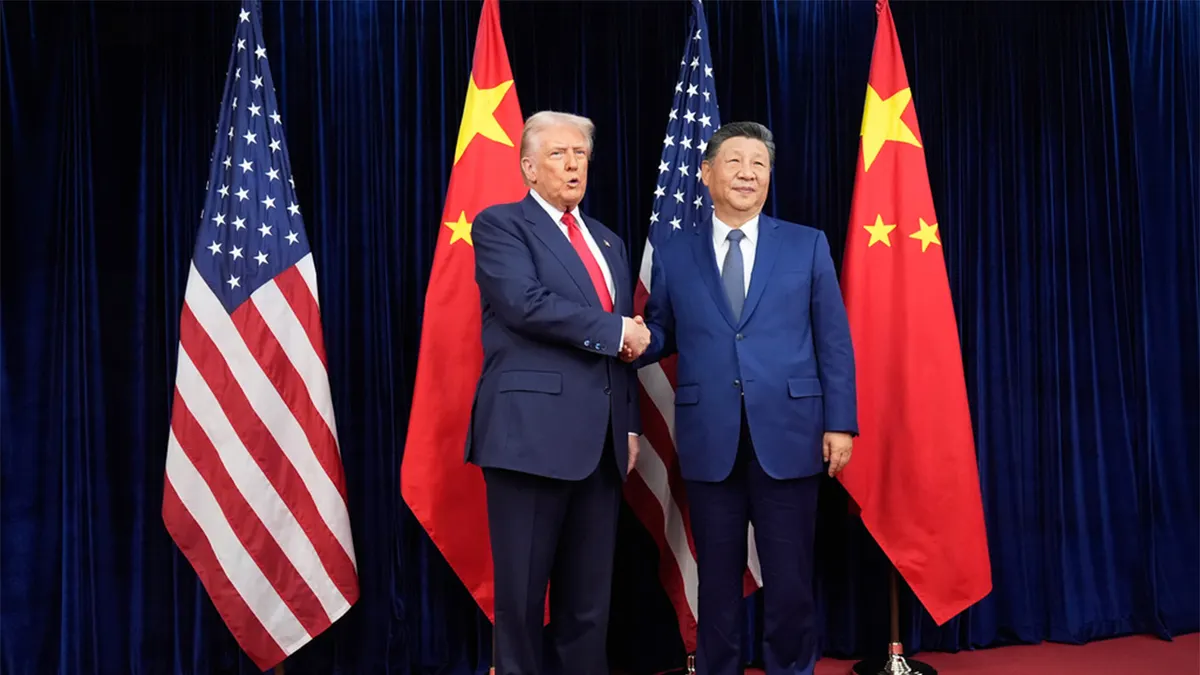
The upcoming meeting between former U.S. President Donald Trump and Chinese President Xi Jinping faces increasing challenges, particularly concerning Iran, Taiwan, and artificial intelligence. These issues could significantly impact the relationship between the two superpowers.
The United States is striving to strengthen its position against China, especially amid rising tensions in the South China Sea, where Taiwan is a focal point in the conflict between the two nations. In response, China continues to bolster its military presence in the region, exacerbating tensions.
Details of the Event
The anticipated meeting comes at a sensitive time, as tensions between the U.S. and China escalate due to several issues, including U.S. support for Taiwan, which China views as part of its territory. Additionally, Iran plays a role in this equation, as the U.S. seeks to pressure Tehran regarding its nuclear program.
Simultaneously, artificial intelligence represents another focal point for discussion, with both the U.S. and China aiming to dominate this advanced technology. The talks are expected to address how to regulate the use of artificial intelligence and its implications for national security.
Background & Context
Historically, U.S.-China relations have been fraught with tensions, particularly following China's rising influence in recent years. Taiwan remains one of the most sensitive issues, as China seeks to regain control over it, while the U.S. supports its independence.
Regarding Iran, relations with the U.S. have been strained for decades, especially after the U.S. withdrawal from the nuclear agreement in 2018. Iran is looking to enhance its nuclear capabilities, which raises American concerns.
Impact & Consequences
If Trump and Xi manage to overcome these challenges, it could lead to improved relations between the two countries; however, if the meeting fails, tensions may escalate further. This meeting presents an opportunity for both sides to reassess their strategies.
The impact of these issues extends globally, as any escalation in tensions between the two superpowers could affect the world economy, particularly in trade and technology sectors.
Regional Significance
The Arab region is part of this equation, with Iran playing a key role in many regional conflicts. Any escalation in tensions between the U.S. and Iran could impact the stability of the region.
Moreover, relations between China and Arab countries are rapidly evolving, as China seeks to strengthen its economic partnerships in the region. Therefore, any changes in U.S.-China relations could affect these partnerships.