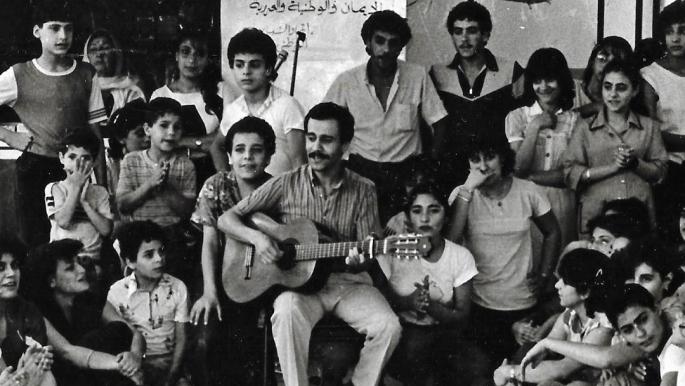
Ahmad Qabour, the renowned Palestinian artist, represents a distinctive voice that intertwines love, childhood, and politics in his musical works. Through his songs, Qabour reflects the experiences of the Palestinian people in exile, where feelings of loss and nostalgia merge with a tone of social and political critique. His works embody the spirit of resistance, making him a symbol of hope and defiance in the face of adversity.
Qabour's songs are characterized by depth and sincerity, drawing inspiration from his childhood memories and life experiences under occupation. His voice conveys a profound sense of longing, allowing him to connect with a broad audience, not only in Palestine but across the Arab world. Qabour has managed to create a bridge between generations, as his songs remain present in the memories of many.
Event Details
Historically, Ahmad Qabour was born in 1963 in the Ain al-Hilweh refugee camp in Lebanon, where he grew up in a challenging environment. From a young age, he was influenced by the political and social events experienced by the Palestinian people, which contributed to shaping his artistic vision. He began his artistic career in the late 1970s, producing numerous songs that reflect the reality of Palestinian life, such as "Ya Tayr" and "Usfur," which have become icons in the Arab musical heritage.
Qabour's works also engage with humanitarian and social issues, addressing themes such as love, separation, and longing for home. His style is marked by simplicity and depth, making him relatable to people's hearts. He has used music as a means of expressing the feelings of the Palestinian people, earning him significant popularity across various circles.
Context and Background
Ahmad Qabour's songs embody a part of the history of the Palestinian people, reflecting their suffering and hopes. Since the Nakba in 1948, Palestinians have lived under difficult conditions, impacting their culture and arts. In this context, art has become a means of expressing Palestinian identity, with Qabour emerging as one of the most prominent voices representing this identity.
Over the years, Qabour has faced numerous challenges, including exile and displacement, yet he has managed to maintain his voice and use it as a tool for resistance. Amid current circumstances, where challenges facing the Palestinian people are increasing, his songs serve as a reminder of the importance of identity and heritage.
Impact and Consequences
Ahmad Qabour's influence extends beyond music, as he has become a symbol of hope and resistance. His songs inspire new generations of artists and activists who seek to use art as a means of change. Amid ongoing crises in the region, his messages remain relevant, reflecting the importance of art in enhancing social and political awareness.
Moreover, Qabour has contributed to promoting Palestinian culture on the Arab and international stages, participating in numerous festivals and concerts that highlight the Palestinian cause. Through his art, Qabour continues to convey the message of the Palestinian people to the world, enhancing the significance of the arts as a means of expressing suffering and hope.
Impact on the Arab Region
Ahmad Qabour's experience serves as a model for Arab artists who strive to use their art to express the issues of their communities. Amid the challenges faced by many Arab countries, the role of art emerges as a means of articulating identity and social realities. Qabour's songs remind us that art can be a tool for change and that the human voice can transcend borders.
In conclusion, Ahmad Qabour remains a distinctive voice in the world of Arabic music, embodying the experiences of the Palestinian people and reflecting their hopes and dreams. His songs continue to resonate in the memories of generations, making them an integral part of the Arab cultural heritage.