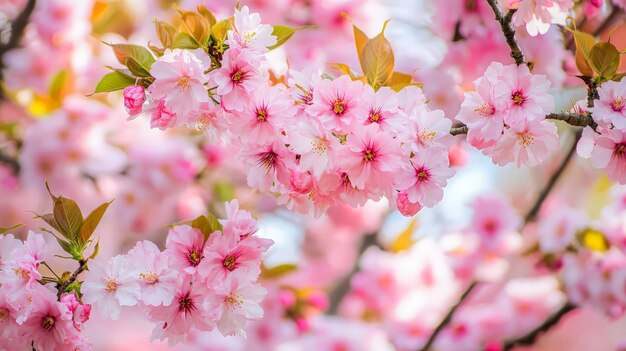
The blooming of cherry blossoms in Japan is an annual event eagerly awaited by millions, and now artificial intelligence is being utilized to determine the timing of this natural phenomenon. Experts rely on data analysis along with thousands of images gathered from the public to provide accurate predictions about the blooming of the flowers, which helps enhance tourism and increase economic revenues.
Cherry blossoms are an important cultural symbol in Japan, attracting visitors from around the world. An annual festival is held to celebrate the blooming of the flowers, which sees a large public attendance, making it one of the country's most prominent tourist events.
Event Details
Modern technologies, such as artificial intelligence, are employed to analyze climatic and historical data related to cherry blossom blooming. By studying climatic patterns and environmental conditions, researchers can provide accurate predictions regarding the timing of the bloom. Additionally, thousands of images are collected from visitors capturing moments of the flowers blooming, which helps improve the accuracy of the predictions.
This new technology represents a significant step towards enhancing the visitor experience, allowing them to plan their visits based on precise forecasts. This initiative also reflects how technology can enhance cultural and tourism experiences.
Background & Context
Historically, the blooming of cherry blossoms is a traditional event in Japan, celebrated for centuries. This event is known as "Hanami," a tradition that dates back to the Heian period (794-1185). During this tradition, people gather under the flowering trees to enjoy the beauty of nature and have picnics.
Over the years, the celebrations have evolved into a global tourist event, with cherry blossom blooming being one of the most notable tourist attractions in Japan. This event contributes to boosting the local economy by attracting visitors from all over the world.
Impact & Consequences
This initiative demonstrates how artificial intelligence can revolutionize our interaction with nature and the environment. By improving the accuracy of predictions, visitors can benefit from richer experiences, enhancing the value of tourism in Japan.
The use of technology in this context also enhances Japan's ability to adapt to climate changes, as AI-based data can help understand the climate's effects on the local environment.
Regional Significance
Although this event takes place in Japan, there are lessons that Arab countries can learn from it. Similar technologies can be utilized to enhance tourism in areas with natural beauty, such as palm oases or mountainous regions.
Arab nations can also benefit from Japan's experience in using technology to promote cultural tourism, contributing to the development of the local economy and increasing revenues.
In conclusion, the use of artificial intelligence to predict the blooming of cherry blossoms demonstrates how technology can enhance cultural and tourism experiences. This development is a step towards a more sustainable future in the tourism sector and serves as a model for other countries.