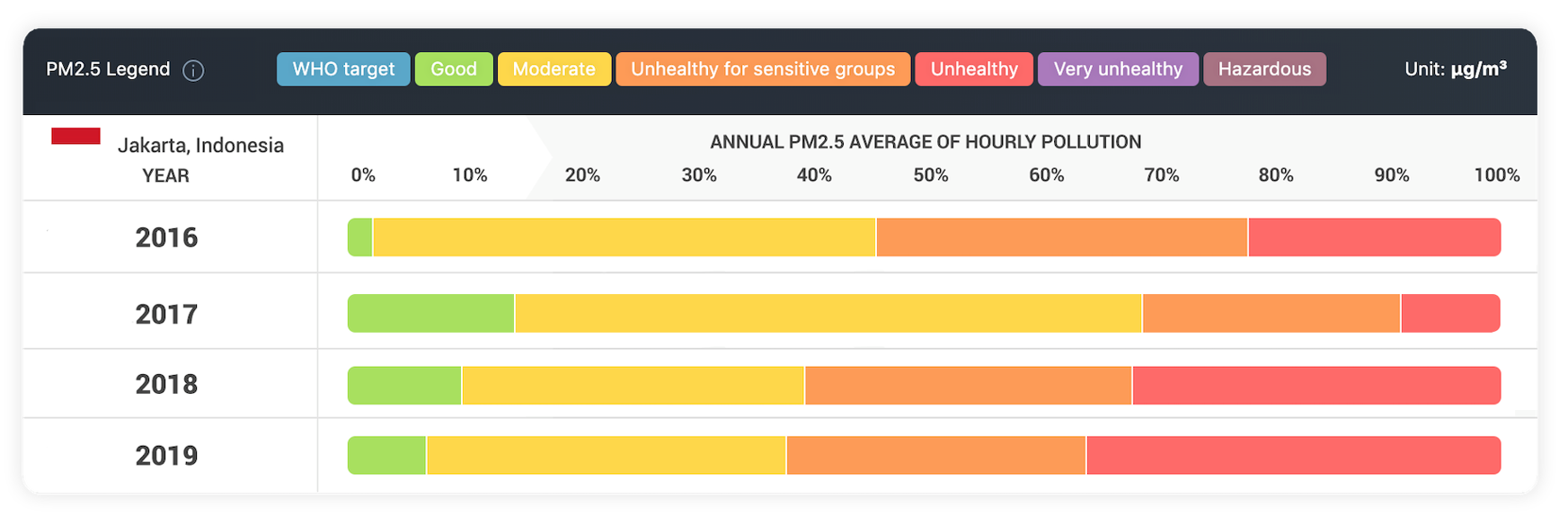
Jakarta, the capital of Indonesia, has recorded unhealthy air quality levels, classified as hazardous for sensitive groups, necessitating precautionary measures from residents. According to a report from IQAir, air quality in Jakarta was measured at 115 AQI, with PM 2.5 particle concentrations reaching 41 micrograms per cubic meter, significantly exceeding the World Health Organization's recommended values.
Health authorities are advising residents, particularly those with chronic illnesses, to wear masks when leaving their homes and to avoid outdoor activities as much as possible. They also recommend closing windows to prevent polluted air from entering and using air purifiers indoors.
Details of the Situation
Jakarta is among the most polluted cities in Indonesia, ranking fifth in the worst air quality in the country, following cities like Cirebon, Tangerang, Surabaya, and Bandung. These figures reflect the deteriorating environmental situation the city is facing, which requires a swift response from the government.
In its efforts to combat air pollution, the Jakarta provincial government has announced rapid response plans to address pollution during the dry season expected to begin in May and last until August. These plans include improving air quality monitoring systems and conducting vehicle emissions tests.
Background & Context
Historically, Jakarta has suffered from numerous environmental issues, including air pollution resulting from traffic congestion and heavy industries. These factors have exacerbated public health problems, with studies indicating that continuous exposure to PM 2.5 particles is linked to increased risks of heart and lung diseases, threatening many lives.
The Indonesian government is striving to implement effective strategies to reduce pollution, including improving public transportation and promoting the use of clean energy. However, challenges remain, as coordination between various government entities and civil society is required to achieve tangible results.
Impact & Consequences
Poor air quality in Jakarta is a serious public health issue, affecting the lives of millions of residents. Reports indicate that continuous exposure to high levels of air pollution can lead to increased rates of premature mortality, especially among vulnerable groups such as children and the elderly.
Moreover, the deterioration of air quality can negatively impact the local economy, as pollution-related illnesses can lead to increased healthcare costs and reduced productivity. Therefore, addressing this issue requires significant investments in infrastructure and environmental policies.
Regional Significance
Air pollution and public health issues are common challenges faced by many countries in the Arab region. Cities like Cairo, Baghdad, and Damascus experience high pollution levels, reflecting the urgent need to adopt effective strategies to mitigate this phenomenon.
Arab countries can benefit from Indonesia's experiences in tackling air pollution by enhancing regional cooperation and exchanging knowledge and expertise in environmental policies. Improving air quality can also contribute to enhancing public health and social well-being in the region.