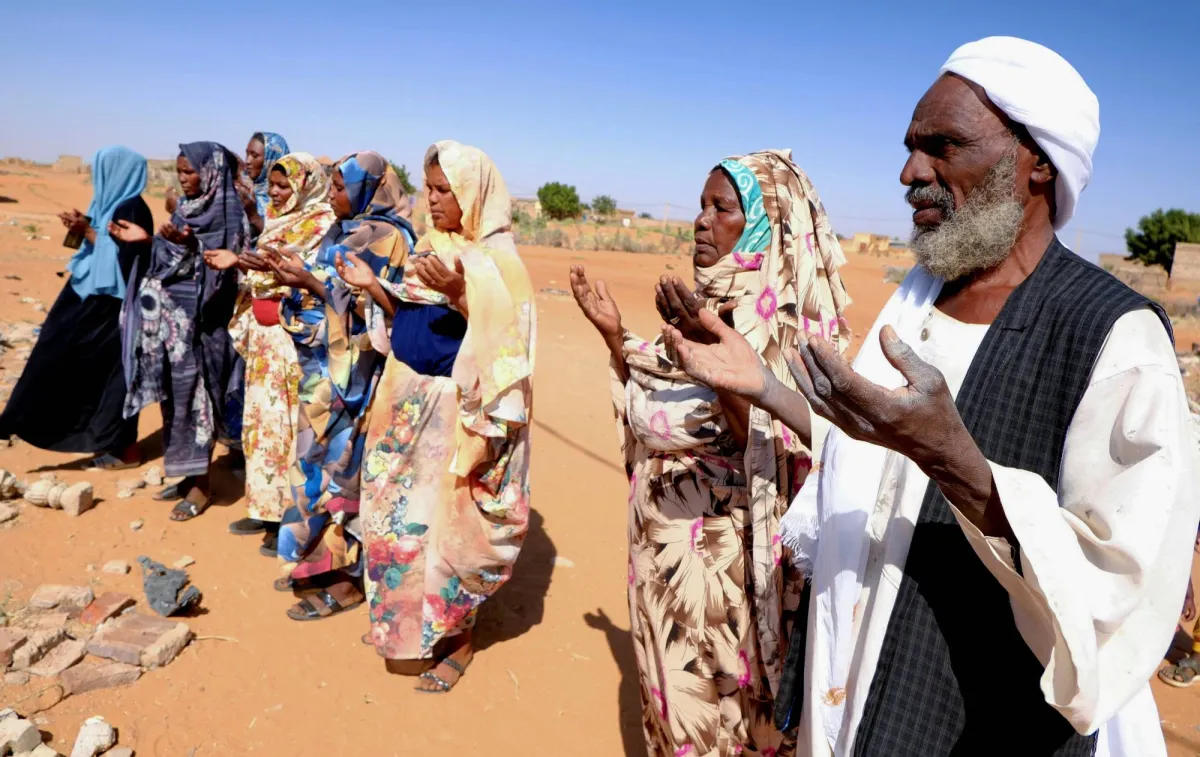
Airstrikes conducted by the Sudanese army and the Rapid Support Forces have resulted in the deaths of dozens of civilians and injuries to others, marking a serious military escalation in Sudan. The incident occurred in South Kordofan, where the airstrikes targeted civilian areas, raising growing concerns about the humanitarian situation in the country.
In detail, eyewitnesses reported that 18 people were killed, and 54 others were injured, including 10 serious cases, due to bombardment from a swarm of drones belonging to the Sudanese army near the city of Al-Debibat. The attack targeted civilians who were on their way to the city of Al-Obeid, raising questions about the targeting of civilians in the ongoing conflict.
Details of the Incident
The attack occurred near the town of Al-Sa'ata Al-Jazair, where the drones targeted citizens who were traveling in cars and on motorcycles. The witness who provided details of the incident indicated that the drone operators might have believed that the vehicles were affiliated with the Rapid Support Forces, leading to the firing upon them. This incident comes at a time when the region is experiencing increasing security tensions, prompting citizens to prefer traveling in convoys to avoid main roads.
In White Nile State, the Rapid Support Forces targeted the cities of Kosti and Al-Duwiem with drones, causing panic among the residents. One of the drones attempted to target the army command headquarters in the city of Al-Duwiem, but it crashed in a nearby neighborhood, injuring one woman.
Background & Context
Historically, South Kordofan has witnessed ongoing conflicts between the Sudanese army and the Rapid Support Forces, with both parties exchanging control over cities. The city of Al-Debibat, for instance, has seen control exchanged between the two sides multiple times, reflecting the chaos and instability in the region. Since May 2025, the Rapid Support Forces have managed to control the city, but the Sudanese army has regained it for short periods.
The fighting in Sudan has not been limited to military conflict; it has significantly affected the daily lives of the population, with humanitarian conditions deteriorating markedly. The repeated attacks on civilians indicate a serious escalation in the conflict, exacerbating the suffering of civilians who are already facing shortages of essential services.
Impact & Consequences
The consequences of this military escalation extend beyond humanitarian dimensions, contributing to the worsening of economic and social conditions in Sudan. With the increasing number of civilian casualties, pressure is mounting on the Sudanese government and the international community to intervene and stop the violence. Moreover, the continuation of the conflict reflects the failure of the parties to reach a peaceful solution, increasing the likelihood of further deterioration in the future.
The psychological impact on civilians may be profound, as many live in a state of constant fear and anxiety. Additionally, the destruction of infrastructure and public facilities due to the conflict will affect the community's ability to recover in the future.
Regional Significance
The conflict in Sudan has direct implications for stability in the Arab region as a whole. With the increasing number of displaced persons and refugees, neighboring countries may face additional pressure on their resources. Furthermore, the continuation of the conflict could lead to heightened tensions between Arab countries, reflecting the urgent need for regional cooperation to resolve crises.
In conclusion, the situation in Sudan requires urgent action from the international community to ensure the protection of civilians and halt the violence. Peaceful solutions must be at the core of efforts to end this conflict, which continues to negatively impact the lives of millions.