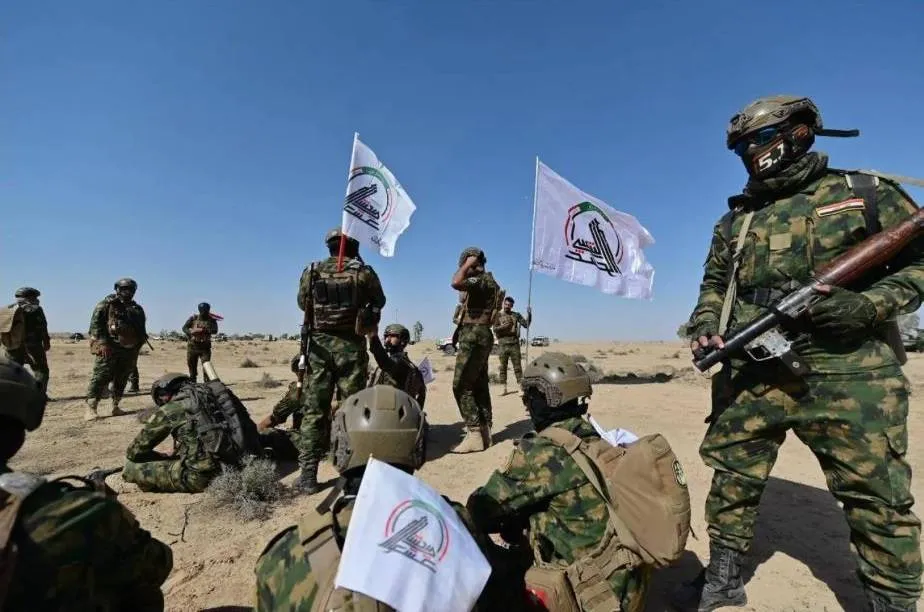
Airstrikes targeted a site belonging to the Popular Mobilization Forces today, Tuesday, in Anbar province, western Iraq, resulting in the deaths of at least 10 fighters, including the operations commander, Saad Al-Baiji, and injuring 30 others.
The Popular Mobilization Forces confirmed in an official statement that the attack on their command headquarters while they were performing their national duty is an act of aggression by the United States. They considered these airstrikes a blatant violation of Iraq's sovereignty and a disregard for the blood of its citizens, indicating that this attack once again reveals the nature of the aggressive approach that does not respect international laws or humanitarian norms.
Details of the Incident
Security and health sources reported that the attacks targeted the Popular Mobilization Forces headquarters during a security meeting attended by several senior leaders. The forces issued a statement holding political powers fully responsible for confronting these repeated American violations, calling for clear stances to preserve the country's sovereignty.
It is noteworthy that the Popular Mobilization Forces include paramilitary factions, most of which are Shiite, and have been officially integrated into the Iraqi security forces, including several groups loyal to Iran. These airstrikes come at a time when the region is witnessing an escalation of attacks by Iran-backed armed groups on American bases in Iraq.
Background & Context
Since the outbreak of the American-Israeli war on Iran last February, attacks on American bases in Iraq have intensified, raising concerns about the escalation of tensions in the region. Baghdad has turned into a battleground for intelligence conflicts between Iran and the United States, with Iranian Quds Force troops present in Iraq to manage operations against American interests.
Additionally, Iranian networks have reorganized themselves following the death of leader Ali Khamenei, adopting a decentralized structure and mixed cells operating through Iraqi factions. The attacks have focused on American interests, increasing tensions in the Iraqi capital.
Impact & Consequences
These airstrikes represent a serious escalation in the ongoing conflict, potentially leading to reactions from Iran-aligned armed factions, increasing the likelihood of new confrontations in the region. Furthermore, these events may affect relations between Iraq and the United States, as pressures mount on the Iraqi government to respond to these violations.
Moreover, these developments could lead to increased political division in Iraq, as positions among political forces vary on how to deal with the American presence in the country. Under these circumstances, fears of escalating violence in the region grow, which could negatively impact regional stability.
Regional Significance
The repercussions of these airstrikes extend beyond Iraqi borders, reflecting ongoing conflicts in the region between regional and international powers. There are increasing concerns that these events could lead to greater escalation in conflicts, especially amid existing tensions between Iran and the United States.
Additionally, these developments may affect the security situation in Lebanon and Syria, where armed factions linked to Iran are present, complicating the security landscape in the region. Under these conditions, the question remains about how these events will impact the future stability of the Middle East.