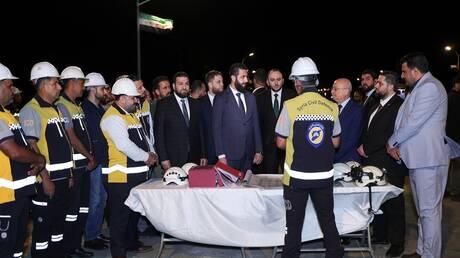
Syrian President Ahmad al-Sharaa affirmed that the defunct regime's bombardment of Al-Rastan Bridge during the "Deter Aggression" battle served as a clear indication of its impending collapse and complete bankruptcy. Simultaneously, he emphasized that reconstruction represents the defining theme of the new phase and a supreme priority for restoring social cohesion among the Syrian populace. The president's remarks underscore a strategic shift toward rebuilding the war-torn nation while consolidating the authority of the new administration.
The president's statement came within the context of his close monitoring of destroyed infrastructure files in areas that recently witnessed military operations. Al-Sharaa indicated that targeting civilian infrastructure reveals the former regime's inability to engage in field confrontation, forcing it to adopt a scorched earth policy in its final days before ultimate collapse. This destructive approach, he noted, demonstrates the regime's determination to inflict maximum damage on national assets rather than facilitate a peaceful transition of power.
Event Details and Military Context
Al-Rastan Bridge, situated on the international highway connecting Damascus and Aleppo through Homs governorate, serves as a vital artery for transportation and commerce in central Syria. During the "Deter Aggression" battle launched by the new administration's forces against military gatherings loyal to the former regime in the central region, the bridge sustained intensive shelling from regime remnants. These desperate attempts aimed to impede the advance of government forces and sever supply routes critical to the operation's success.
The bombardment caused partial damage to the bridge's concrete structure, necessitating urgent engineering interventions to reopen the route for trucks and civilian traffic. Engineering teams affiliated with the new Syrian Ministry of Defense assessed the damage extent, confirming that repair operations commenced immediately under an emergency plan to rehabilitate infrastructure in liberated areas. Military sources indicate that securing this corridor remains essential for maintaining logistical flows between northern and southern Syria.
Background and Political Context
Al-Sharaa's statements emerge within a broader strategic framework aimed at delineating the contours of Syria's transitional phase. The country faces immense challenges regarding state institution reconstruction and restoring trust among Syrian society's diverse components. The president consistently emphasizes that reconstruction constitutes not merely a cement-and-concrete process, but rather a political endeavor requiring genuine reconciliation and addressing the remnants of decades of war and division.
Field reports indicate that the former regime, during its final days, systematically employed tactics involving the destruction of vital infrastructure in areas slipping from its control. This strategy sought to create uncontrolled chaos and obstruct the peaceful handover of authority. The Al-Rastan Bridge bombing represents part of this vindictive policy, revealing the extensive damage the regime inflicted upon Syria's infrastructure before its fall. Analysts view these actions as evidence of the old guard's refusal to accept political realities.
Humanitarian and Economic Impact
Syria's humanitarian file faces complex challenges, with United Nations estimates indicating that more than 70% of the country's infrastructure has been destroyed or partially damaged during the conflict years. Al-Rastan Bridge stands as a living example of deliberate targeting of vital facilities, obstructing displaced persons' return and economic revival in liberated territories. The destruction of such strategic assets complicates efforts to restore normalcy and basic service delivery to civilian populations.
The transitional Syrian government is developing emergency rehabilitation plans for roads and bridges in cooperation with international organizations and Arab donor countries. These plans focus on opening main passages between governorates to ensure goods and relief materials movement, particularly with winter approaching and increasing population needs for heating materials and food supplies. Officials emphasize that rapid infrastructure repair directly correlates with stabilization efforts and preventing further population displacement.
Regional Significance and Refugee Return
Syria's reconstruction file occupies a central position on Arab summit agendas and regional meetings, where analysts view the new administration's success in rehabilitating infrastructure as a decisive indicator of its capacity to restore effective sovereignty and manage state affairs. Stabilizing liberated areas paves the way for hundreds of thousands of Syrian refugees in Jordan, Lebanon, and Turkey to return voluntarily. The international community closely monitors these developments to assess the viability of large-scale repatriation programs.
Neighboring Arab states emphasize the importance of completing the political transition peacefully and supporting reconstruction efforts as necessary measures to prevent extremism's return and achieve regional stability. Al-Rastan Bridge symbolizes the new phase, transforming from a witness to destruction into a landmark on the path toward building and recovery. This scene reflects Syrians' determination to overcome the past and move toward a future founded on justice and shared development, despite the tremendous challenges that lie ahead.