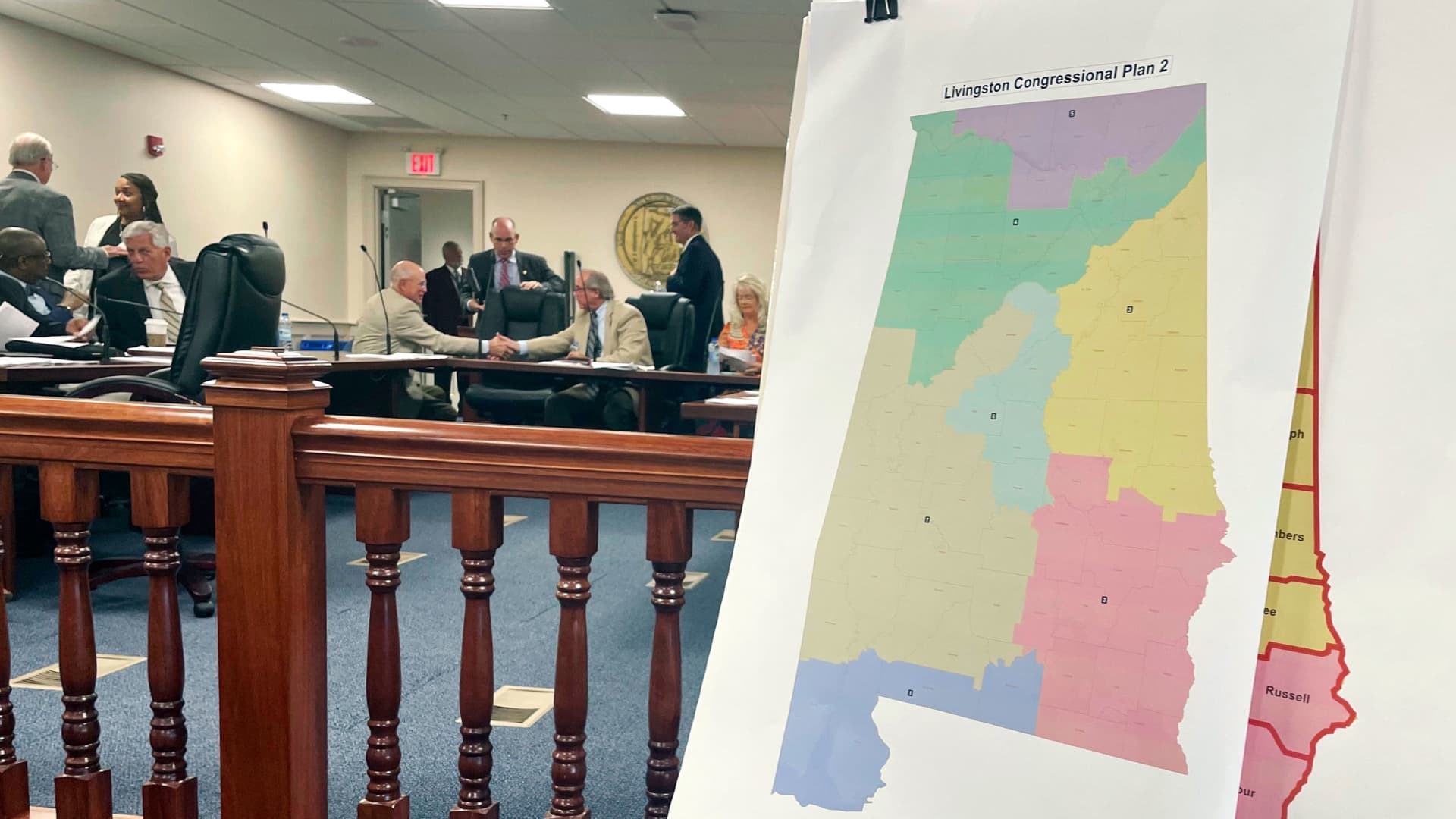
On Wednesday, Alabama requested the U.S. Supreme Court to suspend a lower court's ruling that prevents the use of a controversial electoral map for the 2026 midterm elections. This ruling came after a three-judge panel in the U.S. District Court in Birmingham determined that the proposed map was "deliberately discriminatory."
The map, submitted in 2023, was barred from use in the upcoming elections due to its negative impact on the votes of African American citizens. The court ruled that this map violates the U.S. Constitution by diluting the votes of this group of voters.
Details of the Case
In its decision, the judicial panel emphasized that "the 2023 plan can only be understood as deliberately discriminatory." Two judges on this panel were appointed by former President Donald Trump, raising questions about the influence of politics on judicial decisions.
This ruling followed the U.S. Supreme Court's directive for the judicial panel to reconsider the issue of electoral maps in light of its recent ruling, which deemed the electoral mapping in Louisiana as racially discriminatory.
Background & Context
Historically, the United States has witnessed numerous disputes over electoral mapping, where this process has been used as a tool for racial discrimination. This phenomenon, known as gerrymandering, is employed to divide electoral districts in a way that affects the representation of minorities. In Alabama's case, African American citizens are among the most affected by these practices.
The roots of this issue extend back decades, with ongoing attempts to amend electoral laws to ensure fair representation for all groups. However, significant challenges remain, making issues related to racial discrimination in elections a vital and ongoing topic in public discourse.
Impact & Consequences
If the controversial electoral map is allowed to be used, it could reduce the ability of African American citizens to influence election outcomes, negatively impacting their representation in Congress. This could provoke strong reactions from civil society and human rights organizations, which strive to ensure voter rights.
Moreover, this decision may affect how other states address similar issues, leading to further political and social tensions. Given the current political climate, this topic is extremely sensitive and could result in greater divisions within American society.
Regional Significance
Although this issue pertains to the United States, its impact may extend to the Arab region. Issues related to discrimination and civil rights are sensitive topics in many Arab countries, where certain groups suffer from marginalization and discrimination. This case could serve as a lesson on the importance of protecting minority rights and ensuring their representation in political systems.
Ultimately, the issue of racial discrimination in elections remains a critical matter that requires ongoing attention from the international community. We must learn from global experiences to ensure that such practices are not repeated anywhere.