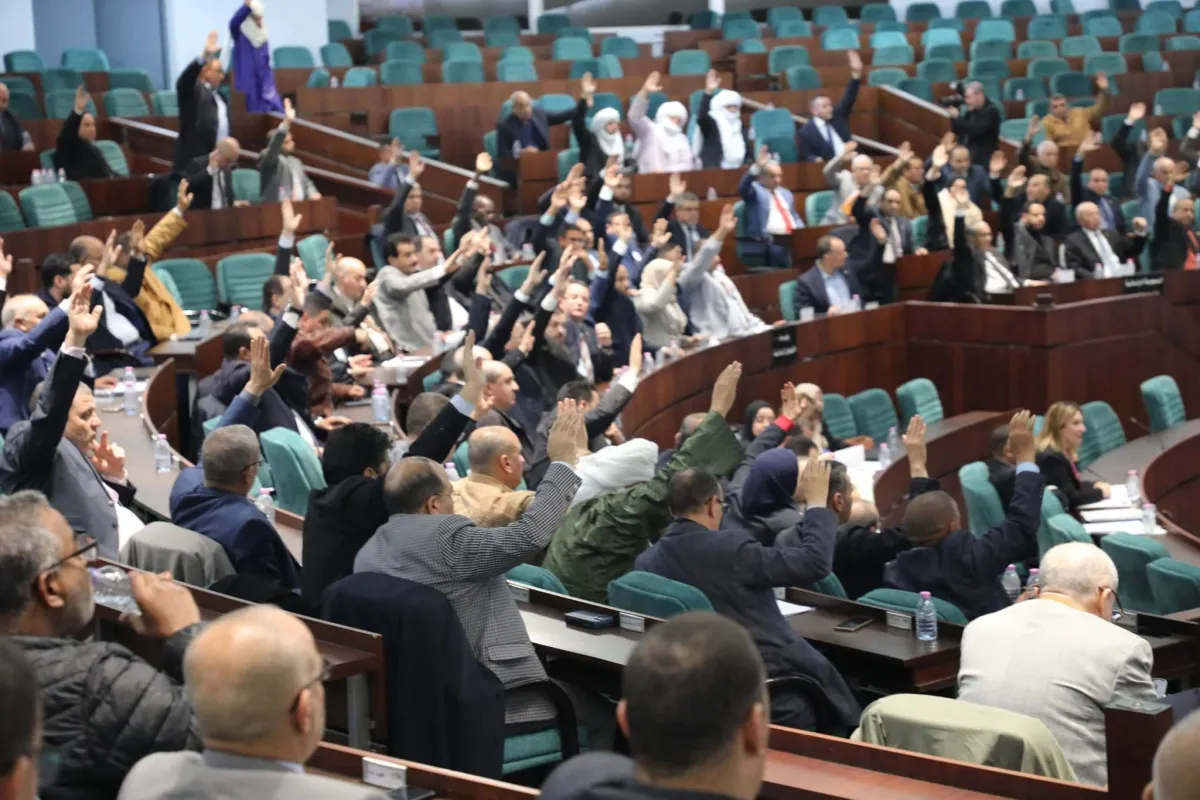
The members of the Algerian Senate (the upper house of parliament) commenced discussions on Thursday regarding a draft amendment to the election law, a move that paves the way for calling the electorate, indicating the approaching date of the legislative elections. The project, proposed by the government, aims to combat what is known as "the infiltration of corrupt money into politics," a reference to the negative practices that marred electoral processes during the presidency of Abdelaziz Bouteflika (1999-2019).
After the project was approved last Tuesday by the deputies of the National People's Assembly (the lower house) during a session marked by disagreements over "Article 221" related to the conditions for candidacy for membership in the Senate, the organic law concerning the electoral system was presented by Interior Minister Saïd Sayoud to the members of the Legal, Administrative, and Liberties Committee of the Senate.
Details of the Discussion
This discussion is characterized by its urgent nature, representing a significant leap in the study of legislative projects, which is understood as a preemptive measure ahead of the imminent electoral dates. The project includes 14 articles that amend 85 existing articles and introduce 4 new measures aimed, according to the Interior Minister, at "enhancing" the legal and institutional framework for elections in Algeria. These measures include updating procedures, clarifying the roles of the Independent National Authority for Elections and the Ministry of Interior, and "improving" candidacy standards to ensure transparency, integrity, and citizen participation.
Article 221, which sparked controversy, includes technical conditions for candidacy for Senate membership, requiring candidates to be at least 35 years old, possess Algerian nationality, prove their status regarding military service, and meet a fundamental condition of being an elected member of a municipal or provincial council. The amendments also stipulate a university degree as a criterion to enhance the quality of legislative performance and ensure that candidates have no criminal record or ties to dubious financial circles.
Background & Context
These amendments come as part of the reforms initiated by the President of the Republic, aiming to provide a clear and transparent framework for organizing elections, in line with the constitutional revisions voted on by parliament on March 25. According to Minister Sayoud, elected councils "constitute the cornerstone of rebuilding institutions in Algeria," and therefore "must be protected from the influence of corrupt money." The text also addresses the reorganization of the Independent National Authority for Elections to improve the effectiveness of its structures and enhance its neutrality.
The Ministry of Interior will, according to the text, provide the necessary material, logistical, and human support, allowing the election authority to focus on its core tasks, such as preparing, organizing, and overseeing electoral processes and referendums. The minister clarified that "this division of roles aims to ensure accurate and responsible monitoring of all stages of the electoral process."
Impact & Consequences
The amendments also include reducing the number of signatures required to submit candidacies, which may facilitate the process for independent candidates and smaller parties. However, these changes have sparked discussions among deputies, who expressed concerns about the reduction of women's quotas on electoral lists. The issue of "the infiltration of corrupt money into the electoral process" was also strongly raised, with some deputies emphasizing the importance of enhancing transparency mechanisms and financial oversight to prevent any illicit influence.
On the other hand, the amendments brought good news for members of the national community abroad, as it was decided to increase the number of deputies representing the community in parliament to 12, up from the current 8. This decision was widely welcomed by the deputies representing the community, who affirmed the importance of this step in facilitating the transfer of concerns and demands from community members.
Regional Significance
These steps are part of Algeria's efforts to strengthen democracy and combat corruption, which may positively affect the country's image in the Arab world. Additionally, these amendments could inspire other countries in the region to adopt similar reforms in their electoral systems, contributing to enhanced transparency and political participation.
In conclusion, these amendments represent an important step towards improving the electoral system in Algeria, reflecting the government's commitment to combating corruption and enhancing democracy, which may help restore citizens' trust in the political process.