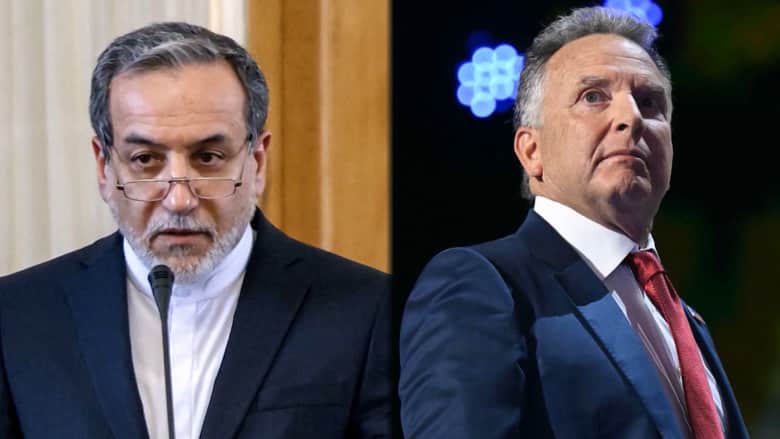
The eyes are on the results of the first round of American-Iranian negotiations, which are considered crucial yet fraught with risks. These talks come at a sensitive time, as military and political tensions between the two sides escalate, focusing on issues related to the Strait of Hormuz and Iran's nuclear program.
In this context, Middle East policy expert Mahjoub Al-Zuwairi noted that the 15 points presented by Washington to Tehran reflect the long-standing stuck positions between the two sides over decades, primarily revolving around the nuclear and missile programs and Iran's regional role. Al-Zuwairi explained that the timing of these proposals came in the fourth week of the war, which President Donald Trump predicted would last between 4 and 6 weeks, reflecting his concern about its impact on energy prices and the worries of regional allies.
Details of the Current Negotiations
The current round of negotiations is considered the first of its kind, with each party setting a high bar for its positions. Former U.S. State Department official Thomas Warick expressed concern about Iran's commitment to any future agreement, indicating that ending the war soon seems unlikely, especially given the significant gap in the positions of both sides regarding the Strait of Hormuz and the nuclear program.
Analyses suggest that there are three potential scenarios for the course of the war. The first scenario is...
Background & Context
The backdrop of these negotiations is marked by a history of mistrust and conflict between the U.S. and Iran. Since the 1979 Iranian Revolution, relations have been strained, with numerous incidents escalating tensions. The U.S. has imposed sanctions on Iran, particularly targeting its nuclear program, which Iran insists is for peaceful purposes.
As the negotiations unfold, both sides are under pressure from their respective domestic audiences. The U.S. seeks to curb Iran's influence in the region while Iran aims to lift sanctions and gain recognition of its regional role. The stakes are high, as any miscalculation could lead to a wider conflict.
Impact & Consequences
The outcome of these negotiations could have far-reaching implications not only for U.S.-Iran relations but also for the broader Middle East. A failure to reach an agreement might lead to increased military actions, further destabilizing the region. Conversely, a successful negotiation could pave the way for a new diplomatic era, potentially leading to a reduction in hostilities.
Moreover, the implications for global energy markets are significant. The Strait of Hormuz is a critical chokepoint for oil shipments, and any disruption could lead to spikes in oil prices, affecting economies worldwide. The international community is closely monitoring the situation, as the balance of power in the region hangs in the balance.
Regional Significance
The negotiations are not only crucial for U.S.-Iran relations but also for the stability of the entire Middle East. Countries in the region, particularly those allied with the U.S., are watching closely, as their security and economic interests are at stake. The potential for a nuclear-armed Iran raises alarms among neighboring countries, prompting them to reconsider their own defense strategies.
In conclusion, the ongoing American-Iranian negotiations represent a pivotal moment in international relations. The decisions made in the coming weeks will likely shape the geopolitical landscape of the Middle East for years to come, making it imperative for both sides to approach the talks with caution and a willingness to compromise.