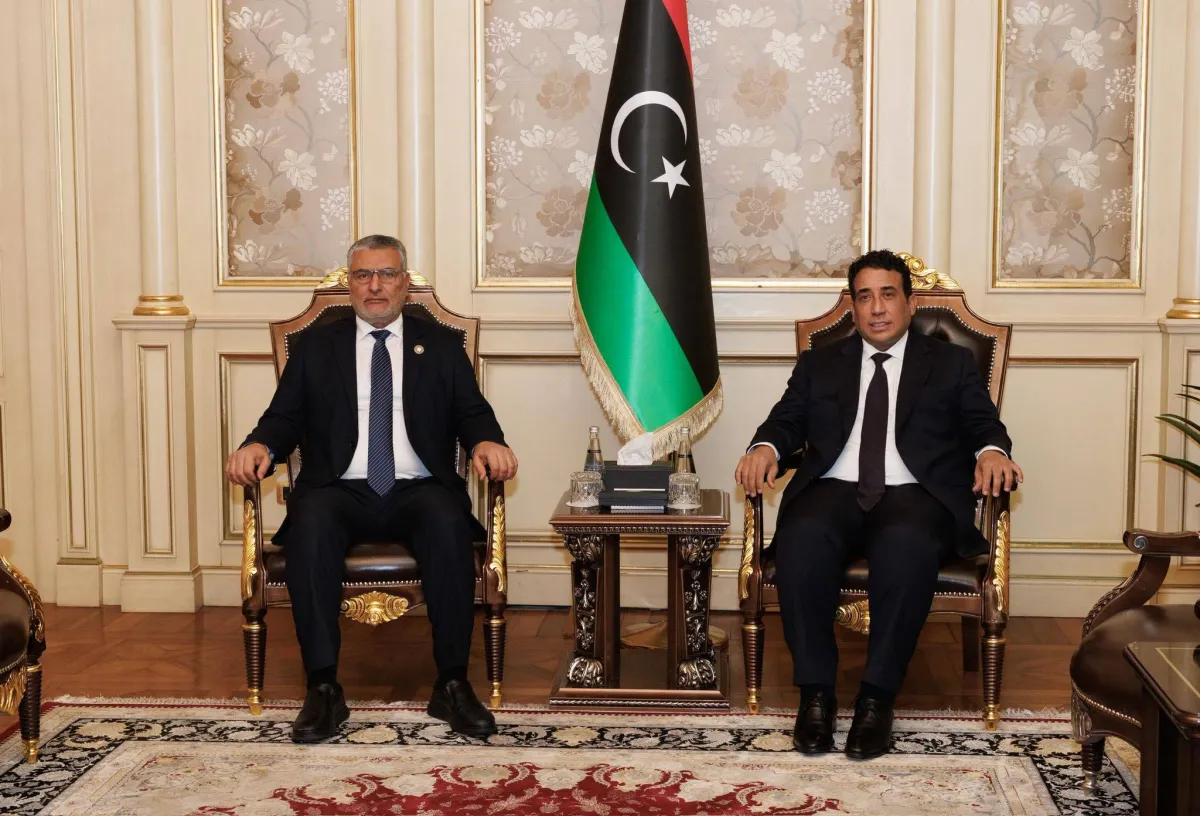
The head of Libya's High State Council, Mohamed Takala, disclosed details of an American proposal aimed at merging the two rival governments in the country during a stormy session held in the capital, Tripoli. The initiative, attributed to U.S. President's Advisor Musad Boulis, seeks to end the political division by restructuring the executive authority.
The proposed initiative includes appointing Saddam Haftar, son of Field Marshal Khalifa Haftar, as the head of the new presidential council, while Abdul Hamid Dbeibah remains in his position as the head of the interim unity government. Reports indicated that UN Envoy Hanna Titi might endorse this proposal if an agreement is reached among the concerned parties.
Details of the Event
In the absence of any official statement from Takala, local media reported that members of the High State Council discussed the initiative during the session, where Takala emphasized that any member supporting this initiative only represents themselves. Voices within the council have risen, demanding the separation of supporters of this initiative and taking a firm stance against what some consider a deviation from the established political path.
No official comments have been issued by the presidential council, the unity government, or the UN mission regarding the controversial nature of this initiative. Libya is currently suffering from a severe political division, with two governments: one in Tripoli led by Dbeibah and the other in Benghazi led by Osama Hamad, supported by the House of Representatives and Field Marshal Haftar.
Background & Context
These developments come at a time when Libya is striving to regain political and security stability after years of conflict. The country has witnessed several previous attempts to unify the governments, but these have often failed due to deep divisions among political factions. The American initiative may represent a new attempt to overcome these divisions, but the negative reactions from within the High State Council indicate that the path to unification will be challenging.
In a related context, Member of Parliament Fathallah Al-Saeiti discussed the political situation updates with Council President Aqila Saleh, emphasizing the necessity of advancing the political process and overcoming the current political stalemate. They also stressed the importance of conducting presidential and parliamentary elections as a means to end transitional phases and achieve stability.
Impact & Consequences
If the American initiative is accepted, it could lead to radical changes in the Libyan political landscape, potentially strengthening Haftar's authority in the western part of the country, which may increase tensions among different factions. Additionally, the ongoing division could exacerbate humanitarian and economic crises in the country, negatively impacting citizens' lives.
On the other hand, these developments may affect international relations with Libya, as any move toward unifying the governments could attract international community interest and shed light on the Libyan crisis. However, if some parties continue to reject the proposal, it could deepen the instability.
Regional Significance
Libya is considered one of the hotspots in the Arab region, and any changes in its internal policy could affect regional security. The situation in Libya is closely linked to conditions in neighboring countries, and the continuation of division could have negative repercussions on security in the Sahel and Sahara region.
In conclusion, the fate of the American initiative remains unclear amid differing opinions within the High State Council. Nonetheless, the need to unify political efforts remains urgent, given the multiple crises facing the country.