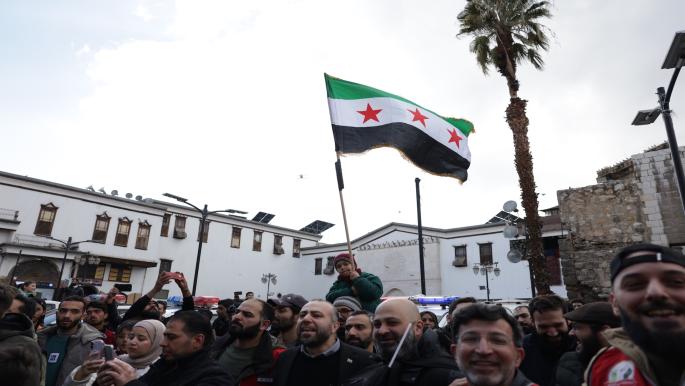
The events in Syria after 2012 reveal that what transpired was not a continuation of the popular revolution but rather an exploitation of the revolutionary climate to overthrow the regime. The country has witnessed radical transformations, as social and political changes were invested in various contexts, complicating the Syrian landscape.
After the outbreak of the Syrian revolution in 2011, there was great hope for achieving democratic change. However, over time, things began to take unexpected turns. Many parties exploited the situation to achieve their own interests, leading to the fragmentation of the original revolutionary movement.
Details of the Event
In 2012, new features of the Syrian conflict began to emerge, as revolutionary forces divided into multiple groups, each seeking to achieve its own goals. This division led to a decline in the core idea of the revolution, which aimed to overthrow the regime and achieve social justice.
Moreover, regional and international powers intervened in the conflict, further complicating the situation. Instead of the revolution being an expression of the people's will, it became a battleground for settling scores between major powers.
Background & Context
Historically, Syria has witnessed numerous political and social transformations. Since gaining independence in 1946, the country has suffered from political instability, with military coups occurring repeatedly. At the beginning of the revolution, there was a general sense of change, but events proved that matters were not that simple.
In the years following the revolution, multiple armed groups emerged, some linked to religious ideologies, leading to the erosion of the Syrian national identity. This shift contributed to a decline in popular support for the revolution, as many began to view the conflict as a civil war rather than a popular movement.
Impact & Consequences
Syria has been significantly affected by this transformation. The war has led to massive destruction of infrastructure and the displacement of millions of residents, creating an unprecedented humanitarian crisis. Additionally, internal division has led to rampant corruption and chaos, making it difficult to achieve any form of stability.
On the international front, the Syrian conflict has become a focal point for many regional and international powers, as it has been used as a means to expand influence. This external intervention has further complicated the situation, making it challenging to reach a peaceful resolution.
Regional Significance
The events in Syria serve as a model for what can happen when popular revolutions intersect with external interests. The Syrian crisis has affected neighboring countries, leading to an increase in the number of refugees and political tensions. Furthermore, the conflict has cast a shadow over relations between Arab states, exacerbating divisions.
In conclusion, the experience of Syria after 2012 demonstrates that revolutions are not always a straightforward path to change. Instead, they can transform into complex conflicts that impact the future of nations. The Syrian situation requires a comprehensive solution that takes into account the interests of all parties, including the Syrian people who have suffered greatly.