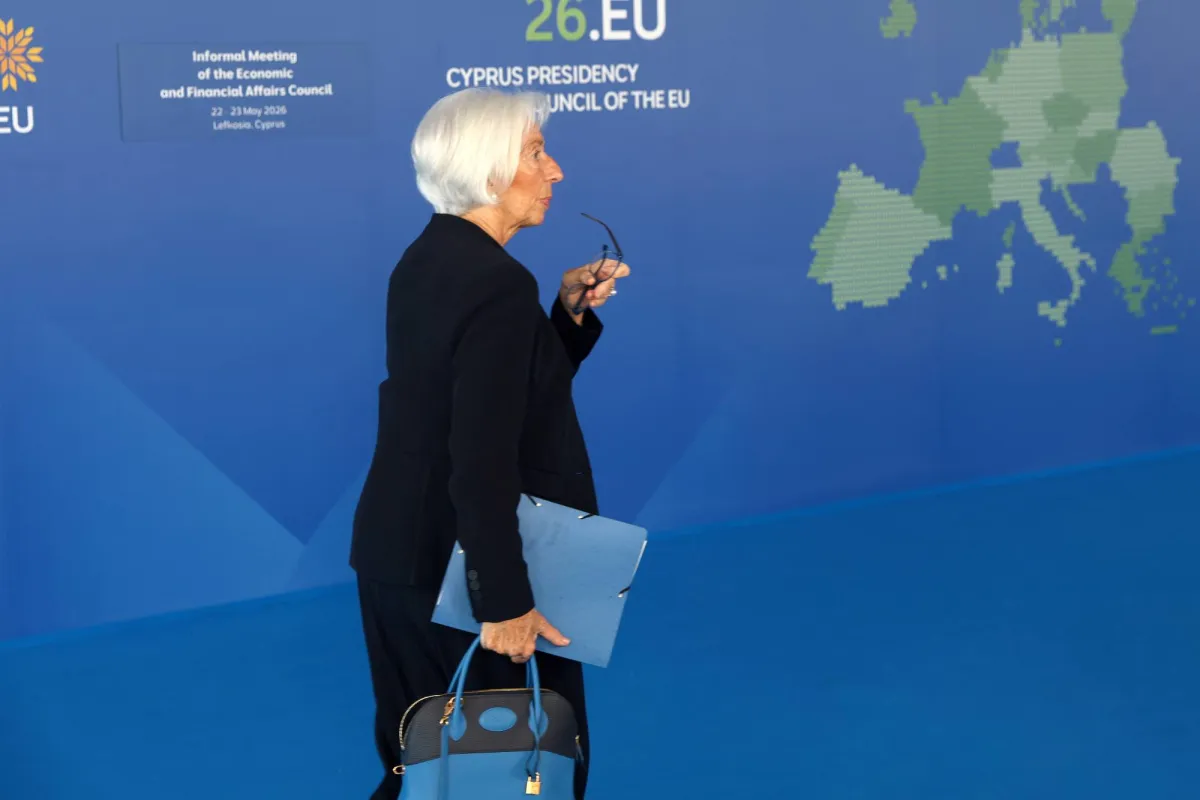
The official minutes released from the European Central Bank's (ECB) April meeting reveal an increasing inclination towards tightening monetary policy, setting the stage for an interest rate hike in the upcoming meeting scheduled for June. This decision is seen as a precautionary measure aimed at protecting the bank's credibility in the face of escalating inflation.
The minutes clarified that the decision to keep interest rates unchanged was a challenging choice, as several members of the governing council expressed readiness to raise rates had this option been on the table for discussion. This step is viewed as a strong signal of the bank's determination to bring inflation back to its target of 2% in a timely manner.
Details of the Meeting
Details from the minutes indicate that the risks surrounding economic growth prospects have increased compared to the previous March meeting. Members acknowledged that indirect effects and "second-round effects" resulting from energy shocks have become inevitable. They noted that the transmission of oil shocks to energy-sensitive consumer price index components takes about one month for fuel, extending over 15 months for other goods such as meat.
The current situation was described in the minutes as a "classic negative supply shock," differing from the scenario witnessed in 2022, where strong demand forces resulting from the reopening of the economy post-pandemic were the primary driver of inflation. Despite rising short-term inflation expectations, the bank believes that long-term expectations remain stable around the 2% target.
Background & Context
Financial markets are now focused on the anticipated 25 basis point interest rate hike in June, driven by previous hawkish statements from Executive Board member Isabel Schnabel. Analysts consider this expected hike a precautionary and symbolic step to reaffirm the bank's commitment, despite the inflationary damage already inflicted on the Eurozone economy.
Regarding the monetary policy trajectory following the June meeting, analyses suggest that the likelihood of entering an "inflationary spiral" remains low as long as government fiscal stimulus packages remain restrained and limited. Consequently, experts expect the bank to settle for a single precautionary hike in June, ruling out ongoing aggressive tightening to combat external supply shocks.
Impact & Consequences
Concerns are mounting over the geopolitical war's effects on the global economy, as the conflict in the Middle East has directly impacted commodity prices. The closure of the Strait of Hormuz has led to rising oil prices, further increasing inflationary pressures within the Eurozone.
Attention is also directed towards how these decisions will affect global financial markets, as any moves from the ECB could influence the monetary policies of other countries, especially amid volatile global economic conditions.
Regional Significance
Arab countries are directly affected by economic changes in the Eurozone, as any increase in interest rates could lead to a reduction in foreign investments in the region. Additionally, rising commodity prices due to geopolitical conflicts may exacerbate inflationary pressures in Arab nations.
In conclusion, this shift in the ECB's monetary policy represents a significant milestone in its response to current economic challenges, reflecting the urgent need to maintain price stability and economic growth in the region.