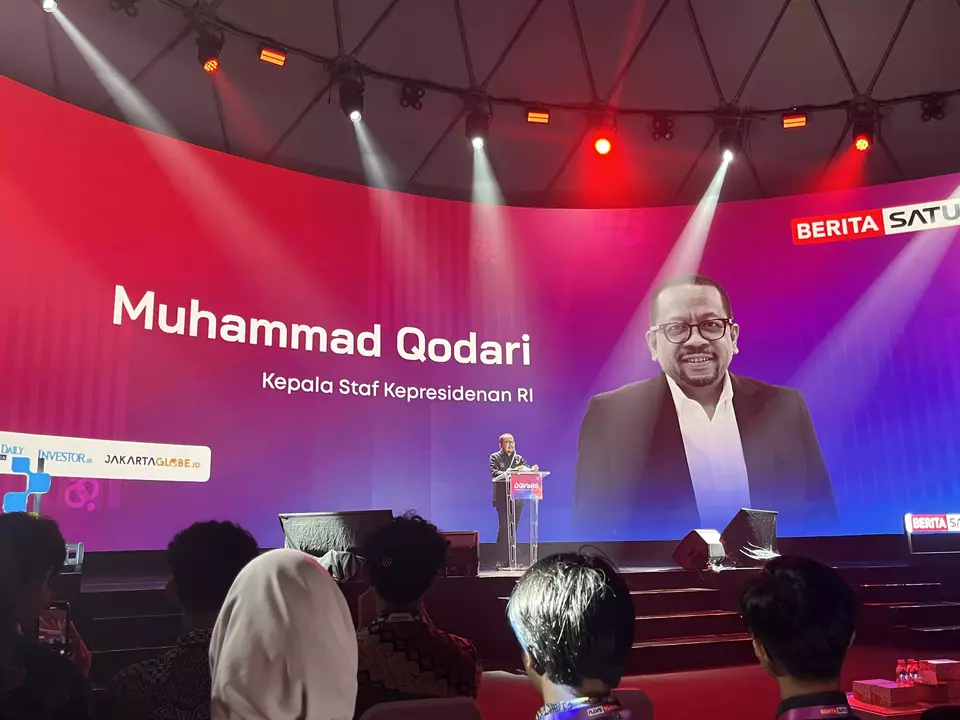
Muhammad Qudari has been officially appointed as the head of the Indonesian Government Communications Agency (Bakom) during a ceremony held at the presidential palace in Jakarta. The inauguration was overseen by Indonesian President Prabowo Subianto, where Qudari reaffirmed his commitment to the laws and constitution of Indonesia.
This appointment comes under Presidential Decree No. 51/P of 2026, which stipulates the termination and appointment of the head of the presidential staff and the head of the government communications agency. After taking the oath, Qudari signed the inauguration minutes in the presence of the president, who also signed the document.
Details of the Event
This move is part of the governmental changes that President Prabowo Subianto aims to implement to enhance the effectiveness of government communications. Qudari, who has a strong academic background and extensive experience in politics and sociology, will manage the strategic communications of the government, as well as handle media crises.
Born in Palembang in South Sumatra, Qudari obtained a bachelor's degree in psychology from the University of Indonesia in 1997, followed by a master's degree in political behavior from the University of Essex in the UK. In 2016, he earned a PhD in political science from Gadjah Mada University, where his dissertation focused on the phenomenon of intermittent voting.
Background & Context
Historically, Indonesia has witnessed significant changes in its governmental structure, with many prominent figures appointed to high positions. Qudari is not only an academic but also a researcher and political analyst, having established his own research institute in 2006, reflecting his deep interest in public affairs.
Before taking on the role of head of the government communications agency, Qudari held several important positions, including director of research at the Center for Strategic and International Studies, which provided him with extensive experience in politics and media. This background makes him well-qualified to assume this vital position.
Impact & Consequences
The appointment of Qudari is expected to have a significant impact on how the government communicates with citizens and the media. Given the current challenges facing Indonesia, including economic and health crises, having an experienced figure like Qudari in this role could help improve the government's image and enhance trust among citizens.
Additionally, Qudari will work to strengthen government communication strategies, which may assist in improving the government's response to crises and challenges, thereby enhancing the effectiveness of public policies.
Regional Significance
Qudari's appointment comes at a time when the Arab region is also experiencing political and administrative changes, as many countries seek to enhance the efficiency of their governments. Indonesia's experience in improving government communications could serve as a model for Arab countries aiming to develop mechanisms for communication with their populations.
In conclusion, Qudari's appointment represents an important step towards improving governmental performance in Indonesia, reflecting a trend towards enhancing efficiency and transparency in managing public affairs.