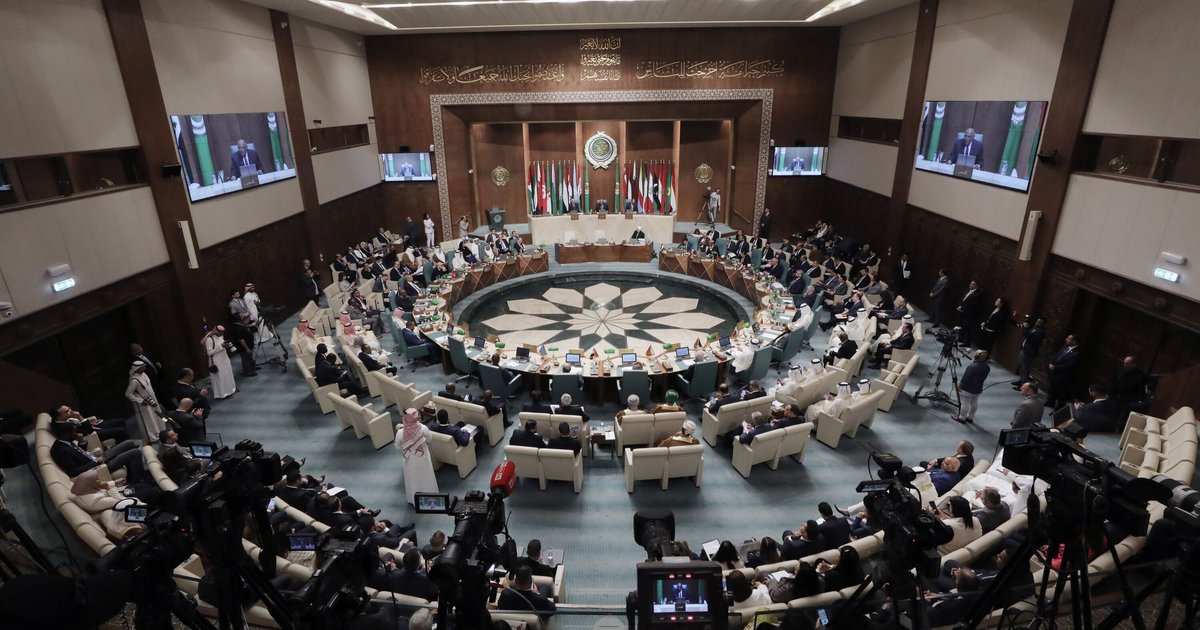
The Arab League Council has renewed its condemnation of Iran's deliberate and unjustified attacks on several Arab countries, emphasizing the need for a unified stance to confront these threats. This came during an emergency meeting held in Cairo to discuss the security situation in the region, where the importance of enhancing cooperation among Arab nations to face common challenges was reaffirmed.
In this context, the Secretary-General of the Arab League, Ahmed Aboul Gheit, pointed out that Iranian attacks pose a threat to Arab national security, urging member states to take effective steps to counter these hostile actions. He also stressed the necessity of coordination among Arab countries to address any threats that may arise against their security and stability.
Details of the Meeting
The emergency meeting of the Arab League Council was held in Cairo with the presence of Arab foreign ministers, where several issues related to regional security were discussed. Reports from member states regarding Iranian attacks were reviewed, which included assaults on oil facilities and infrastructure in some Arab countries.
Moreover, the importance of enhancing security cooperation among Arab nations and sharing intelligence to confront common threats was emphasized. The ministers agreed on the necessity of taking urgent measures to protect Arab national security, including strengthening the defensive capabilities of member states.
Background & Context
The roots of tensions between Iran and Arab countries date back decades, with the region witnessing numerous conflicts and disputes in which Iran played a role. Since the Islamic Revolution in 1979, Iran has pursued an expansionist policy in the region, leading to heightened tensions with Arab nations, particularly in the Arabian Gulf.
In recent years, Iranian attacks on Arab countries have increased, prompting repeated calls from the Arab League to address these threats. The region has witnessed several incidents, such as attacks on oil tankers in the Gulf and missile strikes on oil facilities in Saudi Arabia, which have heightened concerns among Arab nations.
Impact & Consequences
Analyses indicate that the continuation of Iranian attacks may lead to escalating tensions in the region, potentially adversely affecting security and stability. Furthermore, these tensions could result in increased military spending by Arab countries, which may impact economic and social development in the region.
Additionally, the escalation of tensions could lead to greater divisions among Arab nations, as positions towards Iran may vary. This could weaken the ability of Arab countries to confront other challenges, such as terrorism and humanitarian crises.
Regional Significance
Iranian attacks on Arab countries are considered a threat to Arab national security, affecting the stability of the entire region. These threats may lead to increased tensions between Arab nations and Iran, which could negatively impact relations among the Arab countries themselves.
In light of these circumstances, it becomes essential to enhance Arab cooperation to confront common threats and work on building effective strategies to protect Arab national security. Arab countries must also strengthen their defensive capabilities and security cooperation to address any future attacks.